When the Car Does Everything, What’s Left for the Driver?
commentary
How technology may be changing the joy of driving.
by Patrick Hong
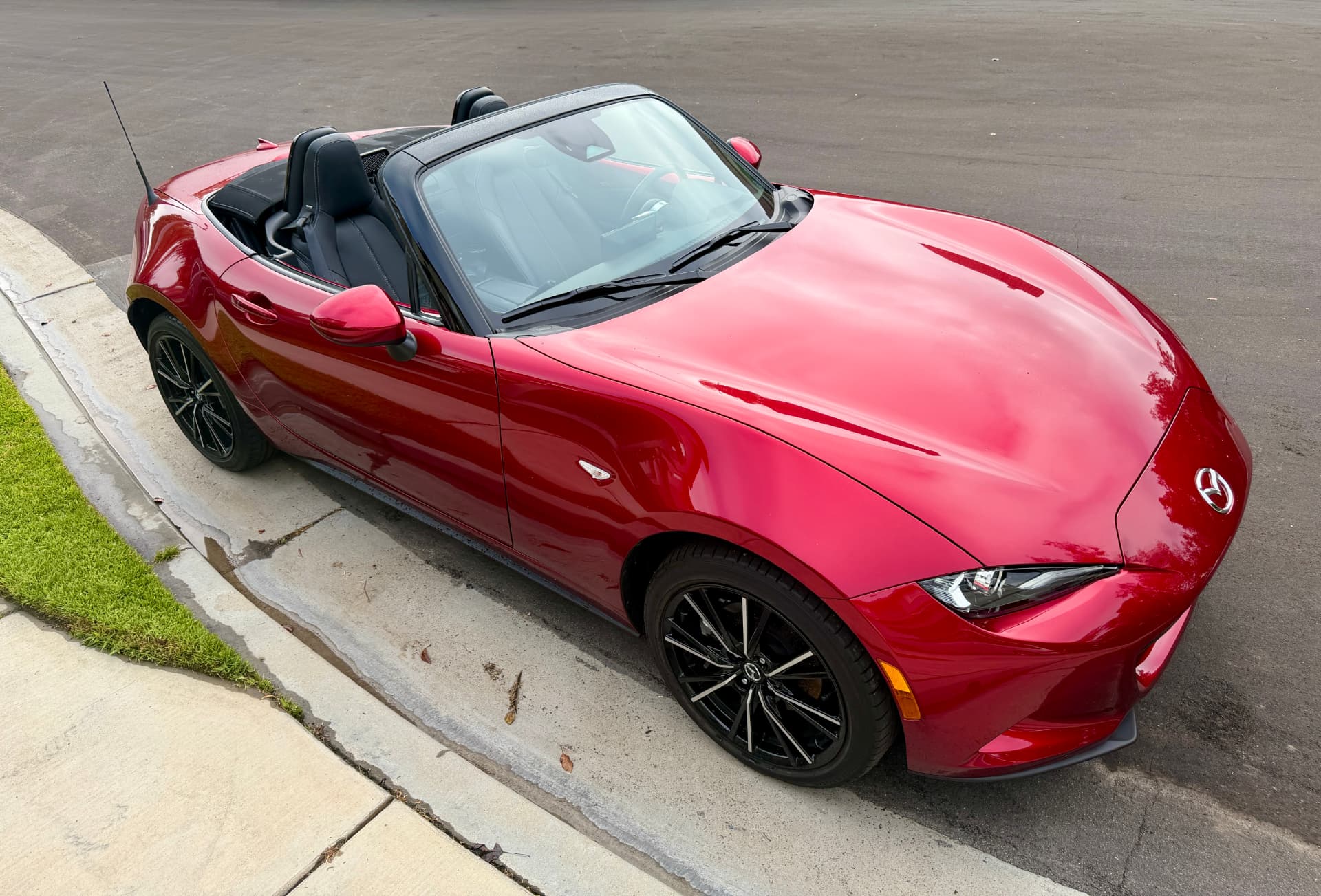
The Mazda Miata is not especially powerful, luxurious, or technologically advanced. In a world of electric cars with instant torque, sophisticated driver assistance, and heart-stopping acceleration, it can almost seem old-fashioned.
That may be exactly why enthusiasts love it.
With a manual transmission, the Miata asks something from you. The clutch is not simply an extra pedal; it is part of a coordinated interaction between your left foot, right foot, right hand, ears and sense of timing.
Approaching a corner, you brake, depress the clutch, select a lower gear and briefly raise the engine speed so it matches the drivetrain when the clutch reconnects. Get the rev-match wrong and the car tells you immediately with a jerk or awkward surge. Get it right and the downshift almost disappears. The clutch comes out smoothly, the car stays balanced, and you accelerate through the corner in one flowing motion.
Doing it well can feel like mastering a musical instrument. At first, every action is separate and deliberate. Eventually, braking, clutching, blipping the throttle, shifting, turning and accelerating become one continuous sequence. Like playing a powerful passage of music, the satisfaction comes not simply from reaching the end, but from executing it beautifully yourself.
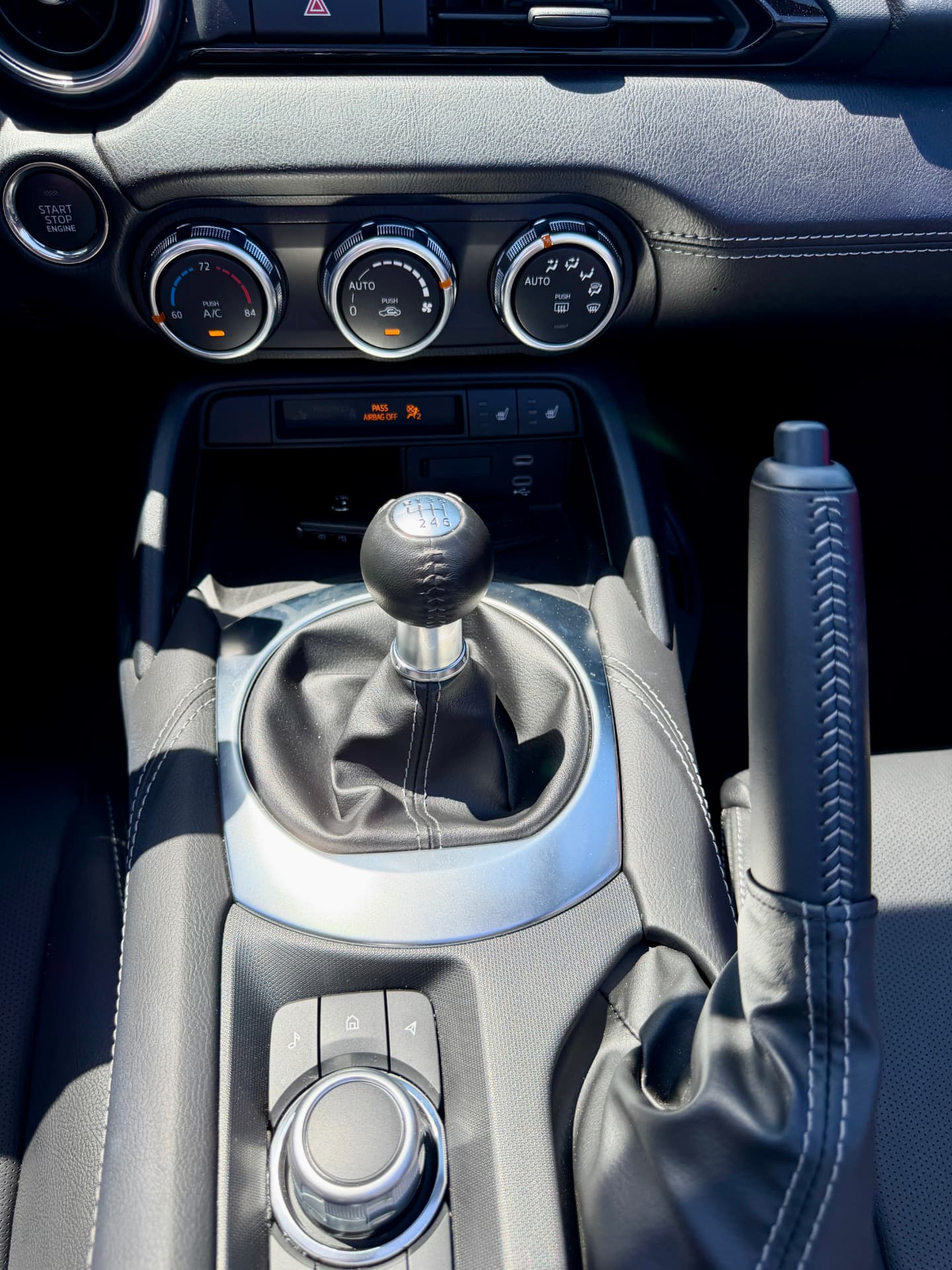
That gets at something fundamental about car enthusiasm: much of the pleasure may come not from what the car can do for us, but from what it asks us to learn to do.
A similar question arises in education and professional development with artificial intelligence. If learning is only about reaching the destination—producing the expected answer, finishing the assignment, or generating the report—AI can make that process much faster. But if learning is also about struggling with a problem, making mistakes, questioning assumptions, and developing judgment, then bypassing that process can mean reaching the answer without building the capability behind it. That is the risk of cognitive offloading: when technology repeatedly performs the difficult thinking, or takes the process of driving out of the driver, we get less practice doing it and less appreciation of it ourselves.
An automatic rev-matching transmission can make every downshift perfect. Objectively, that is better. But the driver never experiences being bad at rev-matching, gradually improving, and finally mastering it. The machine gives us the perfect shift, but it also takes away the satisfaction of learning how to make one.
Modern cars are faster, safer, quieter, and easier to drive. Automatic transmissions shift faster than humans. Stability systems correct mistakes. Adaptive cruise control manages speed and distance. Lane-centering systems reduce steering input. Electric motors deliver immense acceleration with little noise or vibration. These are remarkable engineering achievements, but each one can also remove human involvement.
That may help explain why a highly technological car can be thrilling at first but less emotionally memorable over time. Instant acceleration and automated features are exciting because they are novel. But novelty fades, and the extraordinary machine can eventually become an extraordinarily capable appliance.
Analog cars often do the opposite. Their imperfections demand participation. You learn their sounds, vibrations, limitations and rhythms.
The future car may do everything better than we can. And it may also divide the future of car enthusiasm into two camps: excitement for the technology and for driving. Or why not be in both!
Comments
Loading comments…