2026 Ford Bronco Big Bend
Consensus at a glance
- Consensus score
- Not yet rated
- Price
- $42,490 – $81,990
- Powertrain
- Gasoline
- Combined fuel economy
- 20 MPG
- Body type
- suv
.jpeg)
title
1. Quick Take
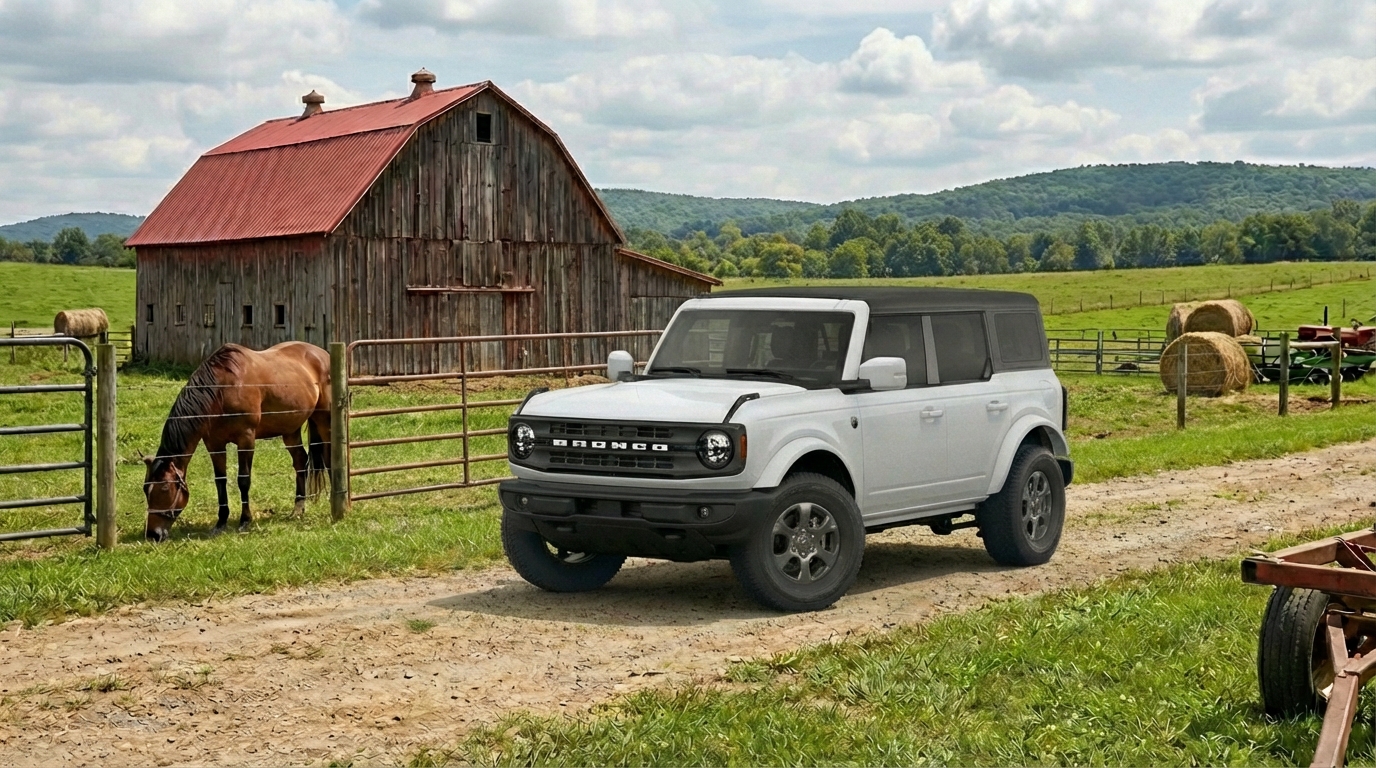
The 2026 Ford Bronco Big Bend is widely characterized by researchers as the lineup's "sweet spot," functioning as the volume-oriented trim that balances rugged engineering with daily drivability. Positioned between base models and high-performance iterations, it targets "active lifestyle" buyers who desire off-road capability without sacrificing pavement manners. A defining engineering feature is the Independent Front Suspension (IFS), which differentiates the Big Bend from the solid-axle Jeep Wrangler by offering superior steering precision and stability on the highway. While critics consistently note compromises like wind noise and utilitarian interior plastics, the Big Bend is praised for democratizing the open-air adventure experience. It successfully bridges the gap between a die-hard off-roader and a suburban commuter.
2. Its Main Competition
The competitive landscape for the 2026 Big Bend is dominated by two primary rivals: the Jeep Wrangler and the Toyota 4Runner. Against the Wrangler, the Bronco leverages its rack-and-pinion steering and independent front suspension to offer a more planted, civilized ride than the Jeep’s wandering solid-axle setup. Conversely, the comparison with the Toyota 4Runner shifts to a battle of "modern fun versus proven reliability." While the 4Runner wins on long-term durability and fixed-roof security, the Bronco counters with superior tech, a convertible open-air experience, and a more engaging turbocharged powertrain. Ultimately, the Big Bend splits the difference, proving more refined than a Wrangler on asphalt yet far more adventurous and modular than the aging Toyota.
3. Its Buyer’s Demographics
The demographic profile for the Big Bend skews toward a younger, affluent segment often described as "lifestyle" buyers rather than purely utility seekers. Research indicates the median age falls in the 30s to late 40s, with household incomes generally exceeding the national median to support the costs of travel and modifications. These owners are often "conquest" customers moving from premium brands, prioritizing a vehicle that projects an adventurous identity even if used primarily for commuting. Family status dictates the body style choice: the two-door model is popular with single professionals and "DINKs" (Double Income, No Kids), while the four-door variant serves small families requiring practical rear-seat access.
4. Design
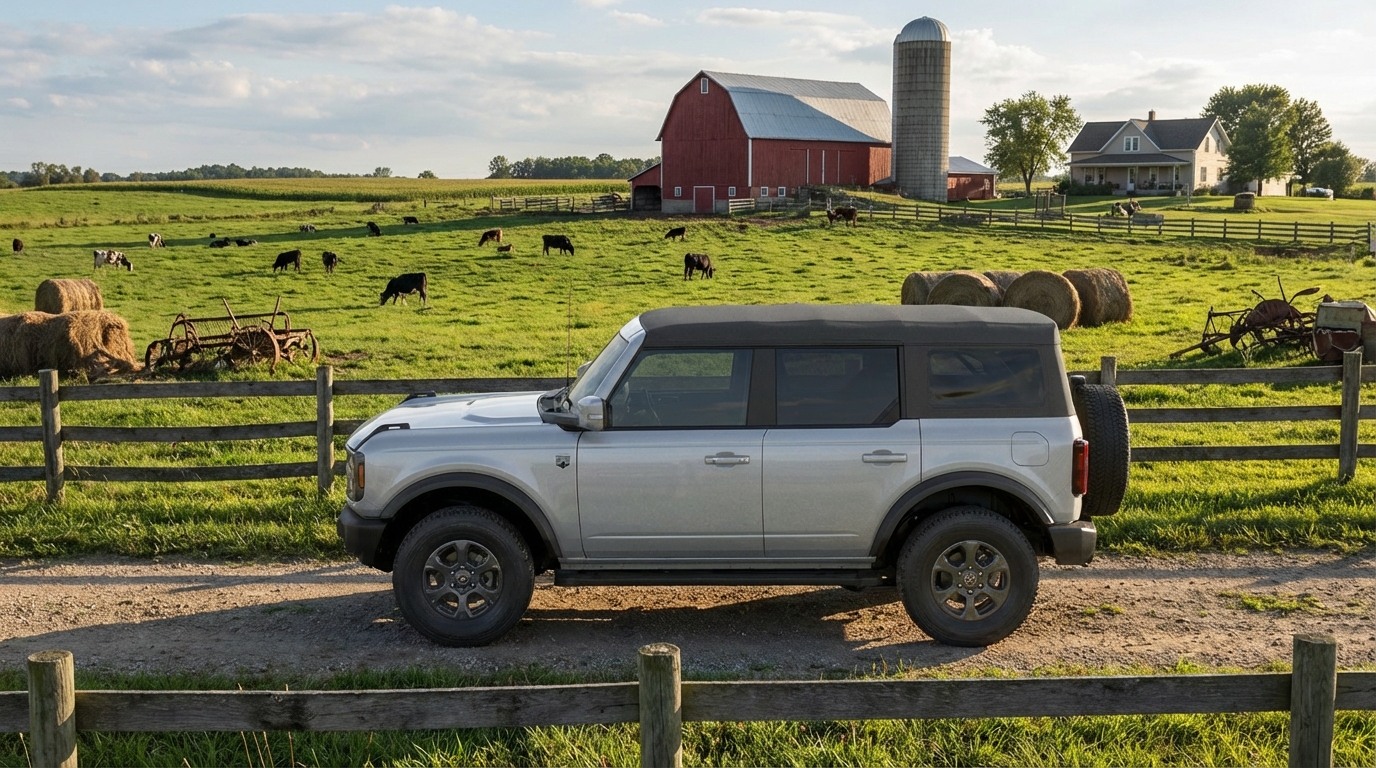
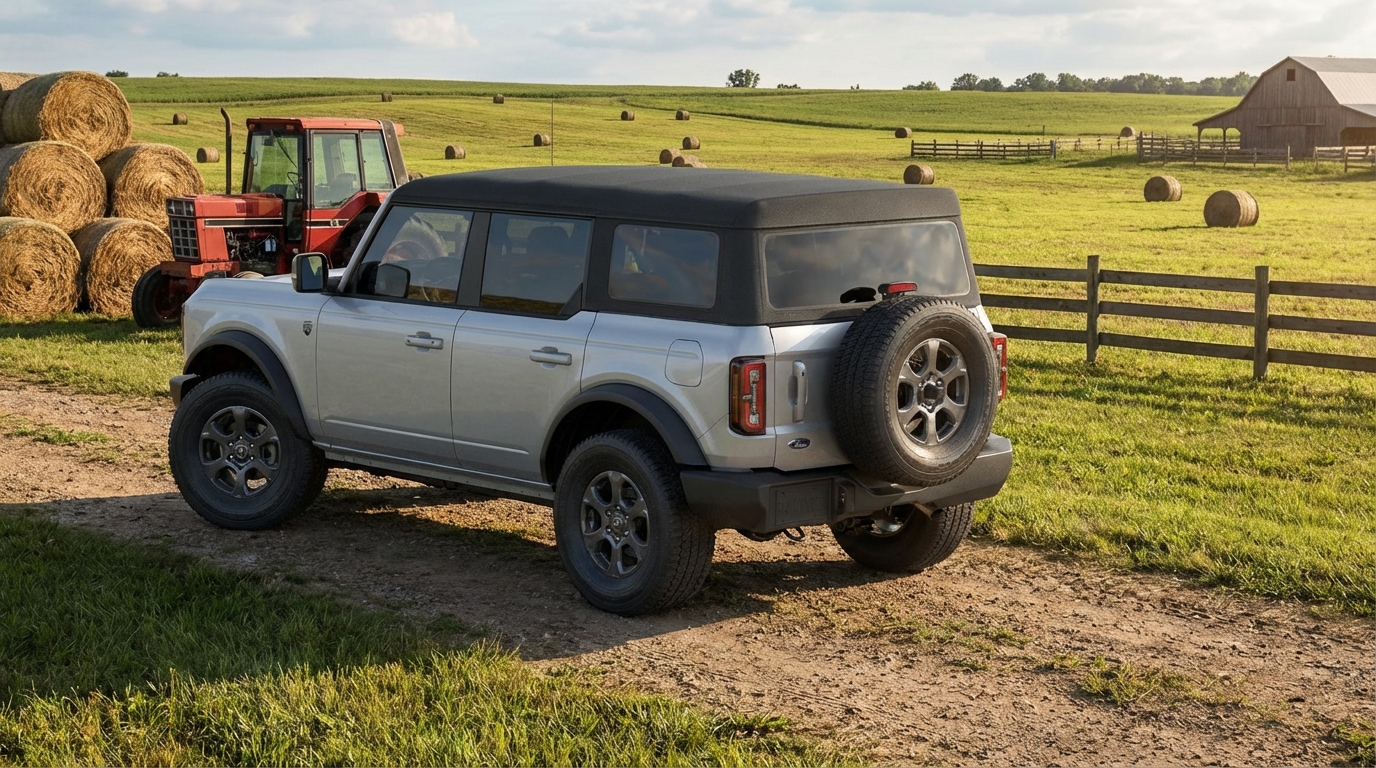
The design language of the 2026 Big Bend is celebrated as a masterclass in "retro-modern" styling, blending the boxy silhouette of the 1966 original with modern aerodynamics. Reviewers praise the "handsome utility" of the trim, which features 32-inch tires and Carbonized Gray accents that look purposeful rather than flashy. The defining feature is modularity; the ability to remove the roof and doors is central to its appeal, with frameless windows making storage easier than on competitors. Inside, the philosophy prioritizes rugged functionalism over luxury, utilizing large physical knobs and rubberized touchpoints designed for gloved operation. While critics argue the abundance of hard plastics feels cheap, the consensus defends these materials as essential to the vehicle's "wash-out" durability.
5. Interior & Cargo Room
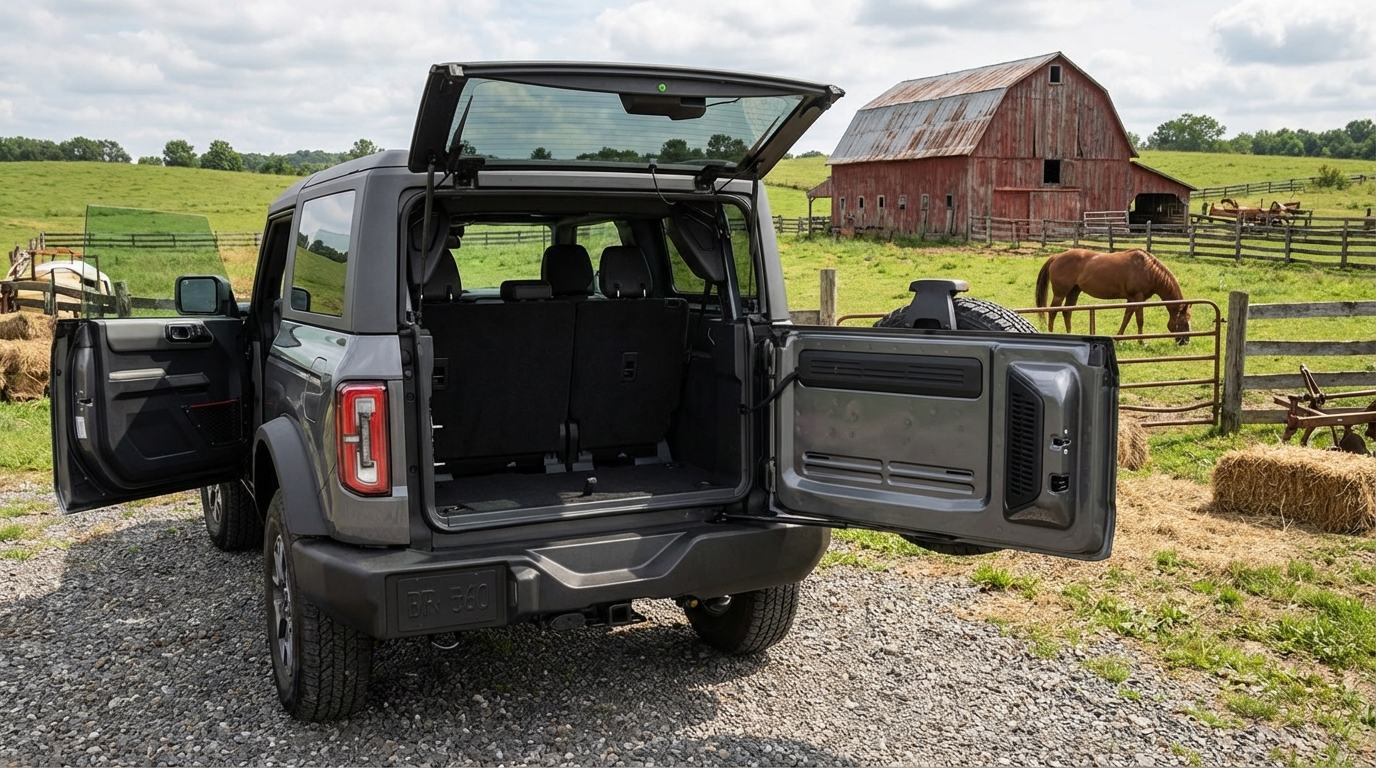
Discussions regarding interior space highlight a cabin that is airy and competitive, particularly regarding the abundant headroom provided by the tall, boxy roofline. Passenger comfort is superior to the cramped Jeep Wrangler, with the Bronco offering significantly more shoulder width and respectable rear legroom in the four-door model. Cargo capacity is generally strong, utilizing a square shape that is ideal for stacking camping bins or bulky gear. However, the utility of loading that cargo draws criticism due to the high liftover height and the swing-gate rear door, which opens toward the curb and requires substantial clearance. Despite these packaging quirks, features like the optional slide-out tailgate are frequently cited as clever additions that enhance the vehicle’s adventure readiness.
6. Ergonomics & Comfort
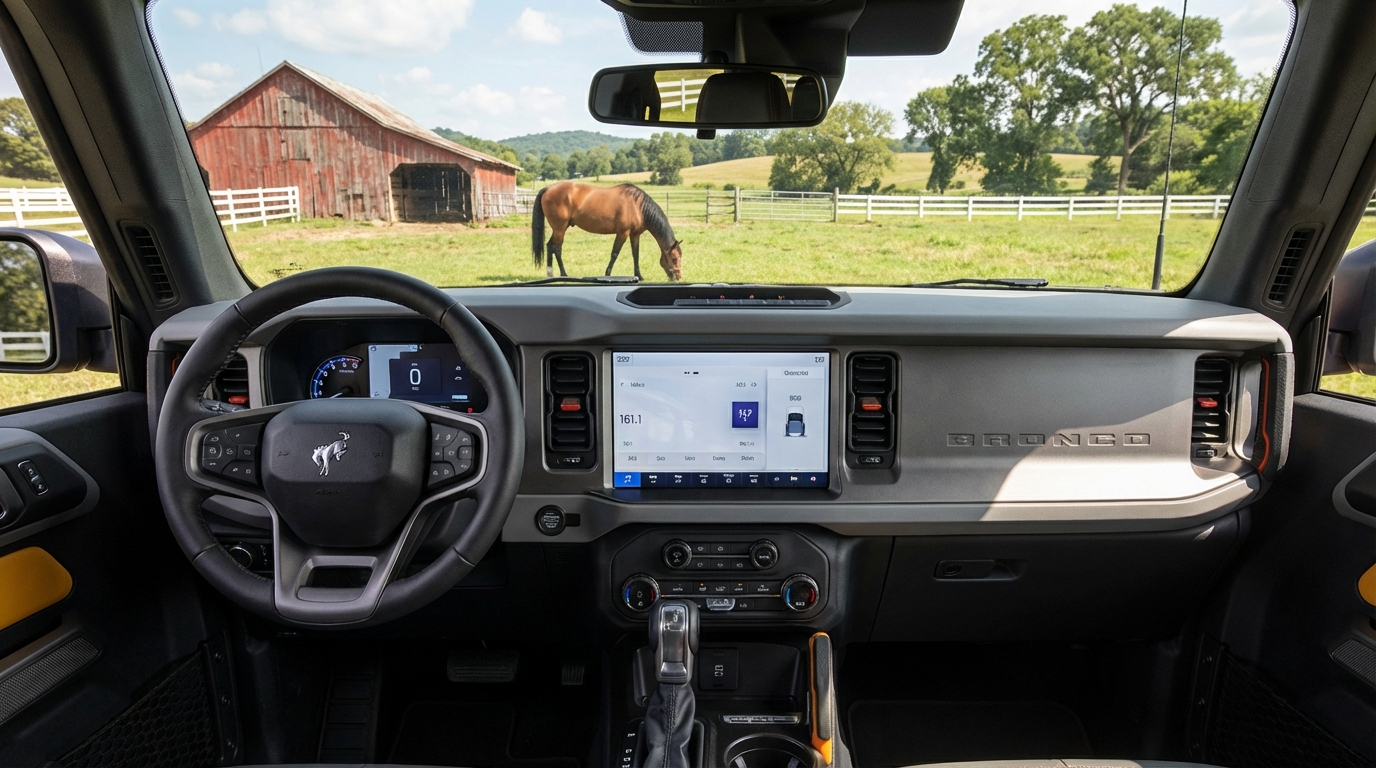
The ergonomic experience is defined by a "Command View" driving position, where the upright seating and "trail sights" on the fenders help drivers place the vehicle's corners with precision. Entering the cabin requires a significant step up, but strategically placed grab handles aid ingress. Once seated, the retention of large, physical knobs for volume and climate control is a major ergonomic win, allowing for adjustments without menu diving. However, muscle memory adjustments are required, particularly for the window switches located on the center console to facilitate door removal. Seat comfort is described as durable rather than plush, offering good support for trails but feeling somewhat firm and flat during long-distance highway cruising.
7. Interior, Fit & Finish
The consensus on the Big Bend’s interior quality is that it is "purpose-built" and durable, though lacking in traditional luxury. Materials lean heavily on hard, scratch-resistant plastics that fit the "wash-out" ethos of the truck but can feel underwhelming at the $40,000 price point. Fit and finish discussions are dominated by the realities of a modular vehicle; because the roof and doors are removable, the cabin lacks the air-tight silence of a fixed-roof SUV. Squeaks, rattles, and inconsistent panel gaps are frequently mentioned trade-offs for the open-air capability. Despite the noise, the switchgear and controls are praised for their assembly quality, offering a tactile robustness that feels substantial and mechanical.
8. Driver & Pass UX
The User Experience (UX) in the 2026 Big Bend is cited as a strong point, primarily due to the Ford SYNC 4 infotainment system. Reviewers consistently describe the interface as intuitive, with a logical card-based menu structure and a snappy 12-inch touchscreen that minimizes lag. Crucially, Ford is applauded for balancing digital tech with analog redundancy; the presence of physical buttons for essential functions allows drivers to make adjustments without taking their eyes off the road. Wireless Apple CarPlay and Android Auto connect reliably, modernizing the cabin significantly compared to older off-road platforms. Beyond entertainment, the digital instrument cluster and available off-road pages provide high-value technical data, making the environment feel like a modern tool rather than a compromise.
9. Sound System
The audio experience in the Big Bend is widely categorized as "adequate utility" rather than immersive entertainment. The standard sound system is tuned primarily for vocal clarity, making it acceptable for podcasts and news, but it struggles significantly with music fidelity. Reviewers note a lack of bass depth and richness, with high frequencies becoming tinny or harsh when the volume is pushed to compete with the environment. The biggest adversary to audio quality is the vehicle itself; the boxy aerodynamics and removable roof generate substantial wind noise that washes out the soundstage. To hear music clearly at highway speeds, drivers must often raise the volume to levels that induce distortion, making the system a weak point for audiophiles.
10. Acceleration
Powered by Ford’s 2.3-liter EcoBoost inline-four, the Big Bend is regarded as surprisingly competent, producing roughly 300 horsepower and ample low-end torque. This powertrain offers a distinct performance advantage over the naturally aspirated V6 found in the Jeep Wrangler, particularly when crawling or accelerating from a stop. Paired with the widely praised 10-speed automatic transmission, acceleration is smooth and linear, with zero-to-sixty times generally recorded in the respectable 7-second range. While some reviewers note a brief moment of turbo lag and describe the engine note as "industrial" rather than sporty, the power delivery is viewed as perfectly adequate for the vehicle's mission, offering a good balance of trail torque and highway merging power.
11. Braking
Braking performance for the Big Bend is characterized as "truck-like" and governed by the physics of a heavy, high-riding vehicle. Stopping distances from 60 mph generally land in the 130-140 foot range, which is average for the off-road class but requires more following distance than a standard crossover. "Nosedive"—the front of the vehicle dipping during hard stops—is a noticeable trait due to the long-travel suspension. The brake pedal feel is frequently described as soft or "progressive," a calibration intended to prevent wheel lockup on loose surfaces. While this setup is ideal for the trail, it can feel spongy on the street, requiring drivers to adjust to the long pedal travel and the sensation of weight transfer.
12. Handling
The defining characteristic of the Bronco Big Bend’s handling is its Independent Front Suspension (IFS), which makes it far more stable and civilized on the highway than the solid-axle Jeep Wrangler. It tracks straight and requires fewer micro-corrections to stay in a lane, providing a planted feel that reduces driver fatigue. Steering is described as electrically assisted and medium-effort, making the vehicle easy to maneuver in parking lots despite its size. While body roll is distinct in corners due to the vehicle's height, it is controlled and predictable. Ultimately, the Big Bend handles like a refined truck, offering a tight turning circle and manageable urban dynamics that represent a massive leap forward for the off-road segment.
13. Interior Noise
There is no sugarcoating the consensus on this topic: the 2026 Bronco Big Bend is a loud vehicle. The combination of a vertical windshield, blocky mirrors, and a removable roof creates a perfect storm for wind noise that becomes dominant at freeway speeds. Road noise from the standard all-terrain tires adds a constant hum, and the lack of a fixed roof structure means acoustical isolation is significantly compromised compared to unibody SUVs. Conversations between front and rear passengers often require raised voices at 70 mph. Owners generally accept this auditory intrusion as the "convertible tax"—the unavoidable cost of driving an open-air off-roader that prioritizes fun over the library-quiet refinement of a traditional crossover.
14. Ride Quality
The ride quality of the Big Bend is a tale of two environments: stable but "busy" on the highway, yet exceptional on broken pavement. The body-on-frame construction transmits minor vibrations from expansion joints that unibody vehicles typically filter out, creating a ride that reacts rather than floats. However, the tall sidewalls and generous suspension travel allow the Bronco to absorb potholes, speed bumps, and crumbing asphalt with indifference. Where a sportier SUV would jar occupants, the Bronco simply thuds firmly and continues. It offers a "rugged comfort" that is compliant enough to make navigating deteriorating urban infrastructure stress-free, avoiding the side-to-side "head toss" often associated with solid-axle competitors.
15. Driver Assist Systems
The 2026 Bronco Big Bend comes well-equipped with Ford’s Co-Pilot360 suite, which is viewed as a strong value add that brings modern safety to a traditionally low-tech segment. Reviewers and owners agree that the Blind Spot Information System (BLIS) is not just a luxury but a necessity, given the thick pillars and rear-mounted spare tire that obstruct visibility. While the Lane-Keeping System receives mixed reviews for occasionally fighting the driver in windy conditions, features like Pre-Collision Assist and the available Adaptive Cruise Control are praised for their smooth operation. Overall, this technology provides a vital safety net, making the massive vehicle feel manageable in heavy traffic and significantly safer than legacy off-roaders.
16. Mileage
Fuel economy is universally cited as the Bronco Big Bend’s Achilles' heel, as the laws of physics regarding aerodynamics and weight work against it. The 2.3-liter EcoBoost engine typically returns EPA estimates of around 20 mpg combined, though real-world numbers often dip into the teens if roof racks or aggressive tires are added. The boxy shape incurs a heavy fuel penalty at highway speeds due to drag, making it significantly thirstier than unibody crossovers or hybrid competitors. While comparable to the gas-powered Jeep Wrangler, the consensus is that buyers must accept poor mileage and frequent fuel stops as the inevitable cost of driving a capable, brick-shaped off-roader.
17. Safety
The safety narrative for the Big Bend combines strong active technology with the inherent realities of its class. The standard Co-Pilot360 suite gives it a technological edge over base competitors, proactively helping to prevent accidents. In terms of crashworthiness, the high-strength steel frame generally performs well in frontal and side-impact tests, though the vehicle’s high center of gravity results in a higher rollover risk than car-based SUVs. Additionally, because the doors and roof are removable, the Bronco lacks the continuous structural rigidity of a sealed crossover. Ideally, it is viewed as "safe for a convertible truck," offering security through mass and tech, even if physics limits its passive safety scores compared to a Volvo.
18. Pricing
The 2026 Bronco Big Bend is not a budget vehicle, with pricing typically starting in the mid-$40,000 range once high destination charges are factored in. Reviewers note that the price can climb rapidly with options, often pushing the sticker near $50,000 for a well-equipped model. The vehicle carries a perceived "lifestyle tax," where buyers pay a premium for the image, convertible roof, and off-road hardware rather than for interior luxury. Comparison is critical here: while competitively priced against the Jeep Wrangler, the Bronco offers less refinement and fewer features than mainstream crossovers like the Kia Telluride. Consequently, the price is considered justified only if the buyer inherently values the open-air capability and rugged hardware.
19. Value
Despite the high entry price, the Big Bend is considered a financial heavyweight regarding resale value, consistently ranking near the top of the industry for retention. Depreciation is remarkably slow compared to typical SUVs, meaning that while it costs more to buy, it serves as a better store of value over time. In terms of the lineup, it is viewed as the "sweet spot," providing the core Bronco experience—the look, the 32-inch tires, and the tech—without the exorbitant price tag of the high-performance trims. For buyers who utilize the convertible features and off-road capability, the value proposition is high; it offers an "intangible" enjoyment and equity retention that standard commuter cars cannot match.
20. Reliability
Reliability predictions for the 2026 Big Bend are characterized as "mixed" but mechanically sound. The core drivetrain—the 2.3-liter EcoBoost engine and 10-speed transmission—is widely regarded as robust and proven, having seen years of service in other Ford vehicles without catastrophic flaws. However, "reliability" complaints frequently center on build quality related to the modular design, such as roof leaks, wind whistles, and rattling panels. Compared to the Toyota 4Runner, the Big Bend is viewed as less bulletproof, but it is roughly on par with the Jeep Wrangler. The consensus is that while the truck will likely run forever mechanically, owners should expect and tolerate the minor "character" flaws inherent to a convertible off-roader.
Frequently asked questions about the 2026 Ford Bronco Big Bend
Is the 2026 Ford Bronco Big Bend worth buying?
The 2026 Ford Bronco Big Bend is widely characterized by researchers as the lineup's "sweet spot," functioning as the volume-oriented trim that balances rugged engineering with daily drivability. Positioned between base models and high-performance iterations, it targets "active lifestyle" buyers who desire off-road capability without sacrificing pavement manners. A defining engineering feature is the Independent Front Suspension (IFS), which differentiates the Big Bend from the solid-axle Jeep Wrangler by offering superior steering precision and stability on the highway. While critics consiste
How much does the 2026 Ford Bronco Big Bend cost?
The 2026 Ford Bronco Big Bend is priced at $42,490 – $81,990, before destination, options, and incentives.
What is the fuel economy of the 2026 Ford Bronco Big Bend?
The 2026 Ford Bronco Big Bend returns 20 MPG combined per published EPA figures.
How this review is produced
moblr meta-reviews are generated by aggregating multiple published expert road tests using AI consensus and sentiment analysis, then read and reviewed by a human editor before publication. Category ratings on the −50 to +50 scale show how each vehicle compares to the average for its segment. Learn more about the moblr review process.