2026 Ford Explorer Active AWD
Consensus at a glance
- Consensus score
- Not yet rated
- Price
- $38,465 – $54,905
- Powertrain
- Gasoline
- Combined fuel economy
- 23 MPG
- Body type
- suv
title
1. Quick Take
The 2026 Ford Explorer Active AWD is a mainstream, three-row midsize SUV targeting the competitive family-hauler segment. A key differentiator is its rear-wheel-drive-based architecture, which provides a more balanced and confident driving character than most front-drive rivals. Praise consistently centers on its powerful standard turbocharged engine, offering robust acceleration. However, the Explorer is considered a competent contender rather than a definitive class leader. Recurring criticisms point to a third-row seat that is less accommodating for adults than in key competitors like the Kia Telluride and Hyundai Palisade. While the cabin is now more technologically advanced with a new digital cockpit, its material quality is often seen as a step behind the near-luxury ambiance found in its top Korean rivals.
2. Its Main Competition
The Explorer Active AWD competes in a crowded field against rivals like the Kia Telluride, Hyundai Palisade, Toyota Grand Highlander, and Honda Pilot. Its RWD-based platform, shared with the Jeep Grand Cherokee L, offers a more engaging driving feel and contributes to strong towing capabilities, a key distinction from its FWD-based competitors. The Explorer’s standard turbocharged engine provides more power than the V6 offerings in the Telluride and Pilot. However, it faces intense competition from the Telluride and Palisade, which are lauded for their upscale, near-luxury interiors. In terms of sheer space, segment leaders like the cavernous Chevrolet Traverse and Toyota Grand Highlander offer more generous third-row legroom and greater cargo capacity, representing a significant challenge for the Explorer.
3. Its Buyer’s Demographics
The typical buyer for a 2026 Ford Explorer Active AWD is a mainstream American household, often residing in suburban or rural areas. These buyers are generally between 35 and 55, a life stage associated with growing families, and have household incomes in the middle to upper-middle class, ranging from $80,000 to $150,000. Prioritizing practicality, all-weather AWD capability, and the security of a new vehicle with a full warranty, they need the flexibility of three rows for children and daily an active lifestyle. Many exhibit loyalty to the Ford brand, graduating from smaller Ford SUVs or continuing a family tradition. This demographic values the Explorer’s perceived durability and recognizable road presence as a trusted solution for their transportation needs.
4. Design
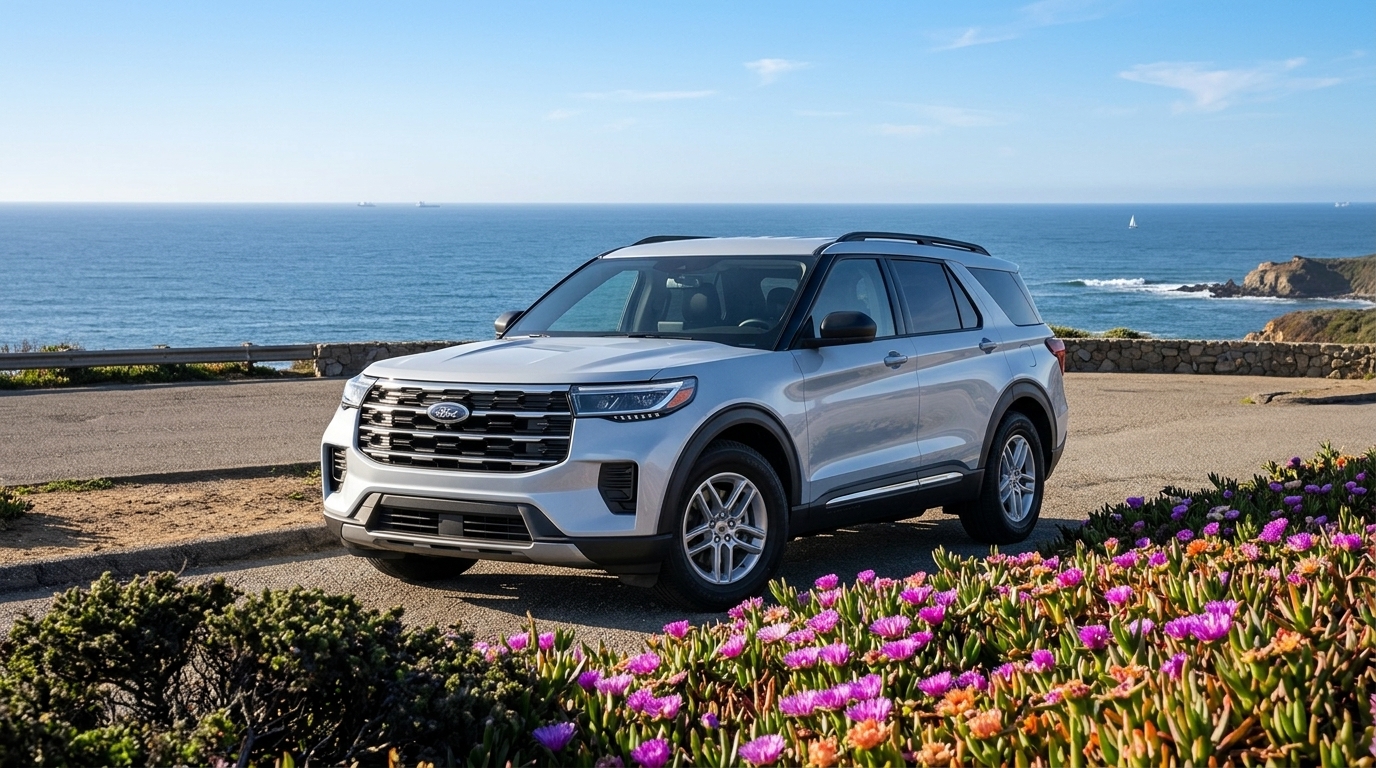
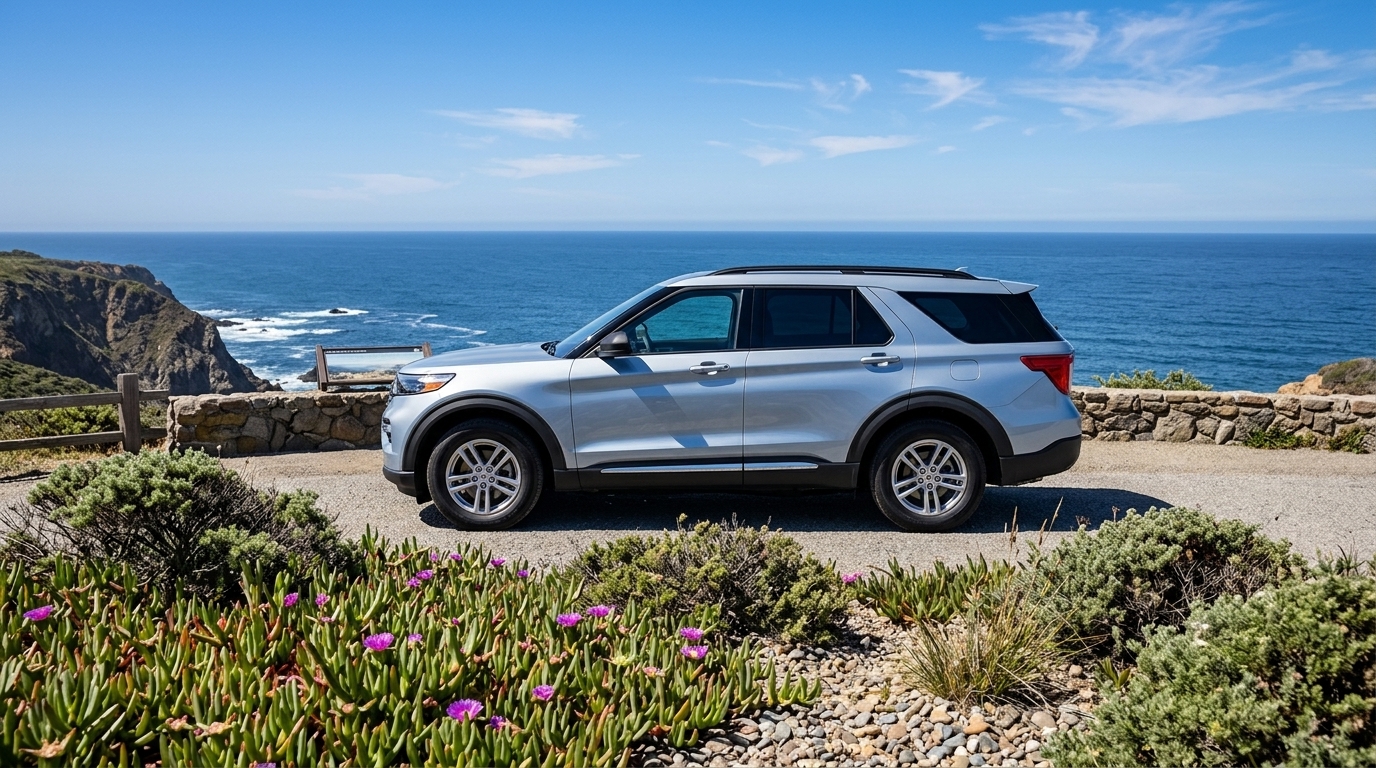
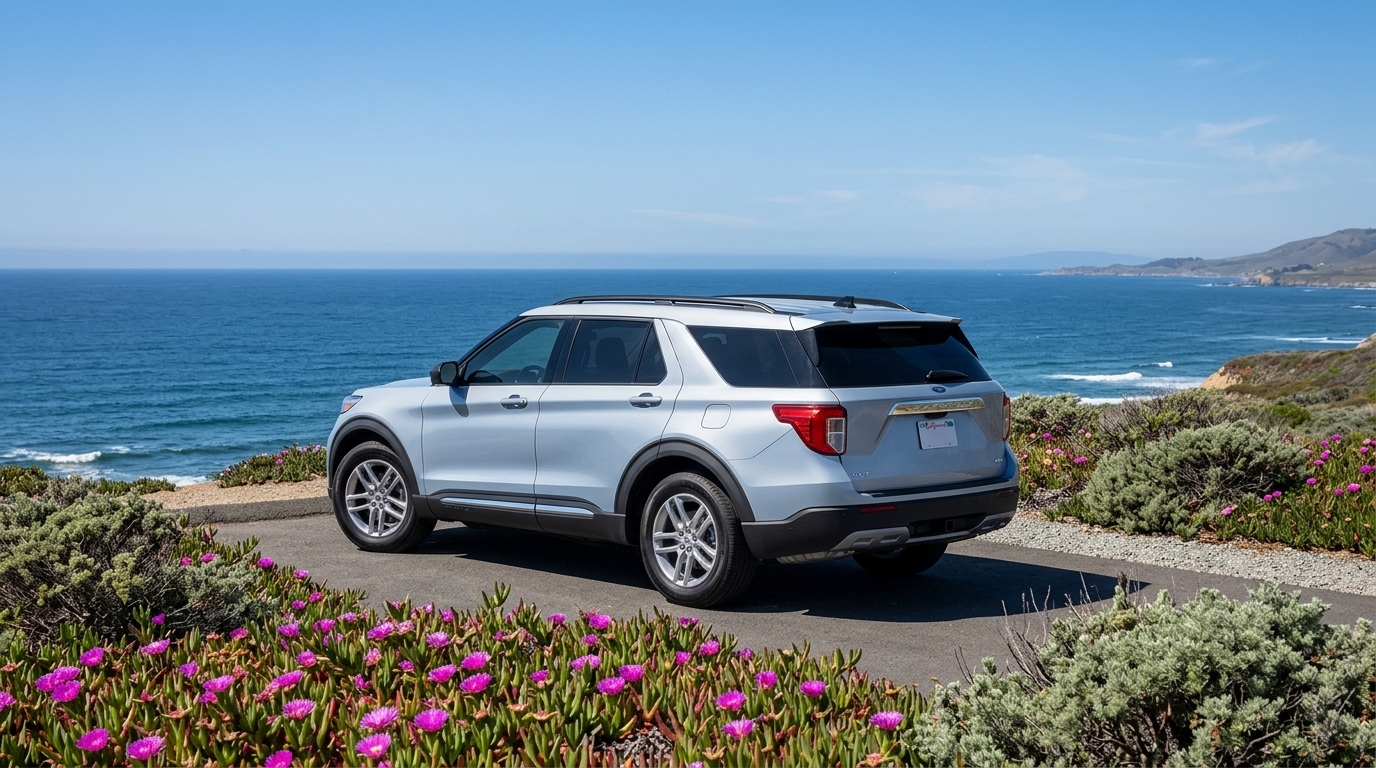
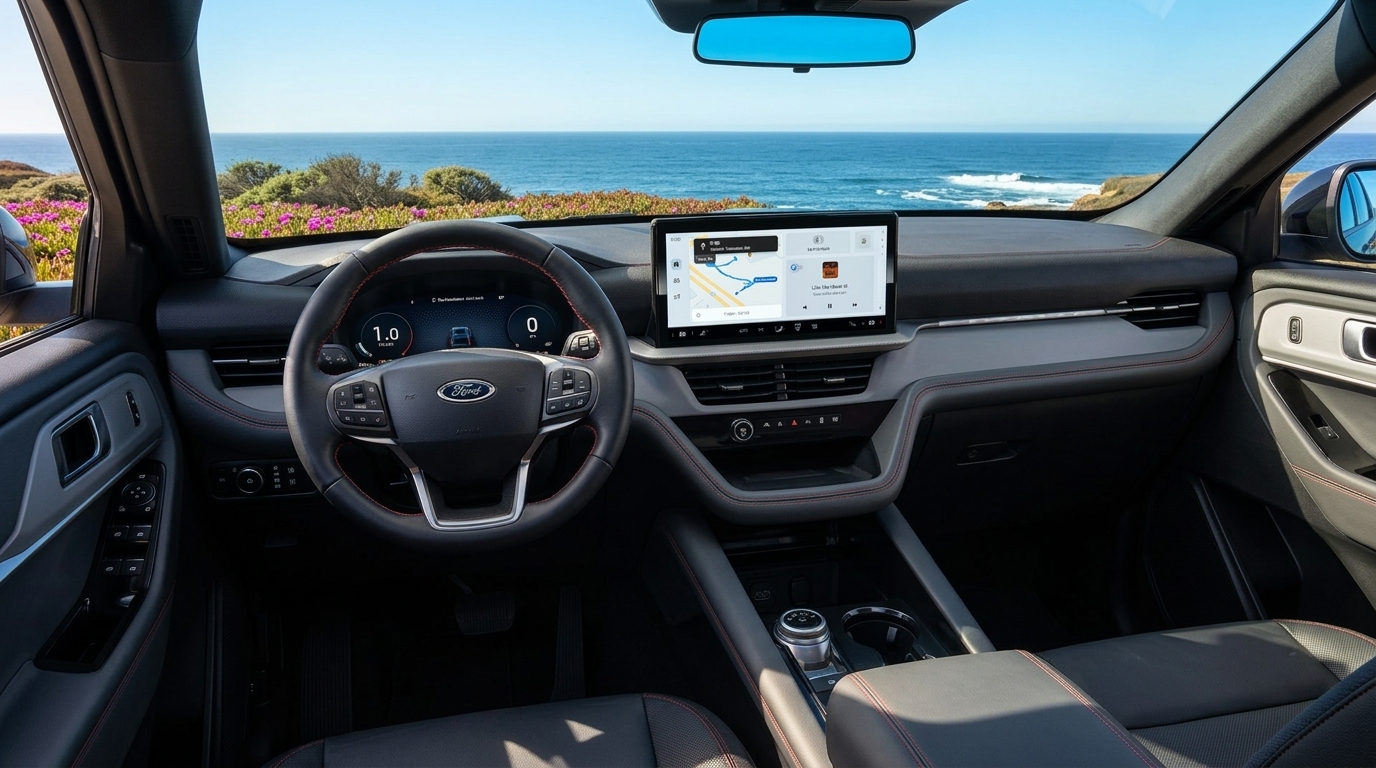
The 2026 Explorer’s design blends traditional SUV assertiveness with modern style, featuring a prominent grille and sleek LED headlights. Its RWD-based proportions give it a more athletic, less van-like silhouette than many rivals, projecting a handsome and capable road presence. Inside, the major 2025 refresh brought a significant technological leap forward with a cleaner, more open dashboard dominated by a large standard touchscreen and digital cluster. This tech-forward layout is a huge improvement. However, while the screens are modern, a point of contention is the continued use of hard plastics on lower interior surfaces, which makes the cabin feel more utilitarian and less upscale compared to the premium-feeling materials found abundantly in competitors from Kia, Hyundai, and Mazda.
5. Interior & Cargo Room
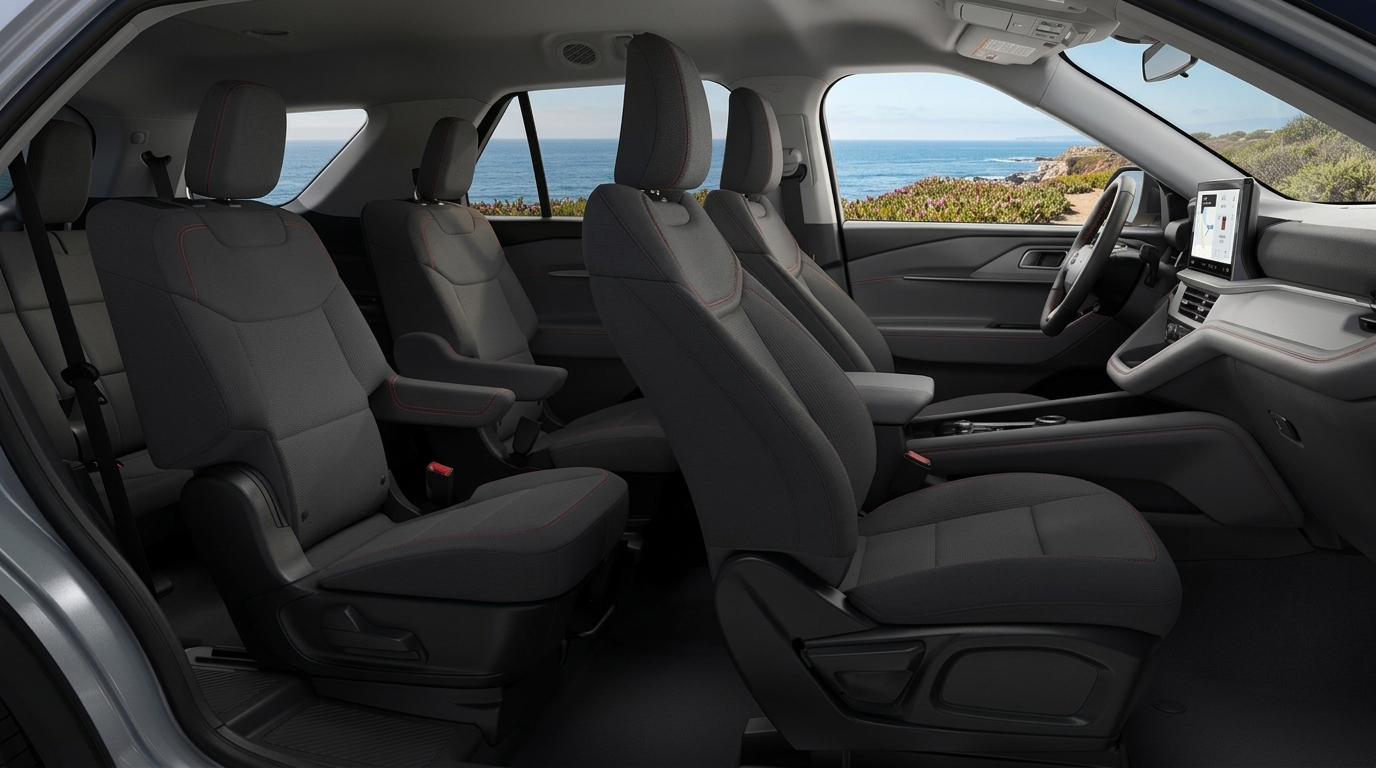
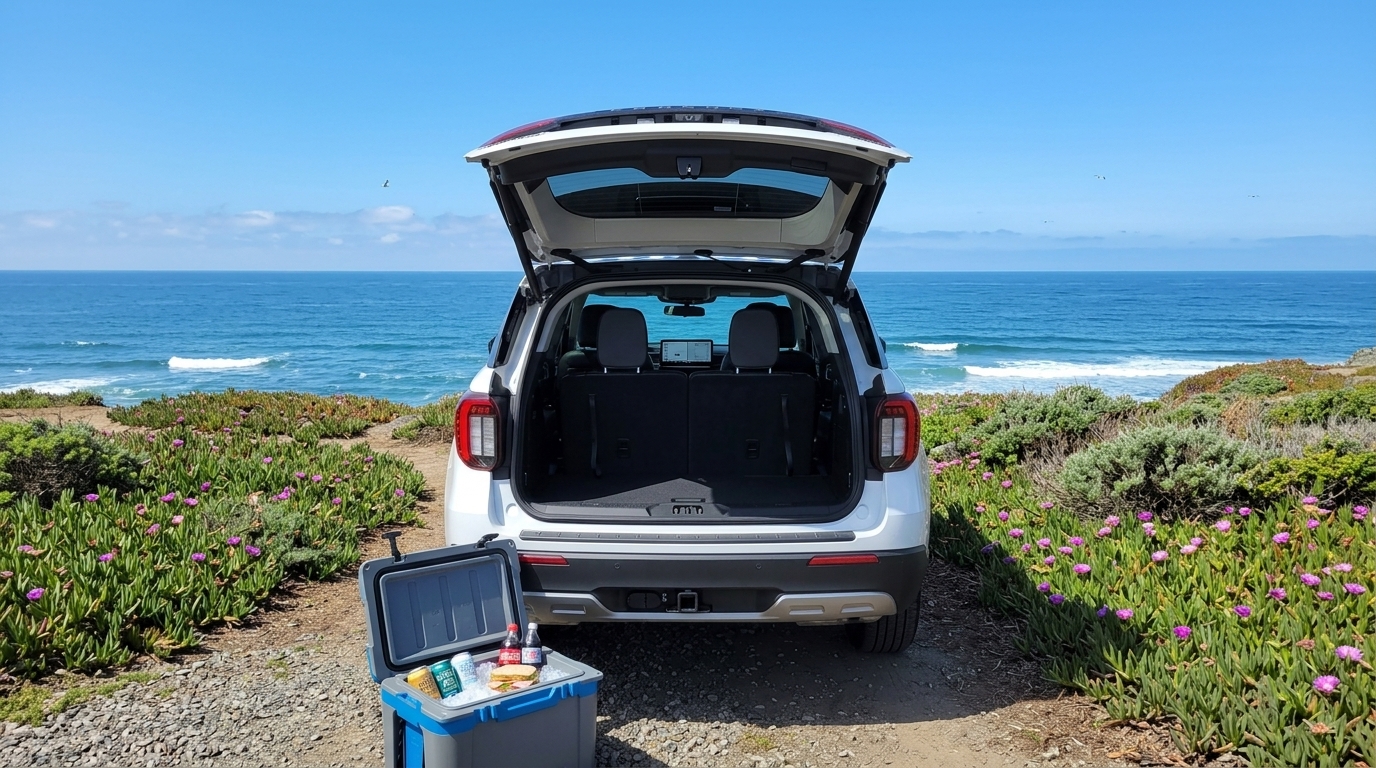
The Explorer Active AWD is considered competent in its use of interior space, but it is not the class leader. The first and second rows offer ample room and comfort for adults, accommodating taller occupants well. The primary criticism consistently falls on the third row, which is noticeably tighter than in segment leaders like the Chevrolet Traverse or Toyota Grand Highlander. While suitable for children, it is best reserved for short trips for adults. This theme extends to cargo capacity, where space behind the upright third row is adequate for daily errands but less generous than what top rivals offer. With all seats folded, the total cargo volume is substantial and practical, but still falls short of the most space-efficient competitors in the segment.
6. Ergonomics & Comfort
The Explorer delivers a largely comfortable and user-friendly cabin. The driving position is a high point, offering a commanding view and ample adjustability. The redesigned dashboard enhances the feeling of spaciousness for front passengers. Seat comfort in the Active trim is rated as good, with supportive front seats suitable for long trips. A standout strength is storage, with numerous cupholders and a capacious center console bin. While the tech-forward layout is modern, some may find reaching the far side of the large central screen a stretch. Outward visibility is good to the front, but like many modern SUVs, thick rear pillars make the standard rearview camera and blind-spot monitoring essential aids for confident maneuvering.
7. Interior, fit & finish
Ford’s interior for the Explorer presents a mix of commendable build quality and merely adequate material choices. Following its recent redesign, the dashboard features more soft-touch materials on key touchpoints, an improvement over previous models. However, critics consistently point to the abundance of hard, scratchy plastics used on lower door panels and the center console, which contrasts with the near-luxury feel of rivals like the Kia Telluride and Mazda CX-90. Where the Explorer earns praise is in its assembly. Panel gaps are typically tight and consistent, and the interior components feel securely fastened with little evidence of squeaks or rattles. The Explorer feels tangibly sturdy and well-built, prioritizing durability over the premium material richness that defines the top interiors in its class.
8. Driver & Pass UX
The user experience is dominated by the new "Ford Digital Experience," an infotainment system built on Google’s Android Automotive OS. Displayed on a crisp 13.2-inch touchscreen, the system is praised for its fast response, intuitive smartphone-like interface, and minimal lag. A major highlight is the native integration of Google Maps and Google Assistant, the latter of which provides best-in-class voice command accuracy for navigation, climate, and media functions. While the system is a massive leap forward, its screen-centric nature and deep customizability may have a slight learning curve for less tech-savvy users. The ability to stream video or use a web browser while parked adds unique functionality, setting it apart from many competitors.
9. Sound System
The standard six-speaker audio system in the Explorer Active trim is consistently described as adequate but unremarkable. It performs capably for spoken-word content like podcasts and audiobooks, rendering voices with sufficient clarity for daily commuting. For music, however, its limitations become apparent. Reviewers note that the sound profile lacks dynamic range, with bass that is present but not deep or impactful and high frequencies that can sound compressed at higher volumes. The overall soundstage feels narrow, failing to create an immersive listening experience. Compared to standard systems in rivals, it is considered average, neither offending nor impressing. A truly high-quality audio experience requires upgrading to a higher trim with the available premium B&O sound system.
10. Acceleration
The Explorer Active’s acceleration is a key strength, thanks to its standard 2.3-liter EcoBoost turbocharged four-cylinder engine. Delivering a robust 300 horsepower and 310 lb-ft of torque, it feels punchy and responsive in everyday driving, pulling strongly from low RPMs for confident merging and passing. Independent testing places its 0-60 mph time in the mid-6-second range, which is quicker than many V6-powered rivals. The 10-speed automatic shifts smoothly but can occasionally hesitate as it shuffles through gears to maximize efficiency. A common critique is the engine's sound; while powerful, it can sound coarse and strained under hard acceleration, lacking the smoother note of a six-cylinder. Overall, the powertrain provides impressively strong and accessible performance for the segment.
11. Braking
Braking performance in the Explorer Active AWD is considered confident and competitive for its class. Instrumented emergency braking tests from 60 mph consistently yield stopping distances in the 120- to 130-foot range, which is average for a three-row SUV and on par with key rivals. The system provides stable, drama-free deceleration even during hard stops. The brake pedal feel is tuned for daily driving, with a progressive and easy-to-modulate response that allows for smooth stops in traffic. Some critics note a slightly soft initial pedal feel compared to the sharper bite of competitors like the Kia Telluride, but the pedal firms up predictably to deliver strong stopping power. The overall consensus is that the brakes are reassuringly effective and easy to manage in real-world driving.
12. Handling
The Explorer's rear-wheel-drive-based architecture gives it a handling character that feels more planted, stable, and responsive than many front-drive-based competitors. On the highway, it feels composed and secure, tracking straight with minimal steering corrections required. The steering is quick and responsively weighted, making the large vehicle feel surprisingly maneuverable, though it offers little in the way of road feedback. Body roll is well-controlled for a tall SUV, inspiring confidence on sweeping turns without the wallowing motions of softer rivals. While its size is always apparent in tight city spaces and its turning circle is average, the Explorer delivers secure, predictable, and reassuringly competent road manners that prioritize confident family transport over playful engagement.
13. Interior Noise
The Explorer’s cabin offers a generally quiet environment, particularly during steady highway cruising. Wind noise is well-managed, thanks to features like acoustic-laminate front glass, and road noise is effectively suppressed on most surfaces, allowing for easy conversation between rows. This level of quietness is competitive with key rivals. However, the most prominent source of interior sound is the 2.3-liter EcoBoost engine during hard acceleration. When pushed to merge or pass, the engine becomes clearly audible and its character is often described as more coarse and unrefined than the smoother-sounding V6 engines in some competitors. While the Explorer provides a comfortable and serene highway experience, it does not completely isolate occupants from the sounds of its powertrain working hard.
14. Ride Quality
The Explorer’s ride quality prioritizes composed handling, resulting in a firm but stable feel. On the freeway, this translates to a planted and confident demeanor, resisting the floaty motions of softer SUVs and remaining unfazed by crosswinds or gentle road undulations. This well-managed body control is a key strength for long-distance cruising. In the city, this firmness is more apparent. While it handles minor imperfections well, the ride can feel somewhat busy over rough, pockmarked roads, transmitting sharper impacts into the cabin with a pronounced thump. The suspension manages speed bumps with authority, quickly damping rebound without secondary wallowing. The ride favors a substantial, disciplined feel over maximum cushiness, a trade-off some may find too firm compared to the plushest competitors.
15. Driver Assist Systems
The Explorer Active is equipped with the Ford Co-Pilot360 Assist+ suite, a comprehensive package of driver-assistance systems widely regarded as robust and competitive. The Adaptive Cruise Control with Stop-and-Go is praised for its smooth, natural-feeling speed modulation in traffic. The Lane-Keeping System works well on clearly marked highways, reducing driver fatigue with meaningful steering support. A major highlight is the availability of BlueCruise, Ford's hands-free highway driving system, which is consistently lauded as one of the best of its kind for its smooth operation. While all systems require an attentive driver, the overall consensus is that the Explorer’s technologies are a valuable asset, delivering strong everyday performance that meets or exceeds modern expectations.
16. Mileage
Fuel efficiency for the 2026 Explorer Active AWD is considered average for its class. The standard 2.3-liter turbocharged four-cylinder with all-wheel drive is expected to achieve EPA ratings around 20 mpg city, 27 mpg highway, and 23 mpg combined. These figures are competitive with other non-hybrid, gasoline-powered rivals like the Honda Pilot and Kia Telluride, placing the Explorer firmly in the middle of the pack. However, it cannot match the significantly higher combined MPG offered by hybrid competitors, most notably the Toyota Highlander Hybrid and Grand Highlander Hybrid. For buyers prioritizing the lowest possible fuel costs, those hybrid alternatives are superior choices. The Explorer’s mileage is acceptable for its segment but is not a standout strength.
17. Safety
The Explorer’s safety profile is a story of two parts: excellent active safety technology and a more mixed structural crash test record. It comes standard with the comprehensive Ford Co-Pilot360 suite, including automatic emergency braking, blind-spot monitoring, and lane-keeping assist, which are all praised for their effectiveness. However, in crashworthiness testing, its performance has been inconsistent. While it has historically earned a 5-Star overall rating from NHTSA, it has struggled to earn top marks from the IIHS in some of their newer, more stringent frontal overlap tests. This has often prevented it from receiving the coveted Top Safety Pick awards achieved more consistently by rivals like the Kia Telluride and Toyota Highlander, placing it at a disadvantage for safety-conscious buyers.
18. Pricing
The Explorer Active AWD is positioned in the heart of its segment, but a recent trim restructure makes the well-equipped Active model the new entry point. Its starting MSRP, projected to be in the low-to-mid $40,000s, is noticeably higher than the base prices of rivals like the Kia Telluride and Honda Pilot. While this higher entry price is a disadvantage for budget shoppers, the Active trim includes a powerful engine, AWD, and a large digital cockpit as standard. When compared against similarly equipped mid-level trims from competitors, its price is considered fair and competitive. Final value often depends on Ford's frequently available incentives, which can make its transaction price more attractive than its sticker price might suggest.
19. Value
The Explorer’s value proposition is complex. On one hand, its powerful standard engine and modern tech suite offer strong upfront appeal, and Ford’s incentives can make its transaction price competitive. On the other hand, it often struggles against Korean rivals on a pure features-per-dollar basis, as they frequently offer more convenience features and premium materials for a similar price. In the long term, the Explorer’s value is clearer: it has historically demonstrated average to below-average resale value, depreciating faster than perennial leaders like the Toyota Highlander and Honda Pilot, as well as the popular Kia Telluride. An Explorer can be a good buy upfront if the price is right, but it is not the resale value champion of its class.
20. Reliability
Reliability is a significant and frequently cited concern for the Ford Explorer. Based on the track record of the current generation, owner surveys and consumer organizations like Consumer Reports and J.D. Power have consistently assigned it below-average reliability ratings. This places it at a clear disadvantage against class leaders like the Toyota Highlander and Honda Pilot, which are renowned for their dependability. Historically, common complaints have centered on the 10-speed automatic transmission and a variety of electronic glitches with the infotainment system and other power features. While Ford may have addressed some issues in the recent refresh, the platform's history suggests a higher-than-average risk of problems, making reliability a crucial point of consideration for potential buyers.
Frequently asked questions about the 2026 Ford Explorer Active AWD
Is the 2026 Ford Explorer Active AWD worth buying?
The 2026 Ford Explorer Active AWD is a mainstream, three-row midsize SUV targeting the competitive family-hauler segment. A key differentiator is its rear-wheel-drive-based architecture, which provides a more balanced and confident driving character than most front-drive rivals. Praise consistently centers on its powerful standard turbocharged engine, offering robust acceleration. However, the Explorer is considered a competent contender rather than a definitive class leader. Recurring criticisms point to a third-row seat that is less accommodating for adults than in key competitors like the K
How much does the 2026 Ford Explorer Active AWD cost?
The 2026 Ford Explorer Active AWD is priced at $38,465 – $54,905 , before destination, options, and incentives.
What is the fuel economy of the 2026 Ford Explorer Active AWD?
The 2026 Ford Explorer Active AWD returns 23 MPG combined per published EPA figures.
How this review is produced
moblr meta-reviews are generated by aggregating multiple published expert road tests using AI consensus and sentiment analysis, then read and reviewed by a human editor before publication. Category ratings on the −50 to +50 scale show how each vehicle compares to the average for its segment. Learn more about the moblr review process.