2026 Hyundai Sonata SEL Hybrid
Consensus at a glance
- Consensus score
- Not yet rated
- Price
- $29,200 – $38,250
- Powertrain
- Hybrid
- Combined fuel economy
- 47 MPG
- Body type
- sedan
Quick Take
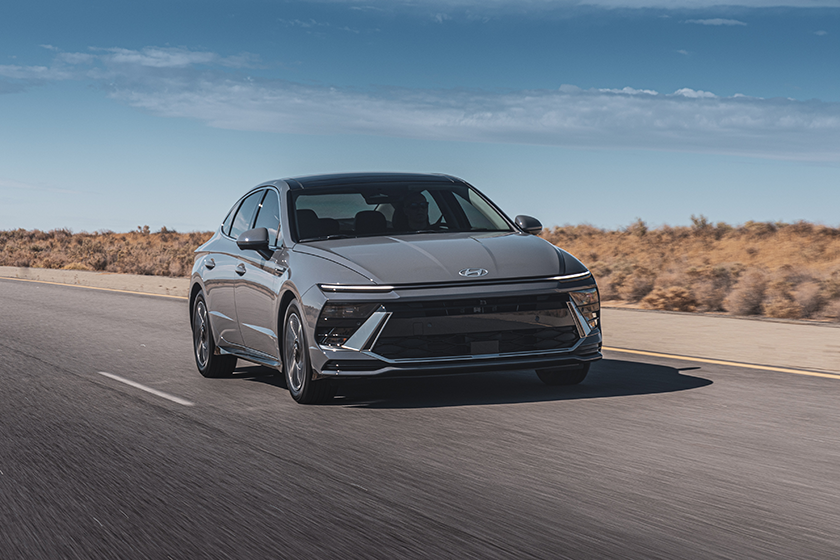
The 2026 Hyundai Sonata SEL Hybrid is a midsize, front-wheel-drive gasoline-electric sedan targeting buyers seeking an efficient, comfortable family car with modern tech at a mainstream price. It competes directly with the Toyota Camry Hybrid and Honda Accord Hybrid. A key differentiator is its powertrain, which pairs a 2.0-liter four-cylinder engine with an electric motor and a conventional six-speed automatic transmission. This setup provides a more familiar driving experience by avoiding the high-rpm engine drone common in hybrids that use CVTs. The Sonata SEL Hybrid is praised for its bold, futuristic styling and a tech-forward interior that feels more premium than its price suggests. Generally seen as the sweet spot in the lineup, the SEL trim delivers a well-rounded package of features and value, making it an excellent all-rounder in the competitive hybrid sedan market.
Its Main Competition
The 2026 Hyundai Sonata SEL Hybrid’s main competition comes from the deeply entrenched Toyota Camry Hybrid and Honda Accord Hybrid. A significant difference lies in the driving experience, as the Sonata uses a conventional six-speed automatic transmission while its rivals employ eCVTs, giving the Hyundai a more familiar feel without sustained engine drone under acceleration. Aesthetically, the Sonata’s bold, futuristic styling contrasts with the more conservative designs of the Camry and Accord. Inside, its modern cabin often feels a generation ahead with its large, integrated digital displays. While the Camry is known for its reputation of long-term durability and strong resale value, and the Accord for its athletic handling, the Sonata competes by offering a high feature-to-price ratio and Hyundai’s industry-leading 10-year/100,000-mile powertrain warranty as a major selling point.
Its Buyer's Demographics
The buyer for the 2026 Hyundai Sonata SEL Hybrid is typically practical and cost-conscious, prioritizing fuel economy, modern technology, and long-term value. The demographic often includes professional commuters and small families, with a core age range from the mid-30s to late 50s, plus a significant number of empty-nesters downsizing from larger vehicles. Household incomes generally fall in the middle to upper-middle-class range. These buyers are often well-researched, comparing specifications, running costs, and warranty coverage before making a decision. Marital status trends toward married or partnered, with households having zero to two children. They seek a comfortable and efficient daily driver that looks stylish and feels well-equipped, but they are not looking to pay for a luxury brand's badge.
Design
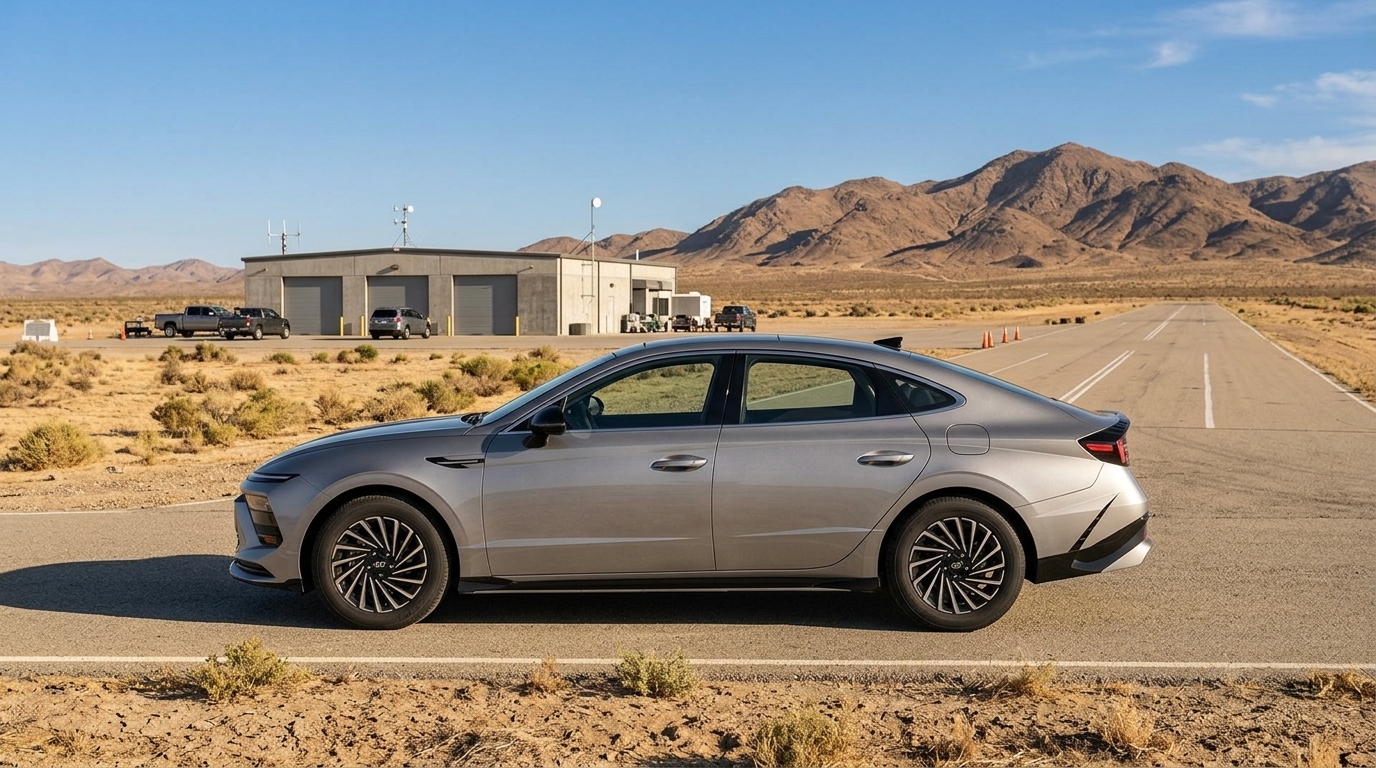
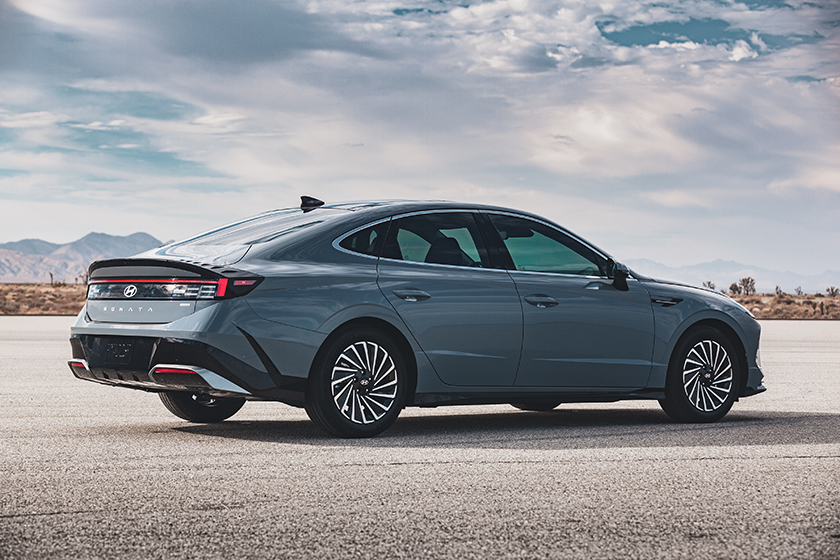
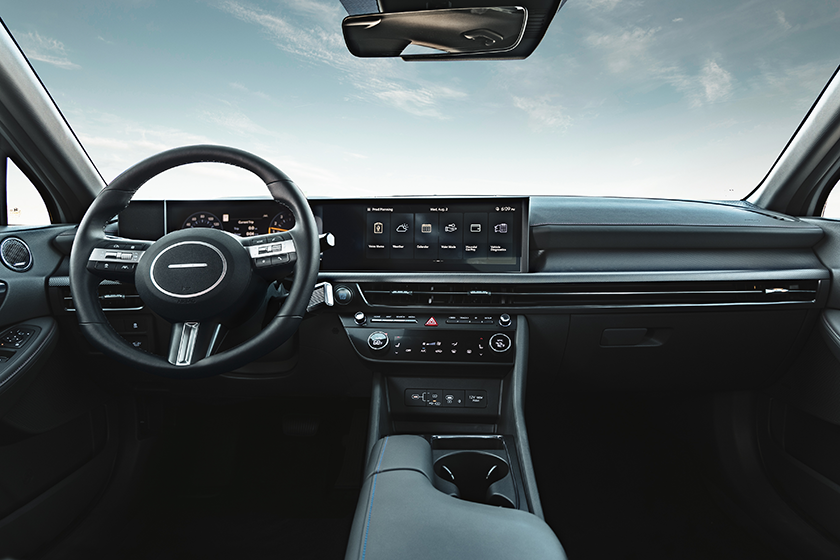
The design of the 2026 Hyundai Sonata SEL Hybrid is characterized as bold, modern, and intentionally futuristic, setting it apart from more traditional midsize sedans. Its exterior is defined by a sleek, fastback-style roofline and a striking full-width daytime running light that creates a distinctive front-end signature. This daring approach is generally viewed as attractive and upscale, representing Hyundai’s move toward more premium styling. Inside, the cabin follows a clean, digital-forward theme, centered around a large panoramic curved display that combines the instrument cluster and infotainment screen. While the overall ambiance feels sophisticated for its class, some critiques note the use of hard plastics in lower-touch areas and glossy black trim that attracts fingerprints, reminding you it’s still a mainstream vehicle.
Interior & cargo room
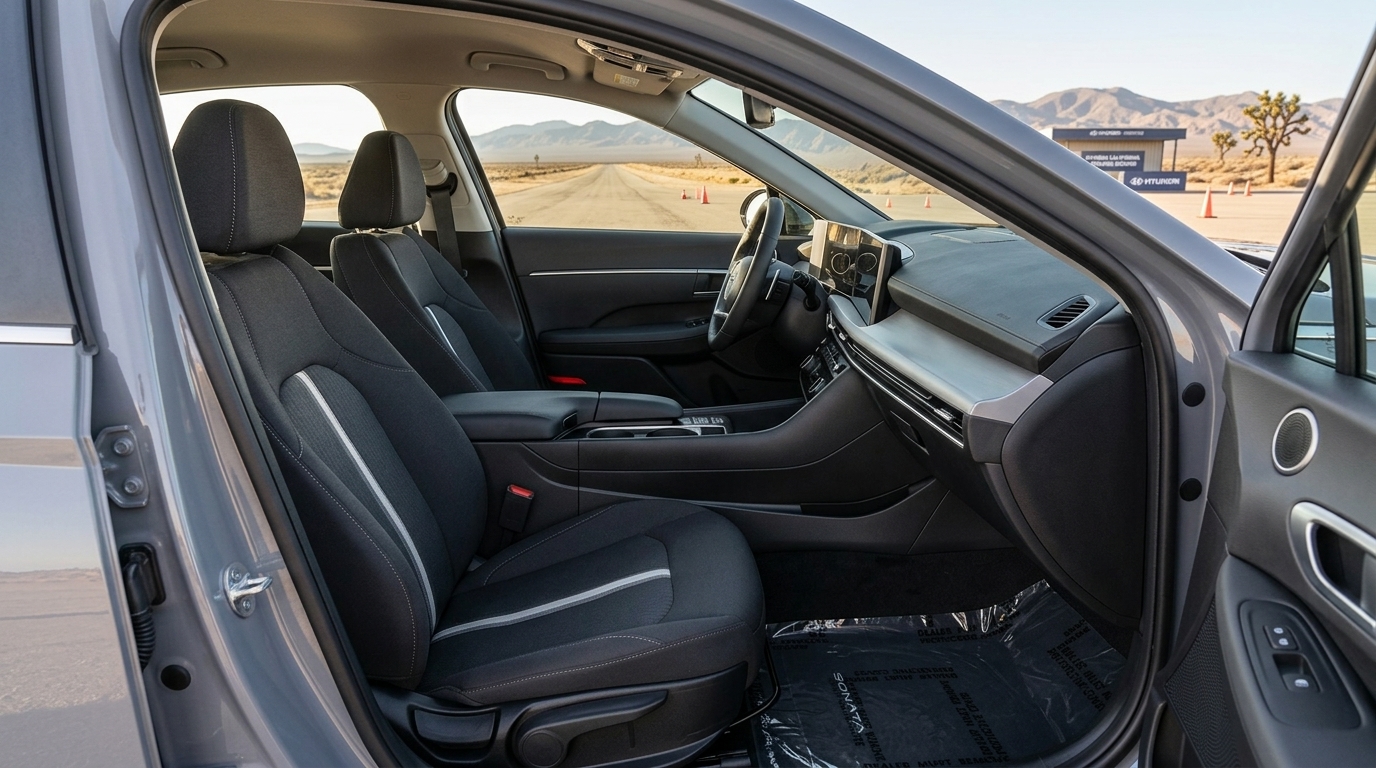
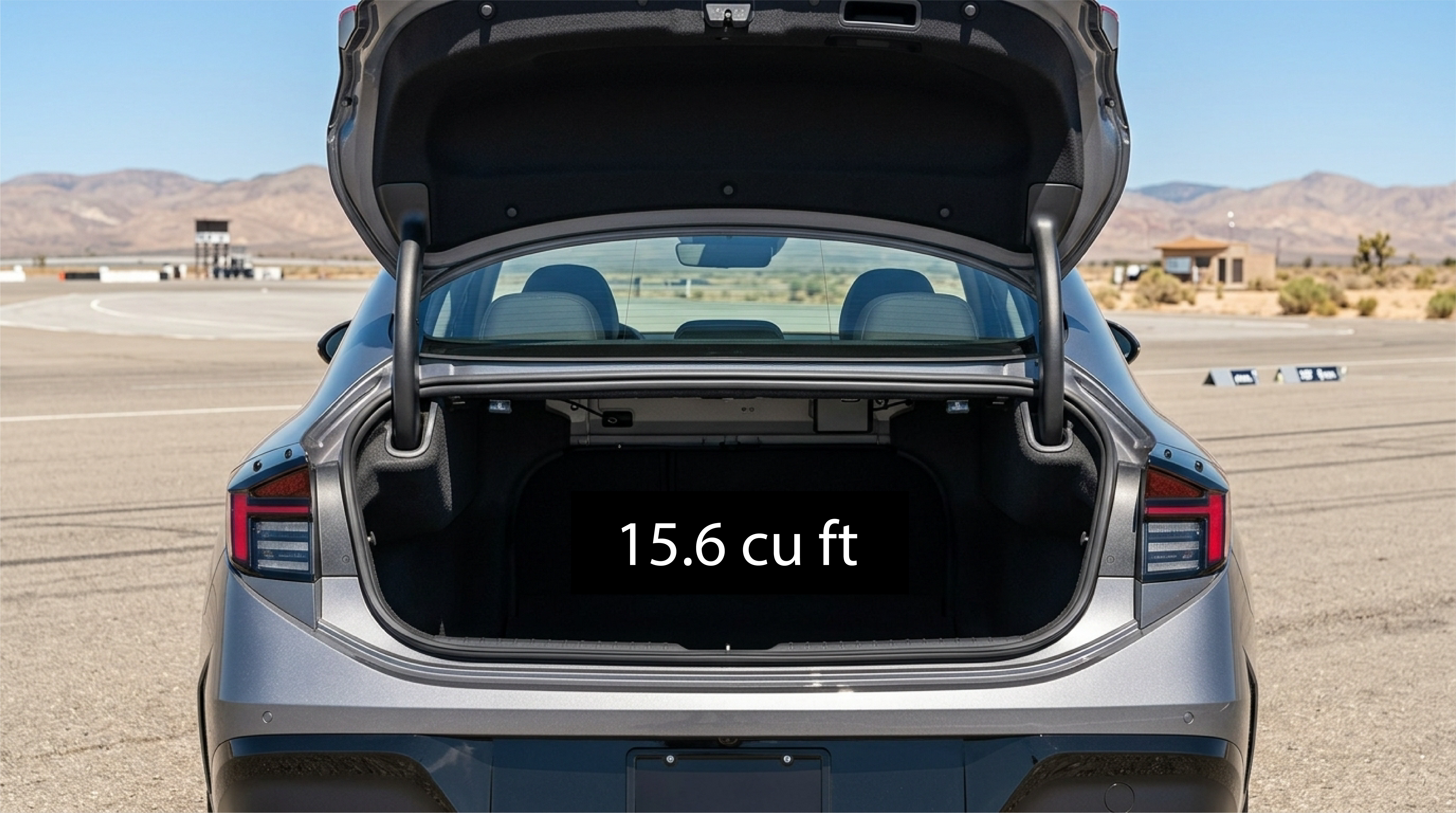
The 2026 Hyundai Sonata SEL Hybrid offers a roomy and accommodating front cabin with generous space for adults of various sizes. In the back, however, the vehicle’s striking fastback design creates a trade-off. While rear legroom is considered adequate for most adults, it is noticeably tighter than in some key rivals like the Honda Accord. Furthermore, rear headroom is compromised by the sloping roofline, making it a snug fit for passengers over six feet tall. On the positive side, cargo utility is a standout advantage. The trunk provides a very practical 15 to 16 cubic feet of space, which is highly competitive for the segment. Critically, the hybrid battery pack is located under the rear seat, so it does not infringe on trunk volume, ensuring cargo capacity is uncompromised compared to the non-hybrid model.
Ergonomics & comfort
The 2026 Sonata SEL Hybrid generally earns high marks for ergonomics and comfort, with a thoughtfully designed cabin that places most controls within easy reach. The driving position is widely accommodating, and the front seats are comfortable and supportive, striking a good balance for both daily commutes and longer road trips. A key ergonomic strength is the retention of physical buttons and knobs for essential climate functions, which prevents the frustration of digging through touchscreen menus while driving. Practical interior storage is another plus, with ample cupholders, door pockets, and center console space. Connectivity is also strong, with USB ports available for both front and rear passengers. The main ergonomic drawback is outward visibility; while forward vision is clear, the car's sleek, sloping roofline creates thick rear pillars and a compromised view to the rear.
Interior, fit & finish
The 2026 Sonata SEL Hybrid’s interior impresses with a fit and finish that feels a step above its price point. The cabin’s upper sections, including the dashboard and front door panels, are trimmed in pleasing soft-touch materials that contribute to an upscale ambiance. This premium impression is enhanced by a generally solid build quality, with tight, consistent panel gaps and an absence of major squeaks or rattles over rough roads. However, the sophisticated vibe is somewhat tempered by the materials used lower in the cabin. Hard, scratch-prone plastics on the lower doors and center console serve as a clear reminder of the vehicle’s mainstream segment positioning. A common critique also targets the widespread use of glossy piano-black trim, which looks sleek when new but quickly attracts fingerprints, dust, and fine scratches with everyday use.
Driver & pass UX
The user experience in the 2026 Sonata SEL Hybrid is centered on a modern, responsive infotainment system that is widely considered intuitive and easy to use. The large touchscreen features a quick, smartphone-like interface with large icons, minimizing lag and driver distraction. A significant plus is Hyundai's decision to retain physical knobs and buttons for essential functions like audio volume and climate control, avoiding the frustrations of a purely touch-based interface. Wireless Apple CarPlay and Android Auto are included and praised for their quick, seamless connectivity. The voice command system performs very well, reliably understanding natural language requests for navigation, media, and climate adjustments. Bluetooth pairing is likewise a straightforward process, establishing a stable connection for calls and audio streaming, creating a polished and user-friendly digital environment for both drivers and passengers.
Sound system
The standard audio system in the 2026 Sonata SEL Hybrid is well-suited for daily commuting, delivering a performance best described as pleasant and clear rather than powerfully immersive. The system truly excels with spoken-word content; podcasts, audiobooks, and radio dialogue are reproduced with excellent clarity and vocal presence, remaining intelligible even at highway speeds. For music, the sound is generally balanced and clean at moderate volumes. However, its limitations become apparent when listening to bass-heavy genres or at high volumes, as it lacks the deep, punchy low-end impact of premium branded systems found in some competitors. The Sonata’s quiet cabin and effective sound insulation help the stereo’s perceived performance by reducing the intrusion of road and wind noise, making for an enjoyable but not audiophile-grade listening experience.
Acceleration
The 2026 Sonata SEL Hybrid’s acceleration is best described as smooth and competent, prioritizing efficiency over outright speed. Its powertrain combines a 2.0-liter four-cylinder engine and an electric motor to produce a total of 192 horsepower, delivered through a conventional six-speed automatic transmission. This unique setup provides a more familiar driving sensation with stepped gear shifts, avoiding the droning, rubber-band feel common in many CVT-equipped hybrids. From a stop, the instant torque from the electric motor makes the sedan feel responsive and sprightly in city driving. However, its 0-60 mph time lands in the eight-second range, which is adequate for daily use but trails quicker competitors. Overall, the acceleration is steady and sufficient for merging and passing, but it is clearly tuned for comfort and fuel economy rather than thrilling performance.
Braking
The braking in the 2026 Hyundai Sonata SEL Hybrid is generally confident and secure, providing stable performance in both routine and emergency stops. Its 60-0 mph stopping distance typically falls in the mid-120-foot range, which is competitive but slightly longer than what some key rivals can achieve. Like most hybrids, the system blends regenerative and mechanical braking, and while the pedal is predictable for most daily driving, the transition between the two can feel slightly unnatural. Some drivers notice a hint of grabbiness or non-linear response at very low speeds, which is a common characteristic in the segment. However, after a short acclimation period, most find the pedal easy to modulate for smooth stops. The overall system prioritizes safe, drama-free deceleration over a sporty, aggressive bite, inspiring confidence in everyday use.
Handling
On the highway, the 2026 Sonata SEL Hybrid delivers a composed and secure handling experience that inspires confidence for long-distance travel. The steering is tuned for low effort, making it easy to place the car in a lane and reducing driver fatigue, though it lacks the sharp feedback desired by driving enthusiasts. Its response to driver inputs is predictable and linear, ideal for smooth lane changes and gentle curves. Body roll is noticeable but well-managed for a family sedan, never feeling excessive or sloppy during normal maneuvers. In city driving, the light steering and a respectable turning circle make the Sonata easy to navigate through traffic and into parking spaces. Overall, the handling prioritizes stability and comfort over sporty agility, creating a pleasant and confidence-inspiring ride for the daily commute.
Interior noise
The 2026 Sonata SEL Hybrid provides a quiet and serene cabin environment, particularly at steady highway speeds, where wind and tire noise are well controlled. This allows for easy conversation and a relaxing commute. However, the calm atmosphere is interrupted under hard acceleration, when the gasoline engine becomes noticeably louder and can sound somewhat strained or coarse as it works to build speed. Once at a cruise, the engine settles down and the cabin returns to its impressively quiet state. The Sonata achieves this tranquility primarily through conventional sound-deadening measures, including acoustic laminated glass and significant insulation. While not luxury-car silent, and with some road roar intruding on coarse pavement, its interior noise levels are highly competitive for the mainstream midsize sedan segment.
Ride quality
The ride quality in the 2026 Sonata SEL Hybrid is a clear strength, with a suspension tuned to prioritize comfort. On the freeway, it feels settled and composed, effectively soaking up expansion joints and small road imperfections to create a smooth, relaxing experience for long journeys. The car avoids feeling overly floaty, maintaining good body control over larger undulations. In city driving, this comfortable character continues, with the suspension adeptly absorbing most common urban bumps like patched asphalt and small potholes. While the ride is generally complaint, sharper and larger impacts can still make their presence felt with a distinct thump. Performance over speed bumps is also well-managed, with the chassis absorbing the hit without excessive crashing or secondary bouncing, confirming its focus on everyday passenger comfort.
Driver assist systems
The 2026 Sonata SEL Hybrid is equipped with a robust suite of standard driver-assistance systems that work together smoothly and effectively. The Highway Driving Assist feature, which combines adaptive cruise control with lane-centering, is a highlight. It confidently keeps the car centered in its lane on well-marked roads and manages speed in traffic with smooth adjustments, significantly reducing driver workload on long commutes. Other valuable standard features include blind-spot monitoring and rear cross-traffic alert, with the latter often able to apply the brakes automatically to prevent a collision while backing up. Some drivers note that the system's alerts can be on the conservative side, but this is generally appreciated for the added margin of safety. Overall, the systems feel well-integrated and intuitive, making the car feel secure and modern.
Mileage
As a conventional hybrid, the 2026 Sonata SEL Hybrid delivers excellent fuel economy without the need for plug-in charging. Its EPA ratings firmly place it in the upper echelon of the midsize sedan class, with combined figures typically landing in the competitive high-40s to low-50s mpg range. This puts it squarely in the same efficiency neighborhood as its chief rivals, the Toyota Camry Hybrid and Honda Accord Hybrid. Owners find it relatively easy to achieve these impressive numbers in real-world mixed driving without resorting to hypermiling techniques. The result is significantly lower fuel costs and a reduced environmental footprint, with CO2 emissions that are impressively low and on par with the segment’s most efficient vehicles. The car's strong mileage is a key part of its value proposition for high-mileage commuters and cost-conscious drivers.
Safety
The 2026 Hyundai Sonata SEL Hybrid is heavily fortified with safety technology, featuring a comprehensive suite of standard active-safety systems. This includes forward collision-avoidance assist, blind-spot monitoring, rear cross-traffic alert, and lane-keeping assist. Beyond its preventative technology, the vehicle is built on a robust chassis incorporating high-strength steel to create a protective occupant safety cage. This strong foundation contributes to excellent crash-test performance, with the Sonata typically earning top-tier ratings, including a five-star overall score from NHTSA and a coveted Top Safety Pick designation from the IIHS. While its primary competitors from Toyota and Honda also offer a comparable set of safety features and achieve high ratings, the Sonata’s systems are praised for their smooth calibration and user-friendly integration, making it a reassuring choice for safety-conscious families.
Pricing
The pricing for the 2026 Hyundai Sonata SEL Hybrid is strategically positioned to offer strong value within the competitive midsize sedan market. The SEL trim is widely regarded as the most popular choice, hitting a sweet spot that balances a generous list of features with an accessible price point, typically in the low-to-mid $30,000 range. This trim is favored by buyers because it includes many sought-after modern conveniences, such as large digital displays and a full suite of driver aids, without the significant cost increase required to step up to the top-tier Limited trim. When compared to similarly equipped rivals like the Toyota Camry Hybrid and Honda Accord Hybrid, the Sonata SEL Hybrid is often priced competitively, or even slightly under, making it an attractive proposition for those seeking maximum features for their money.
Value
The value of the 2026 Sonata SEL Hybrid is a tale of two factors: upfront cost versus long-term retention. At the time of purchase, it presents a compelling, better-than-average value proposition. It typically bundles more standard technology, comfort features, and driver aids for the price than you would find in similarly equipped versions of its primary rivals from Toyota and Honda. However, this strong initial value is balanced by historically weaker long-term resale value. The Sonata Hybrid tends to depreciate slightly faster than the class-leading Camry and Accord hybrids, though that gap has been narrowing. This is partly offset by lower running costs, excellent fuel economy, and Hyundai’s outstanding warranty, which reduces out-of-pocket risk and contributes to a competitive total cost of ownership over an extended period.
Reliability
The 2026 Hyundai Sonata SEL Hybrid is built on a powertrain that is generally considered reliable and mechanically sound, with its core hybrid components benefiting from years of iterative refinement. Widespread mechanical failures are uncommon. When reliability issues do arise, they tend to be minor and concentrated in the vehicle’s software and electronics, such as occasional infotainment system glitches or overly sensitive driver-assist sensors, which are often correctable with software updates. While considered solidly reliable for daily use, its long-term dependability reputation sits just a fractional step below the near-bulletproof benchmark set by competitors like the Toyota Camry Hybrid. To offset any concerns and provide peace of mind, Hyundai provides an industry-leading 10-year/100,000-mile powertrain warranty, which effectively neutralizes long-term financial risk for owners.
Frequently asked questions about the 2026 Hyundai Sonata SEL Hybrid
Is the 2026 Hyundai Sonata SEL Hybrid worth buying?
The 2026 Hyundai Sonata SEL Hybrid is a midsize, front-wheel-drive gasoline-electric sedan targeting buyers seeking an efficient, comfortable family car with modern tech at a mainstream price. It competes directly with the Toyota Camry Hybrid and Honda Accord Hybrid. A key differentiator is its powertrain, which pairs a 2.0-liter four-cylinder engine with an electric motor and a conventional six-speed automatic transmission. This setup provides a more familiar driving experience by avoiding the high-rpm engine drone common in hybrids that use CVTs. The Sonata SEL Hybrid is praised for its bold
How much does the 2026 Hyundai Sonata SEL Hybrid cost?
The 2026 Hyundai Sonata SEL Hybrid is priced at $29,200 – $38,250, before destination, options, and incentives.
What is the fuel economy of the 2026 Hyundai Sonata SEL Hybrid?
The 2026 Hyundai Sonata SEL Hybrid returns 47 MPG combined per published EPA figures.
How this review is produced
moblr meta-reviews are generated by aggregating multiple published expert road tests using AI consensus and sentiment analysis, then read and reviewed by a human editor before publication. Category ratings on the −50 to +50 scale show how each vehicle compares to the average for its segment. Learn more about the moblr review process.