2026 Mercedes-Benz E 350 (RWD)
Consensus at a glance
- Consensus score
- Not yet rated
- Price
- $63,900 – $93,350
- Powertrain
- Gasoline
- Combined fuel economy
- 28 MPG
- Body type
- sedan
- Transmission
- 9-sp auto
- Drivetrain
- RWD
Quick Take
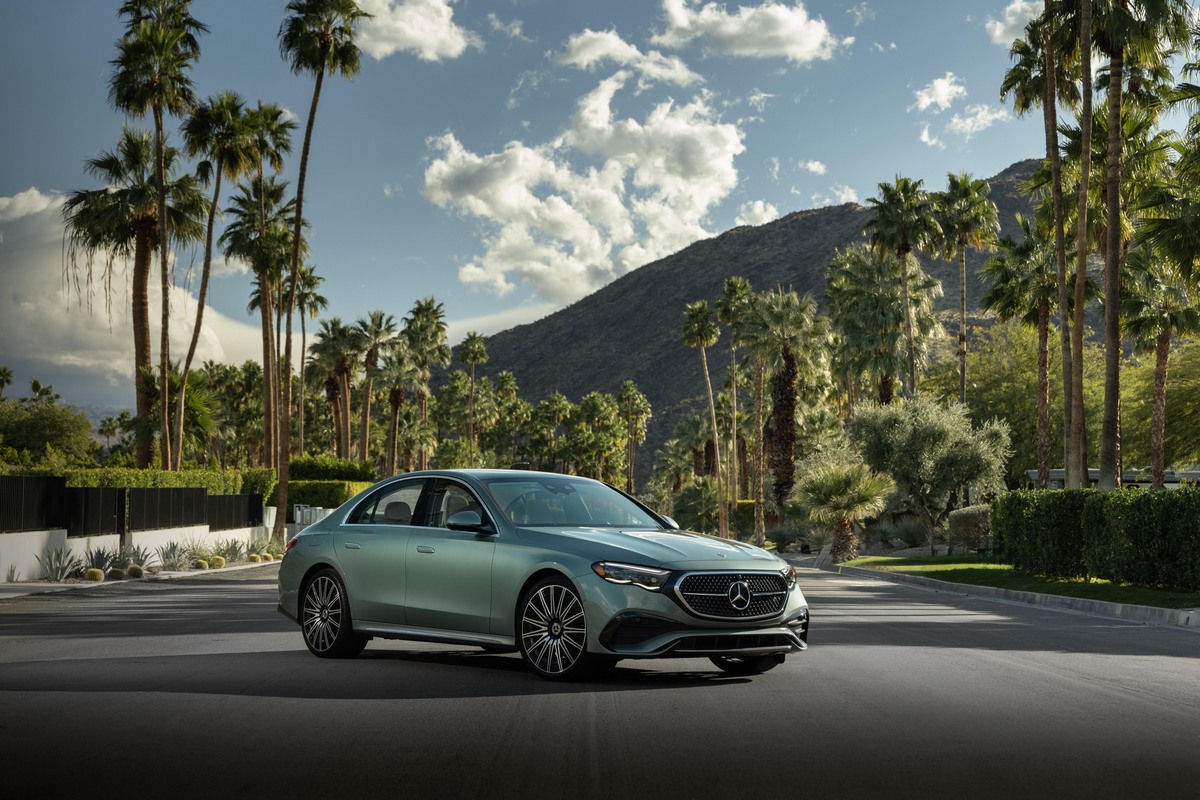
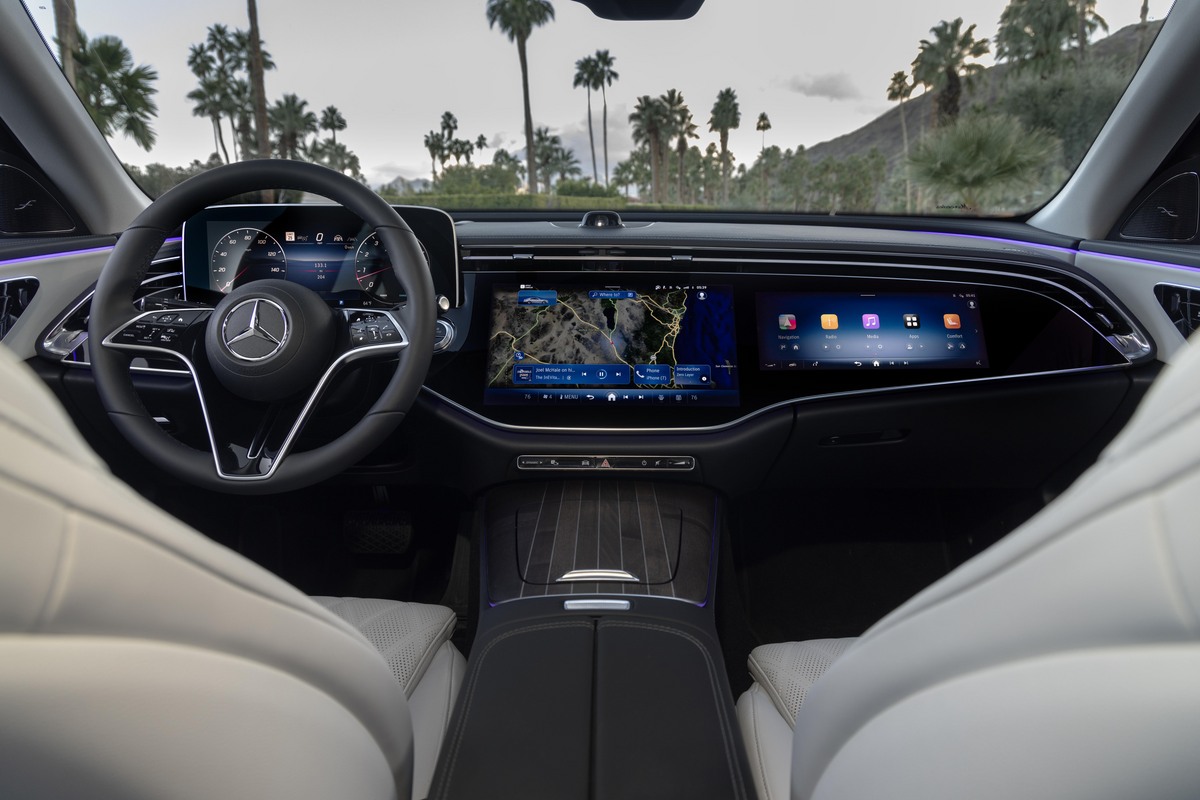
The 2026 Mercedes-Benz E 350 RWD serves as the entry point to the E-Class sedan lineup, positioned as a midsize luxury car that competes by prioritizing comfort, technology, and refinement over outright sportiness. It is powered by a 2.0-liter turbocharged four-cylinder engine paired with a 48-volt mild-hybrid system, sending power to the rear wheels. The vehicle’s personality is defined by its smooth power delivery, a quiet and cushioned ride, and an insulated cabin that bridges the gap between the smaller C-Class and flagship S-Class. Its most distinct feature is its modern, screen-forward interior presentation, which includes the MBUX infotainment system and extensive ambient lighting, creating a high-tech lounge atmosphere. The target buyers are typically established professionals who value brand prestige and a calm, well-isolated driving experience for commuting and long-distance travel.
Its Main Competition
The E 350 RWD’s primary rivals are the BMW 5 Series, Audi A6, Genesis G80, and Lexus ES. The most significant differences emerge in driving character and interior philosophy. The BMW 5 Series is consistently positioned as the more athletic, driver-focused choice with sharper handling, whereas the E 350 leans into a plusher ride and cabin isolation. The Audi A6 offers a tech-forward, minimalist design, but the Mercedes cabin is seen as more theatrical and visually impressive. Against the Genesis G80, which competes on value and style, the E 350 counters with deeper brand cachet and more advanced integrated technology. The Lexus ES is framed as a comfort-first, reliability-focused alternative, though it typically doesn’t match the Mercedes for rear-drive dynamics or the sheer breadth of its luxurious-tech features.
Its Buyer's Demographics
The typical buyer for a 2026 E 350 is an established, affluent professional, often between the ages of 45 and 65. With household incomes generally exceeding $150,000, these individuals are frequently senior managers, business owners, doctors, or lawyers. A majority hold college or advanced degrees and value the brand's prestige, advanced technology, and reputation for comfort. Many are married, and a significant portion are empty nesters who no longer need the utility of a large SUV, choosing the midsize sedan as a reward. This demographic prioritizes a quiet, comfortable daily commute and a relaxing long-distance travel experience over aggressive performance metrics. They seek a vehicle that communicates success and sophistication in a refined, understated manner.
Design
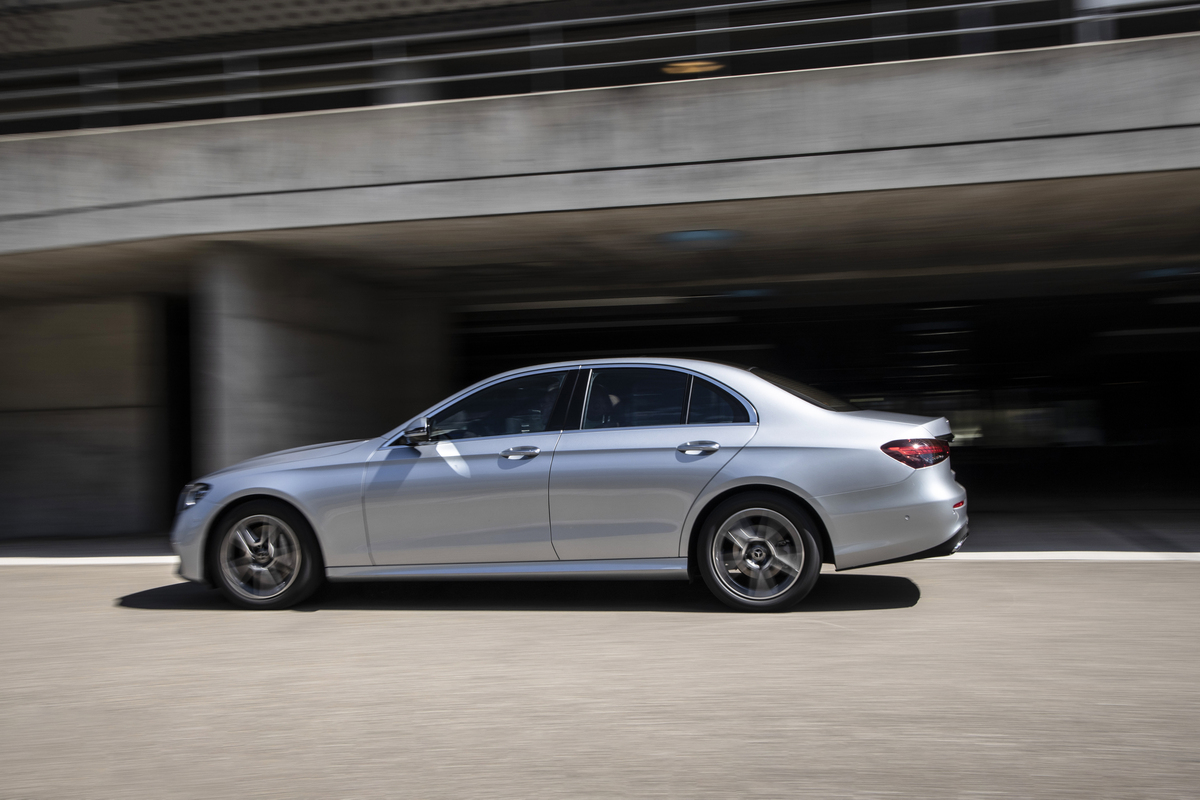
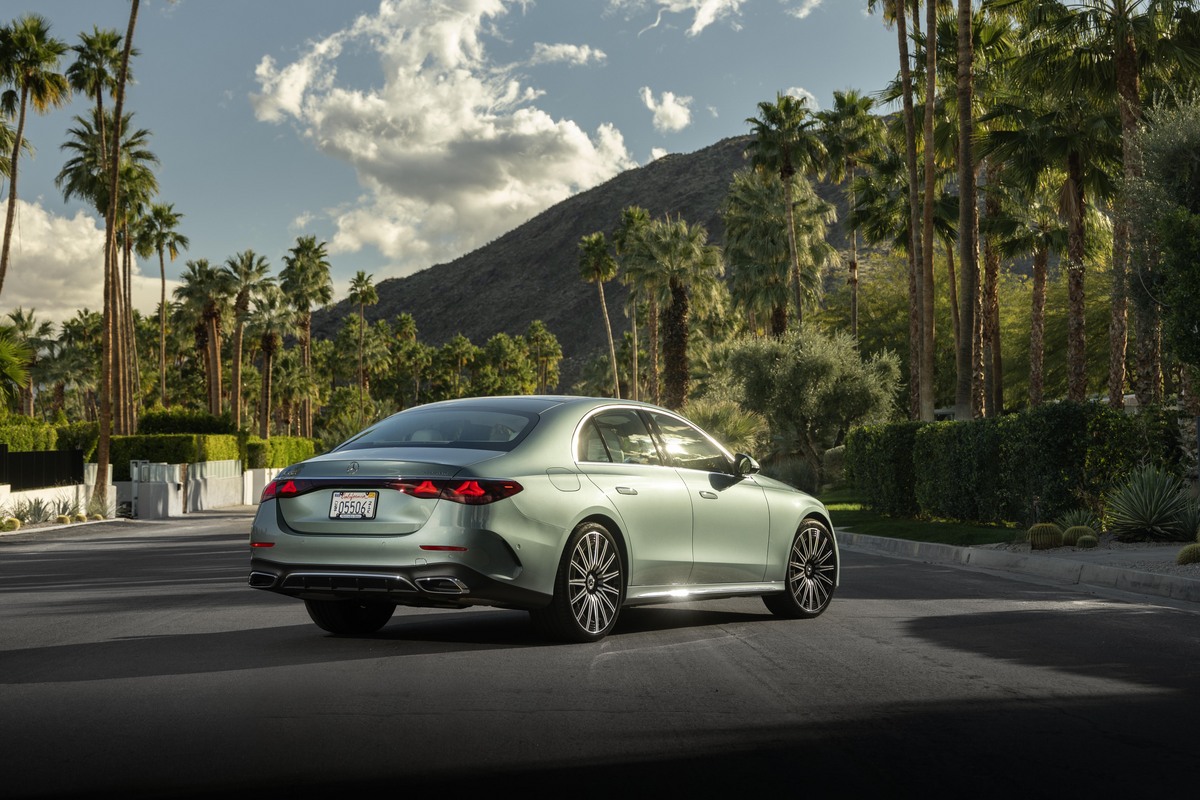
The design of the 2026 E 350 merges classic cab-backward sedan proportions with modern, aerodynamically smooth surfaces. The exterior is more elegant than aggressive, featuring a prominent grille and sophisticated LED lighting, though some find it less distinctive than more angular rivals. The interior design, however, is overtly modern and screen-dominated, drawing heavily from the flagship S-Class. The available MBUX Superscreen turns the dashboard into a sweeping glass panel, surrounded by high-quality leather, open-pore wood, and extensive ambient lighting. This “tech as theater” approach is considered a key selling point, creating a luxurious lounge environment that feels both high-tech and opulent, even if it departs from the more traditional, conservative interiors of past E-Class generations.
Interior & cargo room
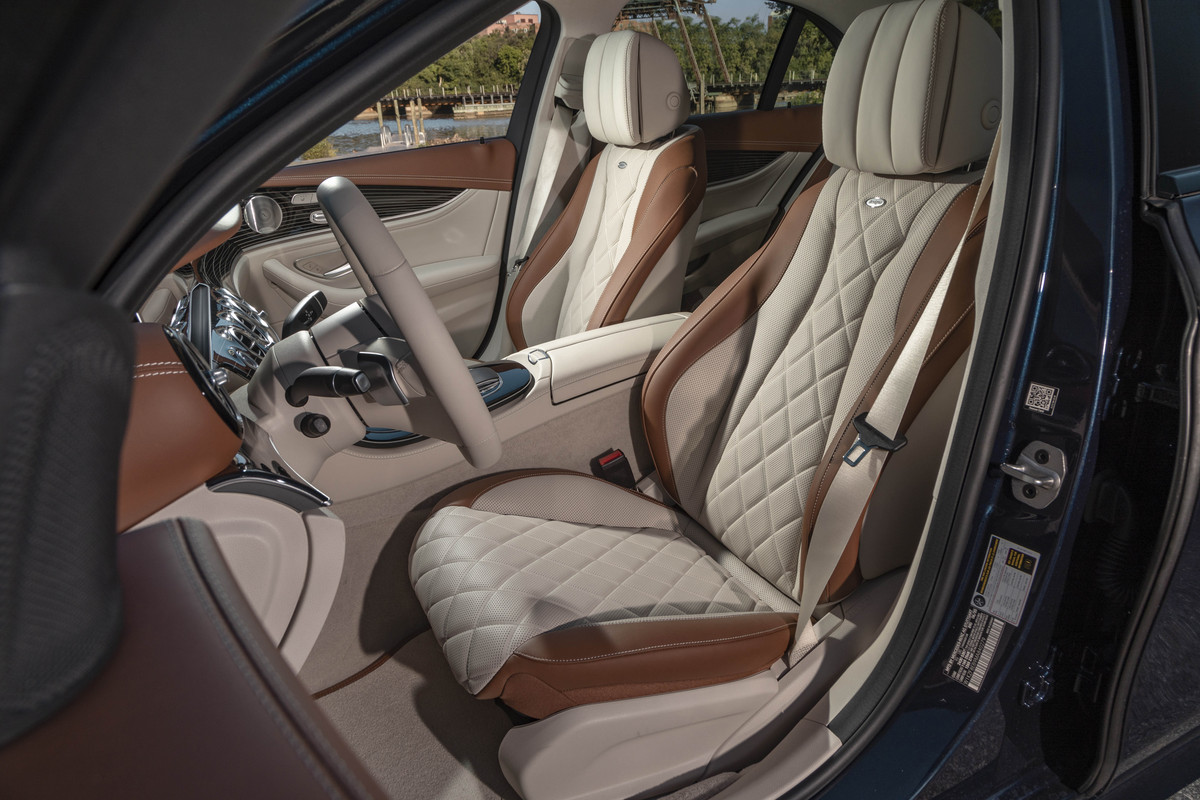
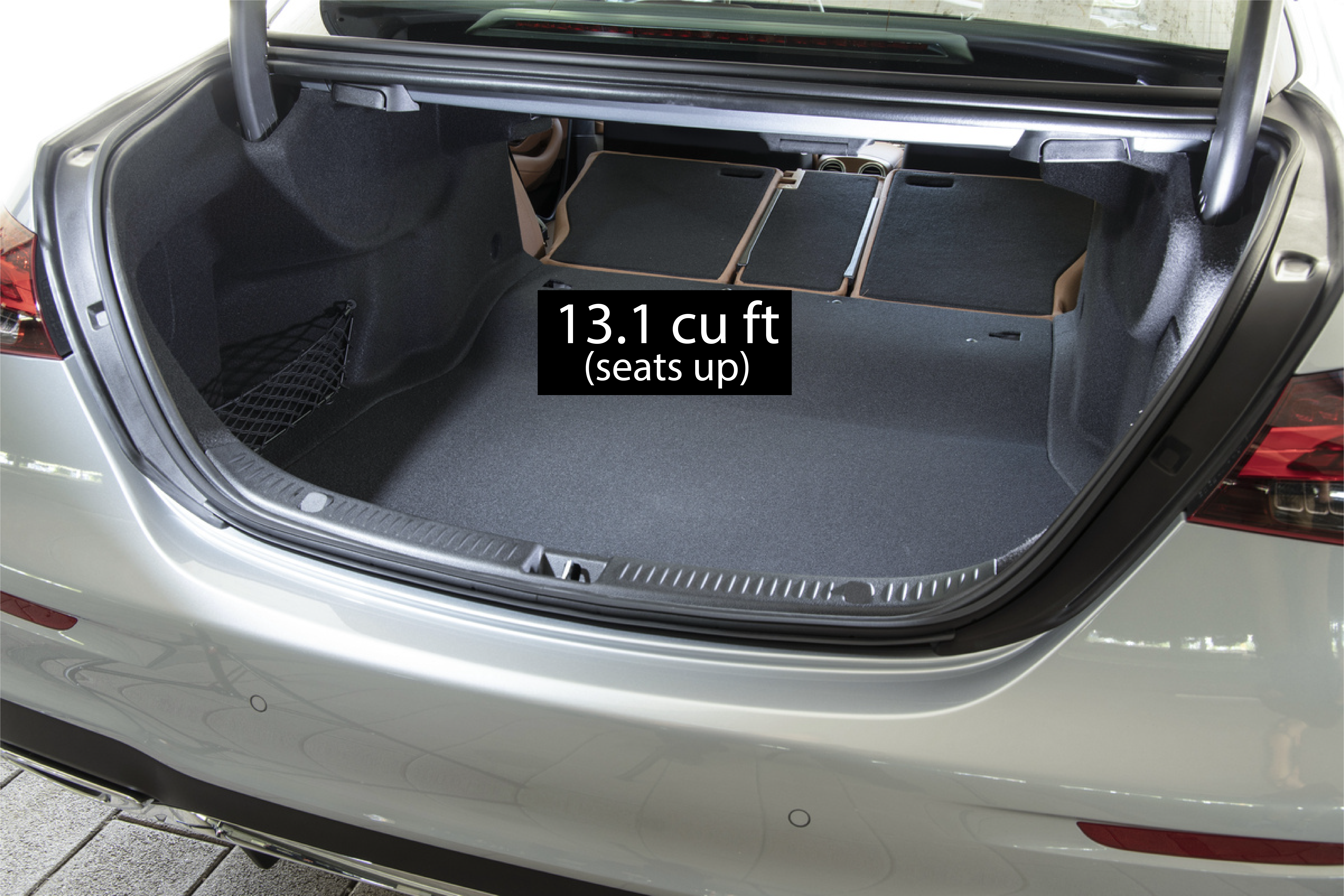
The E 350’s interior offers generous space for front occupants, with ample headroom and a wide range of seat adjustments to accommodate various body types. The rear seat is adult-friendly and comfortable for average-sized passengers on longer trips, providing competitive headroom and adequate legroom on par with key German rivals. However, rear legroom is noted as slightly less than in some competitors like the Genesis G80. The primary compromise is trunk space, with a cargo capacity that is only average for the class and smaller than what is offered in the BMW 5 Series. While the trunk is well-finished, its volume and opening can make loading bulky items challenging, a notable drawback for a car that otherwise excels at passenger accommodation.
Ergonomics & comfort
The E 350 provides a fundamentally sound ergonomic layout, with a highly adjustable driving position that allows most drivers to find a comfortable and commanding view of the road. Seat comfort is a standout strength, with supportive cushioning and available multi-contour massage functions that excel on long journeys. The cabin offers ample small-item storage, including well-placed cupholders, a deep center console bin, and generous door pockets. A notable ergonomic drawback is the reliance on touch-sensitive controls on the steering wheel and for many climate functions, which can require more attention and be less intuitive than traditional physical buttons. Outward vision is generally good, though the modern, thick pillars can create some blind spots that necessitate reliance on the vehicle's comprehensive camera and sensor systems.
Interior, fit & finish
The cabin of the 2026 E 350 is built with high-quality materials that create a convincingly premium atmosphere, especially in the areas occupants touch most frequently. Soft-touch surfaces, supple leather, and genuine open-pore wood or aluminum trims are common, complemented by precise and even stitching. Fit and finish are generally very strong, with tight panel gaps and a solid, well-assembled feel that contributes to the car’s quiet and rattle-free ride. However, two common critiques emerge regarding materials. First, there is a noticeable use of harder plastics on lower, less-visible panels, which can feel out of place at this price point. Second, the prominent use of glossy piano-black trim on the center console and dashboard looks impressive when clean but is a magnet for fingerprints, dust, and scratches.
Driver & Pass UX
The user experience in the E 350 is dominated by its large, responsive touchscreens, which offer crisp graphics and quick reaction times akin to modern smart devices. The main interface is understandable for basic tasks, but the sheer density of features and settings means there is a learning curve, and performing simple actions can require more menu navigation than in cars with physical controls. A standout feature is the excellent voice command system, which understands natural language well and can handle complex requests for navigation, climate, and media, reducing the need to interact with the screen while driving. Bluetooth pairing is quick and reliable, maintaining stable connections. Overall, the system works consistently well, offering deep functionality for those willing to adapt to its screen-centric and highly configurable digital environment.
Sound system
The audio experience in the E 350 is a distinct strength, particularly when equipped with the optional Burmester-branded premium sound system. The standard setup is considered competent and clear for daily listening, but the upgraded system transforms the quiet cabin into an immersive concert hall. It delivers a detailed, spacious soundstage with crisp highs, rich midrange, and strong, well-controlled bass that remains distortion-free at high volumes. Vocal clarity for podcasts and phone calls is excellent, with voices sounding natural and easy to understand. The optional system is highly competitive with the best offerings from rivals, providing the kind of high-fidelity audio performance that luxury buyers expect, making the E 350 an outstanding listening environment when properly configured.
Acceleration
The 2026 E 350 is powered by a 2.0-liter turbocharged four-cylinder engine with a 48-volt mild-hybrid system, producing about 255 horsepower and 295 lb-ft of torque. This powertrain is engineered for smooth, refined, and effortless performance in daily driving rather than outright sportiness. Real-world performance is more than adequate, with a 0-60 mph time in the low-to-mid 6-second range, providing confident merging and passing power. The mild-hybrid system helps create a seamless experience by smoothing out the engine's start-stop function and filling in torque gaps at low speeds, virtually eliminating turbo lag. While brisk enough for most situations, the engine can sound strained under full throttle, lacking the charismatic note of a larger six-cylinder engine, which reinforces its identity as a luxury cruiser.
Braking
The E 350’s braking system is calibrated for smooth, confident, and highly refined stopping performance that suits its luxury mission. The brake pedal offers a progressive and linear response, making it easy to modulate for smooth slowdowns in city traffic without being grabby or abrupt. Emergency stopping distances from 60 mph are competitive for the segment, typically landing in the 118-foot range, providing strong and stable deceleration without drama. While some sport-oriented competitors may offer a firmer initial bite or slightly shorter stopping distances with performance tires, the E 350 prioritizes a polished and predictable feel. The integration with the mild-hybrid system’s regenerative braking is seamless, ensuring the pedal feel remains consistent and natural across all driving scenarios, reinforcing driver confidence.
Handling
On the highway, the E 350 provides a supremely calm and stable ride, tracking straight and true with minimal need for steering corrections. Steering response is accurate and predictable but tuned for smooth, relaxed inputs rather than sharp, athletic feedback. Body roll is well-controlled for a comfort-focused sedan, keeping the car composed through sweeping curves and lane changes without feeling sloppy. In city driving, the E 350 feels agile for its size, aided by light steering effort at low speeds and a competitive turning circle that simplifies parking and U-turns. The chassis prioritizes a reassuring and composed demeanor over playful engagement, making it feel secure when navigating urban environments or darting through traffic. Its handling strikes an excellent balance between precision and relaxation.
Interior noise
The 2026 E 350 is widely praised for its exceptionally quiet and serene cabin, which stands out as one of the best in its class. Wind and road noise are thoroughly suppressed at highway speeds, creating a calm environment that allows for conversation at a low volume. The engine remains a distant, muted hum under normal acceleration and only becomes more audible under heavy throttle, where it maintains a refined tone. Mercedes employs extensive sound insulation, acoustic glass, and in some configurations, active noise-cancellation technology to achieve this profound level of isolation. This vault-like quietness effectively filters out the drone of rough pavement and the harshness of the outside world, reinforcing the car’s premium, relaxing character and making it an ideal long-distance cruiser.
Ride quality
The E 350 delivers an exceptional ride that expertly balances comfort and control. On the freeway, the ride is smooth and settled, gracefully absorbing bumps and highway expansion joints with a muted and expensive-feeling thud, leaving occupants undisturbed. The suspension manages undulations without any floatiness, contributing to a fatigue-free experience on long trips. In the city, it continues to impress by effectively soaking up potholes and broken pavement, though larger wheels with low-profile tires can introduce a hint of firmness over sharper impacts. The car handles speed bumps with a single, controlled motion, showcasing its excellent damping and structural solidity. Overall, the ride quality is a defining attribute, providing a plush, composed, and genuinely luxurious feel across nearly all driving surfaces.
Driver assist systems
The E 350 offers a comprehensive and highly polished suite of driver assistance systems that work to reduce driver workload. The adaptive cruise control is particularly praised for its smooth, human-like acceleration and braking in traffic, while the lane-centering assist keeps the vehicle securely in its lane on well-marked highways without the "ping-pong" effect seen in lesser systems. Features like blind-spot monitoring and rear cross-traffic alert are effective and provide timely warnings. The systems are designed to be supportive rather than intrusive, providing a confident semi-autonomous experience on long freeway journeys. While they still require attentive supervision, especially in complex conditions or with poor lane markings, their overall refinement and smooth operation are considered mature and well-integrated into the luxury driving experience.
Mileage
The 2026 Mercedes-Benz E 350 RWD offers competitive fuel efficiency for its class, with EPA estimates landing around 24-25 mpg in the city, 33 mpg on the highway, and a combined rating in the high 20s. These figures are on par with its direct four-cylinder competitors like the BMW 530i and Audi A6, representing a solid balance of performance and economy for a midsize luxury sedan. The 48-volt mild-hybrid system contributes to these numbers by enabling smooth engine start-stop operation and allowing the engine to shut off during coasting. While it is not positioned as an efficiency leader against dedicated hybrid models, its mileage is considered good for the segment, providing a respectable cruising range on the highway and predictable fuel consumption for daily use without requiring major compromises.
Safety
The E-Class upholds Mercedes-Benz's strong reputation for safety with a robust structure and a comprehensive suite of standard and available safety technologies. The vehicle consistently earns top crash-test ratings from organizations like NHTSA (five stars overall) and IIHS (Top Safety Pick). Standard features include automatic emergency braking, blind-spot monitoring, and a driver attention monitor. The optional Driver Assistance Package adds a highly capable suite of semi-autonomous features, including advanced adaptive cruise control and steering assist. Against its main competitors, the E 350 is considered average to slightly above average, with its active safety systems praised for their smooth and often proactive interventions, providing a high level of reassurance and occupant protection without being overly intrusive.
Pricing
The 2026 Mercedes-Benz E 350 RWD typically starts in the low-to-mid $60,000 range, with transaction prices easily climbing into the $70,000s with popular option packages. This positions its pricing as average-to-high for the segment, closely aligned with its German rivals like the BMW 5 Series and Audi A6 once features are normalized. The most popular configuration tends to be a well-optioned build rather than a base model, as buyers in this category prioritize the hallmark Mercedes experience, which requires adding packages for premium audio, advanced driver assistance, and enhanced comfort features. While its starting MSRP might seem competitive, the final price often reflects the cost of customizing the car to include the very technology and luxury that defines the modern E-Class identity.
Value
The E 350’s value proposition is tied more to brand prestige and the ownership experience than to pure feature-per-dollar math. Its value retention over the first few years is respectable and generally on par with its direct German competitors, though it typically depreciates faster than Japanese rivals like the Lexus ES. At the time of purchase, it can feel more expensive than competitors like the Genesis G80, which offer more standard equipment for a lower price. However, buyers often justify the premium by placing a high value on the E 350's superior ride quality, superb cabin ambiance, and advanced technology integration. Thoughtfully optioned models that include desirable features tend to hold their value best on the used market.
Reliability
Reliability for the 2026 E 350 is generally considered average for the complex, technology-laden luxury segment, placing it on a similar footing as the BMW 5 Series and Audi A6. The core mechanical components, including the proven 2.0-liter engine and transmission, are regarded as robust. However, the vehicle’s immense complexity—with its advanced infotainment, numerous sensors, and sophisticated driver aids—creates more potential for minor electronic glitches or software-related issues. Most of these are not catastrophic but may require dealer visits or over-the-air software updates to resolve. While it is not expected to match the top-tier long-term dependability of less complex rivals, it is seen as a dependable daily driver when maintained properly through its warranty period.
Frequently asked questions about the 2026 Mercedes-Benz E 350 (RWD)
Is the 2026 Mercedes-Benz E 350 (RWD) worth buying?
The 2026 Mercedes-Benz E 350 RWD serves as the entry point to the E-Class sedan lineup, positioned as a midsize luxury car that competes by prioritizing comfort, technology, and refinement over outright sportiness. It is powered by a 2.0-liter turbocharged four-cylinder engine paired with a 48-volt mild-hybrid system, sending power to the rear wheels. The vehicle’s personality is defined by its smooth power delivery, a quiet and cushioned ride, and an insulated cabin that bridges the gap between the smaller C-Class and flagship S-Class. Its most distinct feature is its modern, screen-forward i
How much does the 2026 Mercedes-Benz E 350 (RWD) cost?
The 2026 Mercedes-Benz E 350 (RWD) is priced at $63,900 – $93,350 , before destination, options, and incentives.
What is the fuel economy of the 2026 Mercedes-Benz E 350 (RWD)?
The 2026 Mercedes-Benz E 350 (RWD) returns 28 MPG combined per published EPA figures.
How this review is produced
moblr meta-reviews are generated by aggregating multiple published expert road tests using AI consensus and sentiment analysis, then read and reviewed by a human editor before publication. Category ratings on the −50 to +50 scale show how each vehicle compares to the average for its segment. Learn more about the moblr review process.