2026 Toyota Corolla Cross Hybrid XSE AWD
Consensus at a glance
- Consensus score
- Not yet rated
- Price
- $25,035 – $33,430
- Powertrain
- Gasoline
- Combined fuel economy
- 42 MPG
- Body type
- suv
title
1. Quick Take
The 2026 Toyota Corolla Cross Hybrid XSE AWD is a subcompact crossover that blends the Corolla nameplate’s reliability with the practicality of a higher-riding utility vehicle. It sits in Toyota’s lineup below the larger RAV4, offering a compelling package for buyers who prioritize exceptional fuel efficiency and all-weather security. Its key differentiator in a crowded segment is the standard pairing of an advanced hybrid powertrain with electronic on-demand all-wheel drive. The typical buyer is a pragmatic, cost-conscious consumer seeking a dependable daily driver with low operating costs. Strengths universally highlighted include its excellent real-world mileage, user-friendly nature, and Toyota’s reputation for durability. Conversely, critiques consistently point to performance that is adequate but unexciting, and a gasoline engine that can sound loud and coarse under heavy acceleration. The XSE trim adds sporty styling and premium features, making it a sensible, low-stress choice for the sensible everyday driver.
2. Its Main Competition
The Corolla Cross Hybrid XSE AWD competes in a fierce subcompact crossover segment against rivals like the Honda HR-V, Subaru Crosstrek, and Korean offerings such as the Hyundai Kona and Kia Niro. Its significant advantage over the Honda HR-V is its hybrid powertrain, which delivers far superior fuel economy, though the Honda often counters with a roomier interior. Against the Subaru Crosstrek, which also offers standard AWD and a more rugged, outdoorsy image, the Corolla Cross wins on commuting efficiency. Compared to the stylish and tech-forward Hyundai Kona and Kia Niro, Toyota’s offering leans on its hybrid system maturity and standard AWD capability, as the Niro is front-wheel-drive only. The Mazda CX-30 is also a competitor, often praised for its premium interior and engaging driving dynamics, areas where the more practicality-focused Toyota is less of a standout.
3. Its Buyer’s Demographics
Buyers of the 2026 Corolla Cross Hybrid XSE are defined by their pragmatism, valuing predictable ownership costs, strong fuel economy, and everyday utility over flashy performance. The demographic profile is broad, attracting both younger professionals or small families in their 30s and older buyers in their 60s downsizing from larger SUVs. Household income levels are solidly in the middle to upper-middle range, typically between $60,000 and $120,000, allowing buyers to comfortably afford the well-equipped XSE trim. Education levels often skew towards college graduates who research total cost of ownership. This vehicle is best suited for individuals, couples, or small families with one or two children, as its compact dimensions are perfect for urban life but can feel restrictive for those needing extensive rear-seat space for multiple car seats.
4. Design
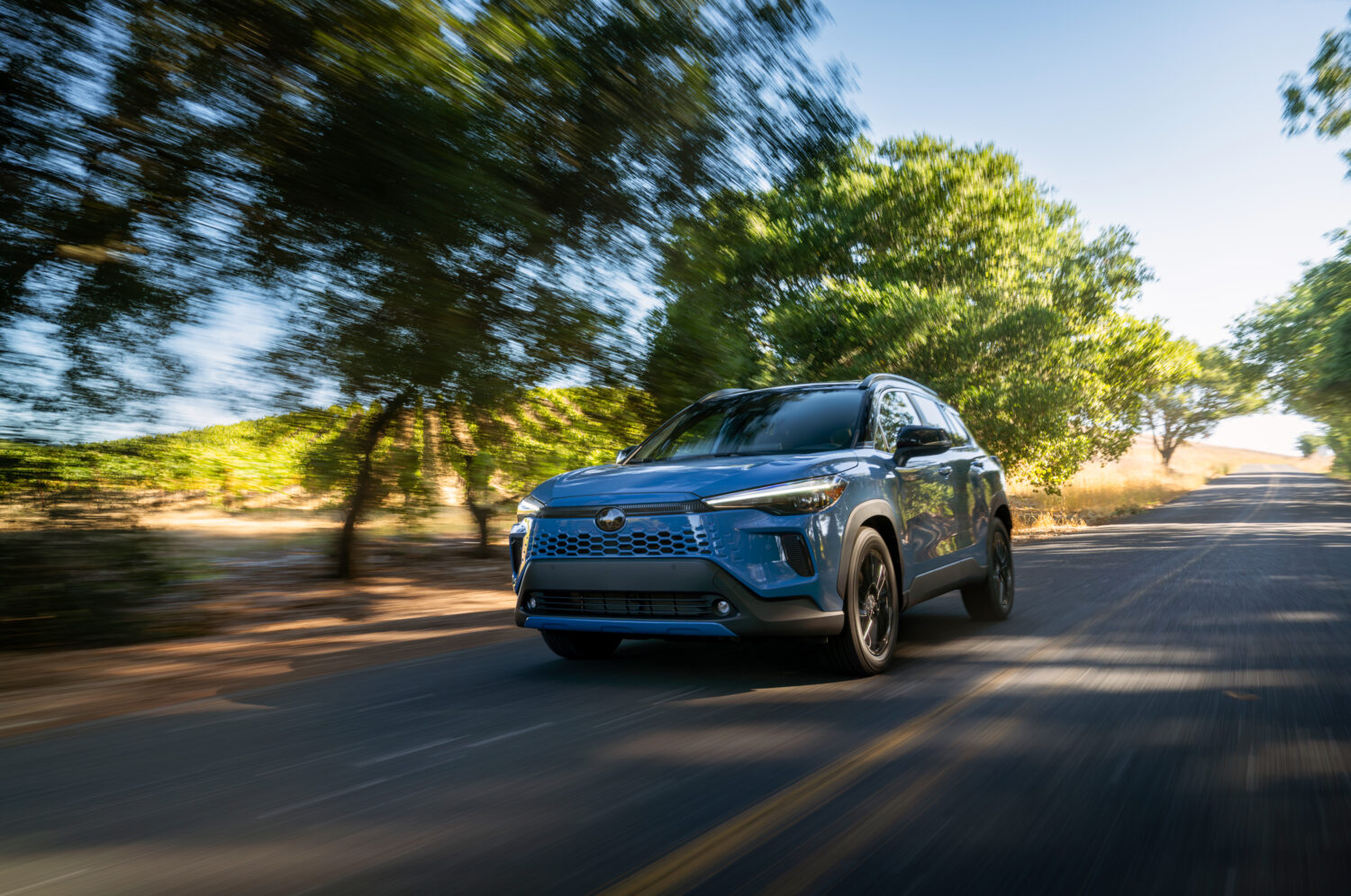
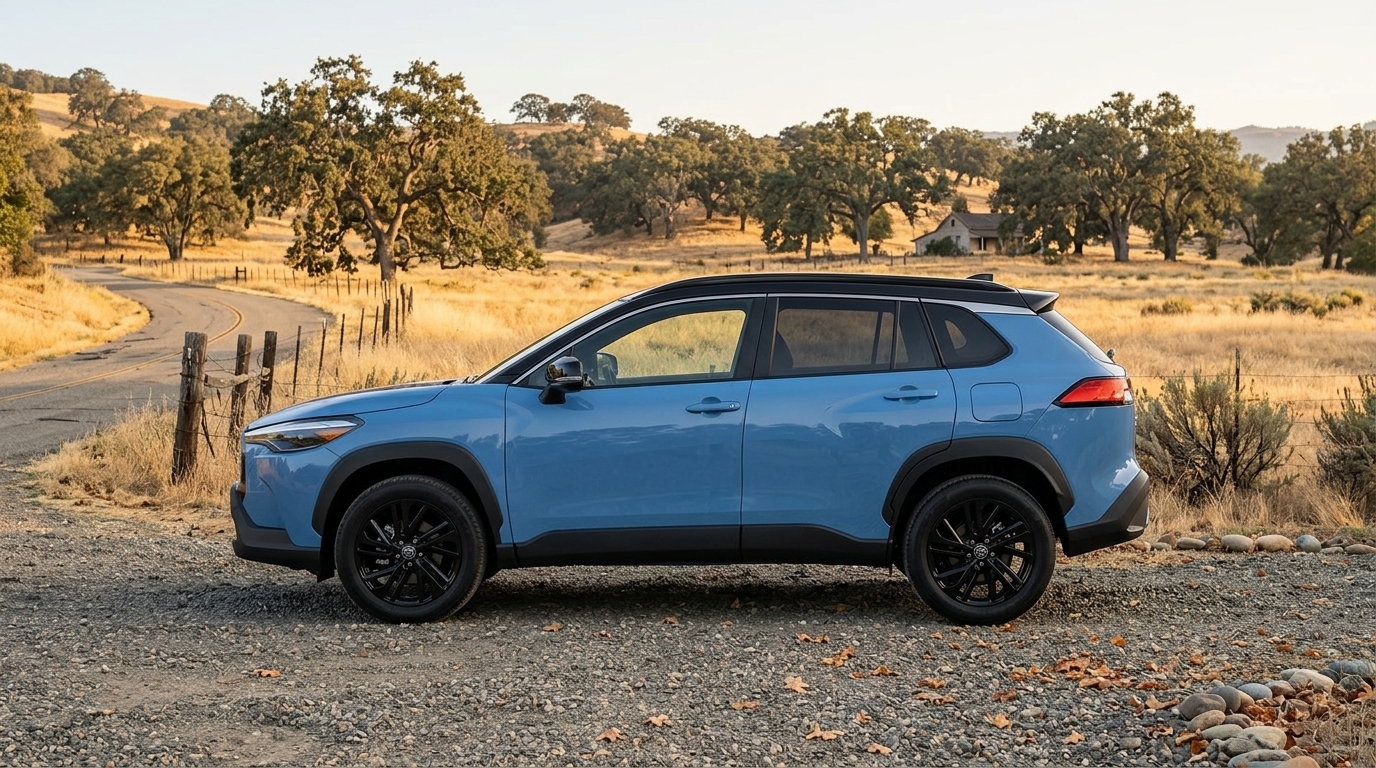
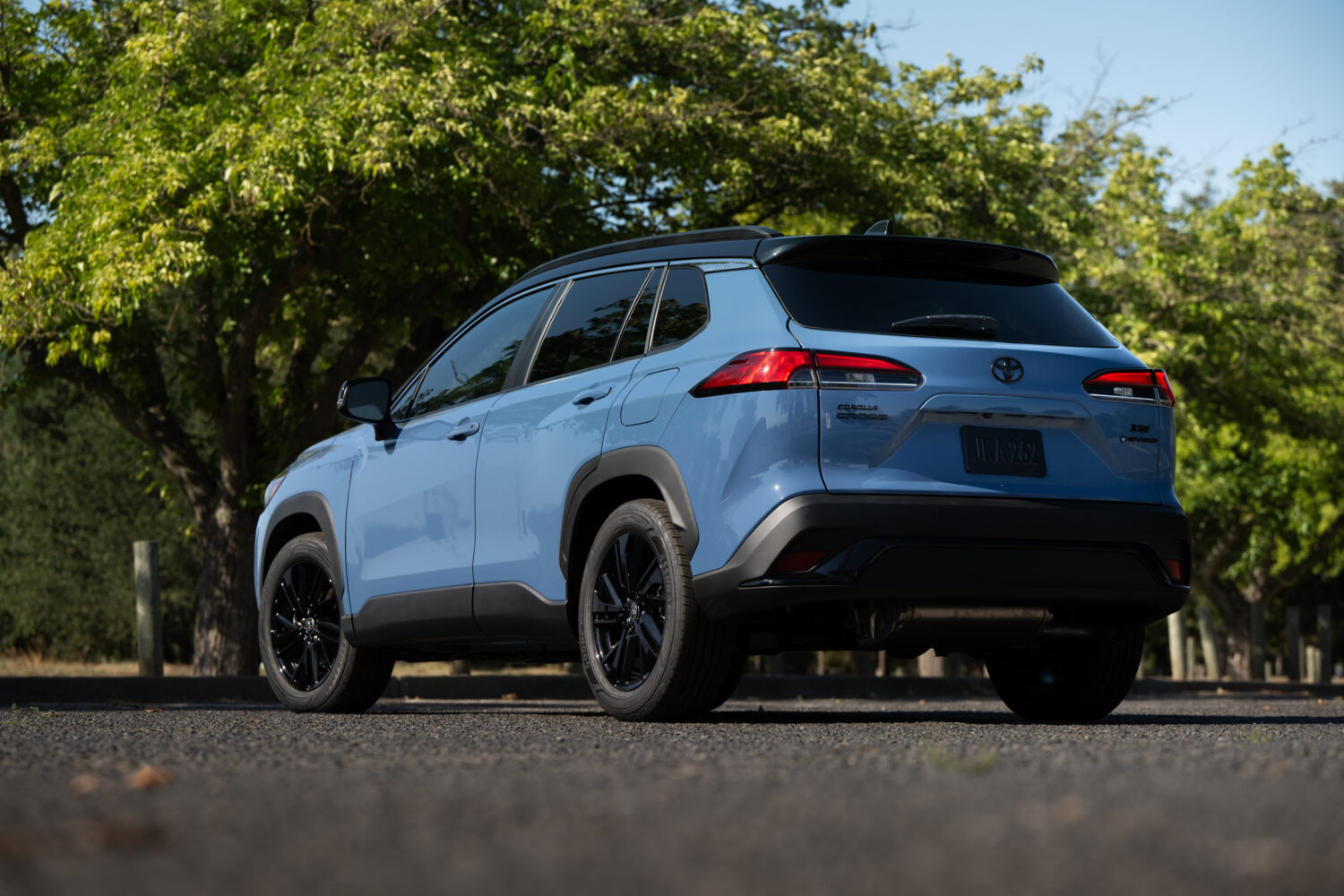
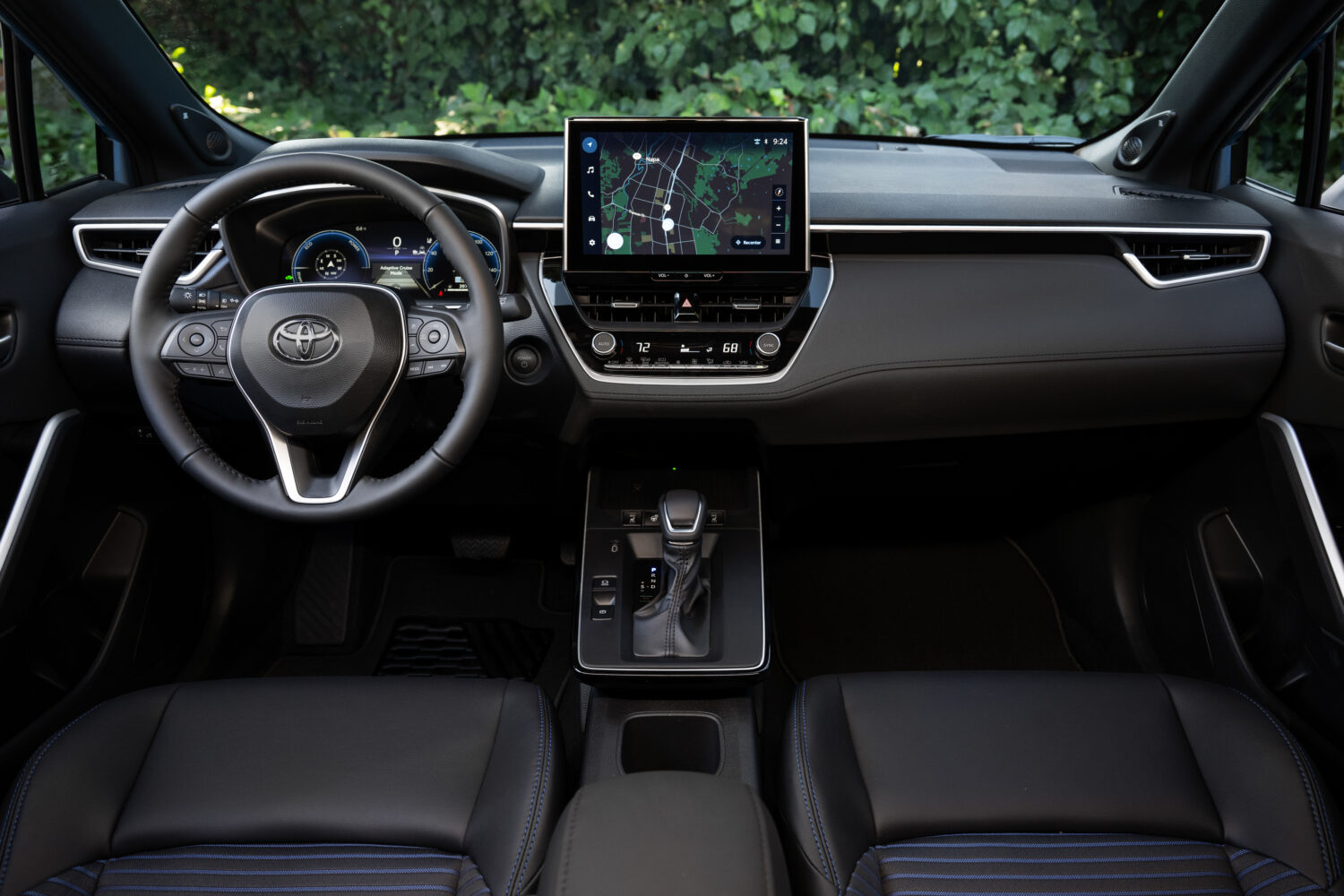
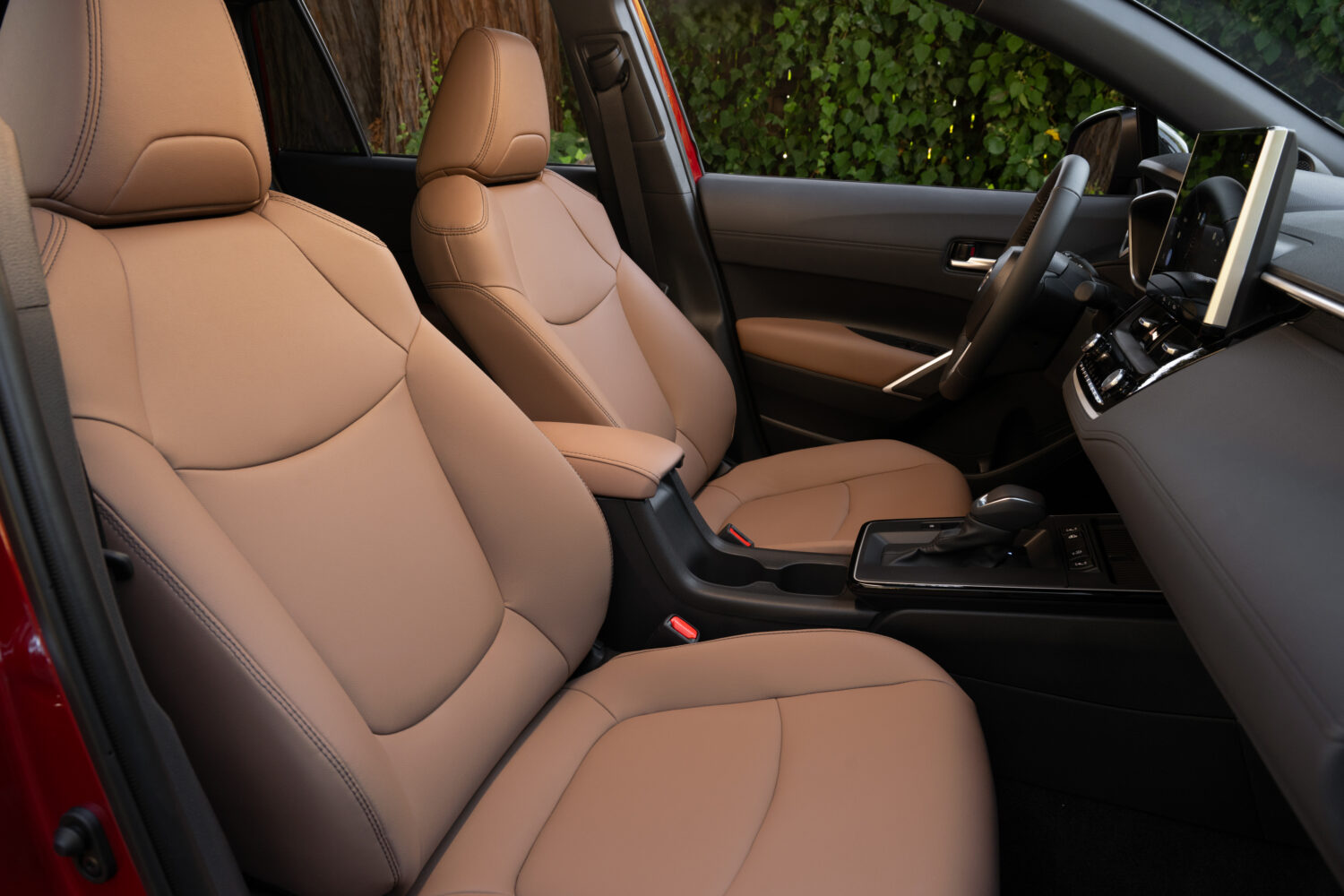
The design of the 2026 Toyota Corolla Cross Hybrid XSE is clean, contemporary, and conservative, resembling a scaled-down version of the popular RAV4. It avoids the polarizing, futuristic styling of some rivals in favor of a handsome and purposeful look that is expected to age gracefully. The XSE trim enhances the exterior with sporty details, including a more aggressive front grille, black accents, and stylish 18-inch alloy wheels. Inside, the design philosophy prioritizes functionality and straightforward ergonomics over flair, with a well-organized dashboard and easy-to-reach controls. The XSE model elevates the cabin with SofTex synthetic leather and other upgraded touches, giving it a more finished feel. However, the interior is still viewed as more durable than luxurious, with some competitors offering more upscale materials or elegant design flourishes.
5. Interior & cargo room
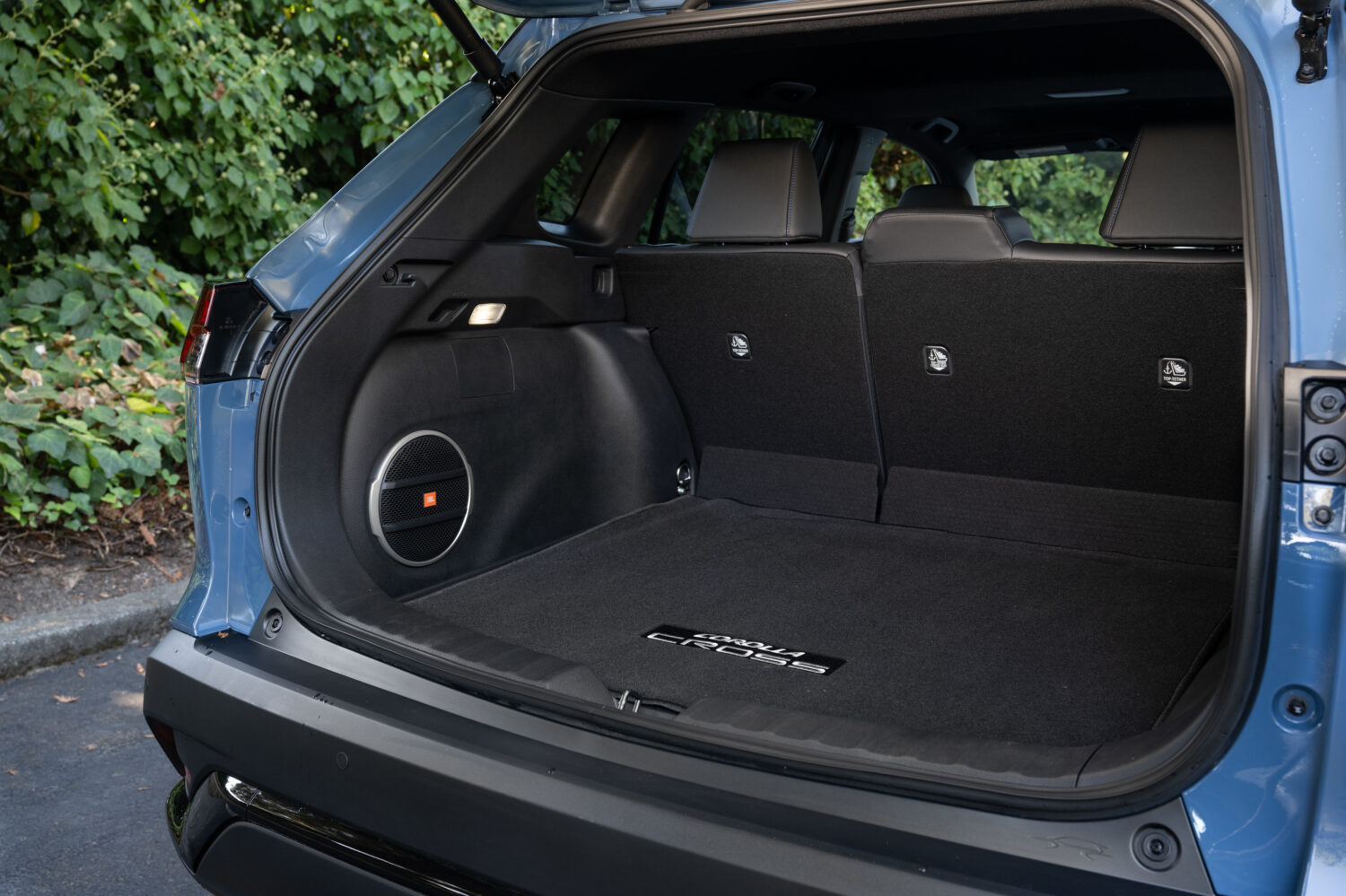
The interior of the Corolla Cross Hybrid XSE provides generous and comfortable space for front-seat occupants, with ample headroom even for taller individuals. However, its primary spatial weakness is in the second row, where rear legroom is consistently described as tight or cramped, measuring significantly less than class leaders like the Honda HR-V. This makes the back seat best suited for children or shorter trips with adults. Cargo capacity is useful for daily errands but also trails the most spacious competitors in outright volume, partly due to the packaging of hybrid components under the floor. Outward visibility from the driver’s seat is a notable advantage, thanks to an upright seating position and smart pillar design that gives a commanding view of the road ahead, enhancing the feeling of space in the front.
6. Ergonomics & comfort
The cabin of the 2026 Corolla Cross Hybrid XSE is ergonomically sound, featuring a logical layout where primary controls are well-placed and easy for the driver to operate. Front seat comfort is commendable, offering supportive cushions ideal for daily commuting, though some find them a bit firm on very long trips. In the rear, comfort is compromised by limited legroom and upright seatbacks. Storage solutions are practical, with numerous cupholders and small bins, and USB ports are conveniently provided for both front and rear passengers. A key strength is excellent forward visibility, but this is contrasted by a significant minus: thick rear pillars create noticeable blind spots, making the standard blind-spot monitoring system an essential feature for safe lane changes and navigating traffic.
7. Interior, fit & finish
The interior of the XSE trim presents a balance between premium touches and economy-class roots. Key touchpoints like the dashboard, front armrests, and synthetic leather seats feel pleasant and well-made, enhanced by attractive contrast stitching. However, the cabin also features a significant amount of hard, scratch-prone plastic on the lower door panels, center console, and in the rear passenger area, which reveals its budget-conscious origins. Where the vehicle excels is in its fit and finish; panel gaps are consistently tight and the overall construction feels solid and rigid, with virtually no squeaks or rattles reported even on rough roads. While some minor parts can feel lightweight, the impressive assembly quality reinforces Toyota’s reputation for durability, ensuring the cabin is built to withstand years of daily use.
8. Driver & Pass UX
The driver and passenger user experience is centered around an 8-inch touchscreen that is responsive, user-friendly, and features an intuitive layout with large, clear icons. The system performs reliably without significant lag or glitches, and navigating menus for audio, vehicle settings, or navigation is straightforward. While most controls are easy to find, some deeper settings can be buried within sub-menus, requiring a few extra taps. Bluetooth pairing is a simple and quick process, with devices reconnecting reliably upon re-entry. The vehicle also includes a voice-based interface that performs adequately for basic commands like making calls or changing audio sources, though it can struggle with more complex phrasing or noisy conditions. Overall, the system prioritizes ease of use and dependability over flashy design, delivering a frustration-free experience for daily tasks.
9. Sound system
The audio experience in the 2026 Corolla Cross Hybrid XSE is competent, especially for spoken-word content like podcasts and news, where vocals are reproduced with excellent clarity. The available nine-speaker JBL premium audio system is a significant upgrade over the standard setup, providing brighter highs and more distinct mid-bass, though the standard system is adequate for casual listening. A weakness noted in both systems is that bass response can feel somewhat limited, and the sound may lose some fidelity or become thin at higher volumes. Perceived audio quality is also impacted by cabin acoustics, as road and wind noise at highway speeds can become noticeable, sometimes requiring the listener to increase the volume to compensate, which can expose the system’s limitations.
10. Acceleration
The Corolla Cross Hybrid XSE is powered by a 2.0-liter four-cylinder engine and electric motors, producing a combined 196 horsepower. This power is sent through an electronic on-demand AWD system that uses a rear motor, eliminating the need for a mechanical driveshaft. Its greatest strength is the smooth, immediate torque delivery at low speeds, making it feel zippy and responsive in city traffic. In timed tests, it achieves a 0-60 mph time of around eight seconds, which is brisk and competitive for its class. The powertrain’s primary weakness is the loud, droning engine note that intrudes into the cabin during hard acceleration, a common trait of its continuously variable transmission. While quick enough for daily driving, the powertrain is tuned for smooth efficiency rather than delivering an exciting, performance-oriented character.
11. Braking
The 2026 Toyota Corolla Cross Hybrid XSE features a blended braking system that combines regenerative and traditional friction brakes, delivering confident and predictable performance for everyday driving. Emergency stopping distances from 60 mph are competitive for the class, typically landing in the high-120-foot to mid-130-foot range. The brake pedal feel is a frequently discussed trait; due to the blending of braking types, it can feel slightly artificial or non-linear compared to a purely hydraulic system, particularly at very low speeds. However, most drivers find it easy to acclimate to and can achieve smooth stops in traffic after a short adjustment period. Under hard braking, the vehicle remains stable and composed with good ABS calibration, inspiring confidence in emergency situations without any unnecessary drama.
12. Handling
On the highway, the Corolla Cross Hybrid XSE is tuned for calm and secure cruising, tracking straight without requiring constant steering corrections. The steering itself is light and easy to manage, but it provides limited road feel, prioritizing comfort over sporty engagement. Body roll is present in faster corners, as expected for a relatively tall crossover, but it remains controlled enough to feel safe and predictable. In the city, its handling shines, where light steering and a good turning circle make it feel maneuverable and stress-free to park or navigate through tight urban spaces. The vehicle’s reactions are consistently smooth and safe rather than eager or sharp, perfectly aligning with its mission as a practical, easy-to-drive daily commuter that does not pretend to be a performance machine.
13. Interior noise
The acoustic environment inside the Corolla Cross Hybrid XSE is a mixed experience. Its most prominent source of noise is the powertrain; under hard acceleration, the engine is held at high RPMs, creating a coarse, droning sound that penetrates the cabin. During gentle cruising or low-speed electric operation, the interior is impressively quiet and serene. At steady highway speeds, however, wind and road noise become the dominant sounds, with tire roar over coarse pavement and wind rush around the mirrors being quite evident. The overall noise level is considered average for the segment—not class-leadingly quiet, but acceptable for daily commuting. Refinement relies on conventional sound deadening rather than advanced active noise cancellation, so the cabin is not as isolated as some better-insulated rivals.
14. Ride quality
The 2026 Toyota Corolla Cross Hybrid XSE delivers a ride that successfully balances comfort and control. On the freeway, it feels stable and composed, effectively smoothing over long undulations and minor pavement seams for a relaxed journey. In the city, the ride is generally competent at absorbing everyday potholes and bumps, but it can feel slightly firm or busy over sharp, high-frequency imperfections, a characteristic sometimes attributed to the XSE trim’s larger 18-inch wheels. Its behavior over speed bumps is considered average; it handles them without harshness but can exhibit some secondary body motion as the suspension settles. Overall, the ride is tuned to prioritize predictability and composure for daily driving rather than a pillowy, ultra-plush feel, making it a comfortable if not class-leading commuter.
15. Driver assist systems
Equipped with Toyota Safety Sense 3.0, the Corolla Cross Hybrid XSE features a comprehensive suite of modern driver aids. The adaptive cruise control is widely praised for its smooth operation, maintaining following distances predictably in traffic, all the way down to a complete stop. The lane centering system works effectively on well-marked highways, reducing driver fatigue on long trips by providing consistent steering support. Key safety features on the XSE trim, like blind-spot monitoring and rear cross-traffic alert, are valued for their timely and easy-to-interpret warnings in busy parking lots and on multi-lane roads. The pre-collision system is generally seen as vigilant and reliable. The overall behavior of the assist systems is coherent and user-friendly, providing a strong safety net without being overly intrusive during normal driving.
16. Mileage
As a conventional hybrid, the 2026 Toyota Corolla Cross Hybrid XSE AWD delivers exceptional fuel efficiency. It achieves an EPA-estimated combined rating of around 42 mpg, with city mileage often rated higher than highway mileage (e.g., 45 mpg city, 38 mpg highway) due to the hybrid system’s effectiveness in stop-and-go traffic. This performance is better than the average for an all-wheel-drive crossover and represents a significant advantage over its non-hybrid competitors like the Honda HR-V and Subaru Crosstrek. In terms of emissions, its fuel economy translates to approximately 47 pounds of CO2 generated per 100 miles, placing it on the cleaner end of the small SUV spectrum. This predictable efficiency makes it an incredibly appealing choice for commuters and budget-conscious drivers who want utility without a major fuel penalty.
17. Safety
The 2026 Corolla Cross Hybrid XSE is positioned as a safety-forward vehicle, earning top marks from major testing agencies, including a 5-Star Overall Safety Rating from NHTSA and a Top Safety Pick designation from the IIHS. It comes standard with the comprehensive Toyota Safety Sense 3.0 suite, which includes automatic emergency braking, adaptive cruise control, and lane-keeping assistance. The XSE trim further enhances this with standard blind-spot monitoring and rear cross-traffic alert, which are especially valuable systems that help mitigate the visibility challenges posed by the vehicle's thick rear pillars. Its structural performance in crash tests is strong, and its standard active safety features compare favorably to rivals, many of whom offer similar tech but sometimes reserve it for higher trims or extra-cost packages.
18. Pricing
The Corolla Cross Hybrid XSE AWD is competitively priced within the mainstream small crossover segment. The hybrid lineup generally starts in the high $20,000s to low $30,000s, with the top-tier XSE AWD trim typically priced in the mid-$30,000s (around $33,500), including a destination charge of approximately $1,450. This pricing is average for a well-equipped a hybrid crossover with standard all-wheel drive. While it may appear higher than some base model, non-hybrid competitors, the cost becomes much more comparable when those rivals are equipped with similar features and AWD. Due to its popularity and strong demand, the Corolla Cross Hybrid often has firm transaction prices with fewer discounts available compared to some other models in the class.
19. Value
The value proposition of the 2026 Corolla Cross Hybrid XSE is exceptionally strong, anchored by Toyota’s reputation for stellar long-term reliability and low depreciation. It is expected to retain its value better than most competitors, with only the Honda HR-V/CR-V and Subaru Crosstrek offering similarly slow depreciation rates. At the time of purchase, its value is bolstered by a generous list of standard features, including all-wheel drive and a full suite of safety systems, which might be costly options on rivals. The upfront cost, while potentially higher than non-hybrid alternatives, is often balanced by significant long-term savings from its excellent fuel economy and low expected maintenance costs. This combination of high resale value, standard equipment, and low running costs makes it a financially sound choice.
20. Reliability
The 2026 Toyota Corolla Cross Hybrid XSE is expected to deliver excellent reliability, benefiting from Toyota’s decades of experience with its mature and well-tested hybrid powertrain technology. The drivetrain is widely regarded as robust and durable, with a history of minimal catastrophic failures in other Toyota models. While any new vehicle can have small issues, the most commonly reported concerns tend to be minor, such as occasional infotainment software glitches or oversensitive driver-assist sensors, rather than significant mechanical problems. Compared to competitors that use more complex small-displacement turbo engines or less-proven hybrid systems, the Corolla Cross Hybrid is often viewed as a safer bet for long-term, trouble-free ownership, aligning perfectly with the brand's bulletproof reputation.
Frequently asked questions about the 2026 Toyota Corolla Cross Hybrid XSE AWD
Is the 2026 Toyota Corolla Cross Hybrid XSE AWD worth buying?
The 2026 Toyota Corolla Cross Hybrid XSE AWD is a subcompact crossover that blends the Corolla nameplate’s reliability with the practicality of a higher-riding utility vehicle. It sits in Toyota’s lineup below the larger RAV4, offering a compelling package for buyers who prioritize exceptional fuel efficiency and all-weather security. Its key differentiator in a crowded segment is the standard pairing of an advanced hybrid powertrain with electronic on-demand all-wheel drive. The typical buyer is a pragmatic, cost-conscious consumer seeking a dependable daily driver with low operating costs. S
How much does the 2026 Toyota Corolla Cross Hybrid XSE AWD cost?
The 2026 Toyota Corolla Cross Hybrid XSE AWD is priced at $25,035 – $33,430, before destination, options, and incentives.
What is the fuel economy of the 2026 Toyota Corolla Cross Hybrid XSE AWD?
The 2026 Toyota Corolla Cross Hybrid XSE AWD returns 42 MPG combined per published EPA figures.
How this review is produced
moblr meta-reviews are generated by aggregating multiple published expert road tests using AI consensus and sentiment analysis, then read and reviewed by a human editor before publication. Category ratings on the −50 to +50 scale show how each vehicle compares to the average for its segment. Learn more about the moblr review process.