2026 Toyota Corolla Hybrid LE (FWD)
Consensus at a glance
- Consensus score
- Not yet rated
- Price
- $22,925 – $29,140
- Powertrain
- Hybrid
- Combined fuel economy
- 50 MPG
- Body type
- sedan
title
1. Quick Take
The 2026 Toyota Corolla Hybrid LE (FWD) is a compact sedan combining the brand’s famous nameplate with a mature and highly efficient gas-electric hybrid powertrain. Positioned as an accessible entry into electrified driving, it targets pragmatic consumers who prioritize low operating costs, high fuel economy, and proven reliability over thrilling performance. The car’s greatest strength is its refined hybrid system, which delivers a familiar and easy driving experience that requires no change in user habits. Praised for its excellent real-world fuel economy and straightforward usability, the overall impression is that of a sensible, dependable daily driver. Common critiques focus on its modest acceleration and a driving character that is competent and comfortable rather than sporty or engaging. It stands as a top choice for commuters, first-time new car buyers, and anyone seeking financial peace of mind from their transportation.
2. Its Main Competition
The Corolla Hybrid LE’s primary rivals are other efficiency-focused compact sedans, most notably the Honda Civic Hybrid and the Hyundai Elantra Hybrid. The significant differences center on driving dynamics and interior philosophy. The Civic Hybrid generally offers a more engaging and sporty driving experience, with sharper handling and a more premium-feeling cabin, but it often comes with a higher price tag. In contrast, the Hyundai Elantra Hybrid competes with bold, polarizing styling and a more comprehensive warranty. The Corolla distinguishes itself by prioritizing a softer, more compliant ride quality and an unmatched reputation for long-term, trouble-free reliability. While competitors may win over buyers with sportier dynamics or more expressive design, the Corolla Hybrid LE remains the definitive choice for those who value comfort, predictable ownership, and a proven track record.
3. Its Buyer's Demographics
The Corolla Hybrid LE attracts highly practical, value-conscious buyers who view a car as a tool for reliable transportation. The demographic is broad but shows concentrations in two main groups: younger buyers in their twenties and thirties purchasing a first new car, and older buyers over fifty-five, such as retirees on fixed incomes. Household income typically falls within a middle-class range, as buyers prioritize affordability and low running costs over luxury or status. These shoppers are often well-informed, having researched long-term reliability and total cost of ownership. The car is popular with single commuters, couples, and small families using it as a dependable and efficient primary or secondary vehicle. Overall, the buyer profile is defined by financial prudence and a desire for an automobile that is durable, inexpensive to fuel, and hassle-free.
4. Design
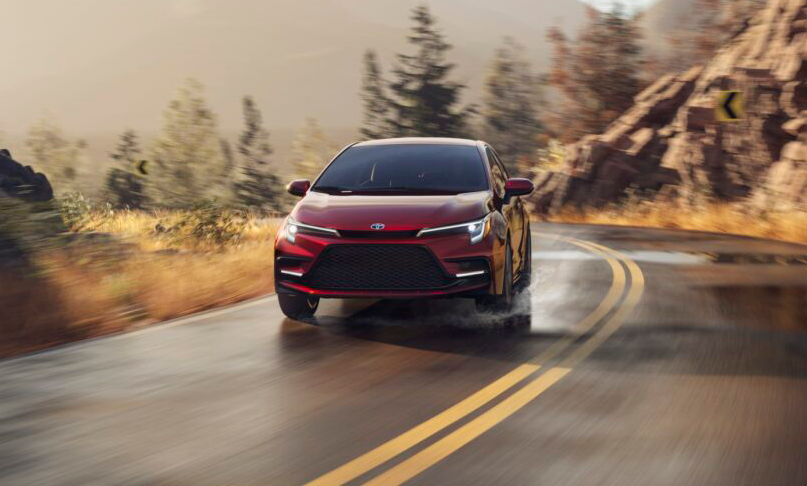
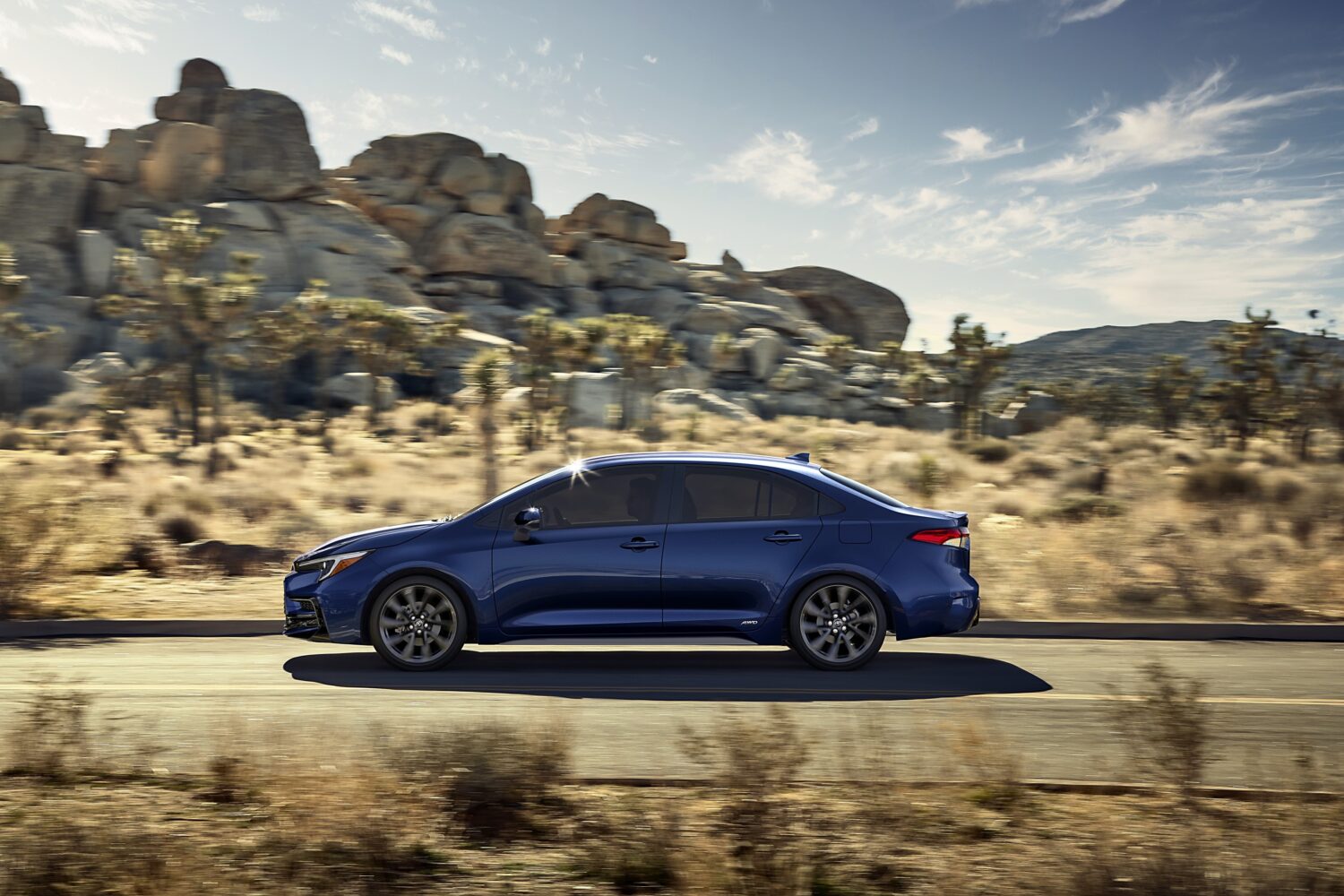
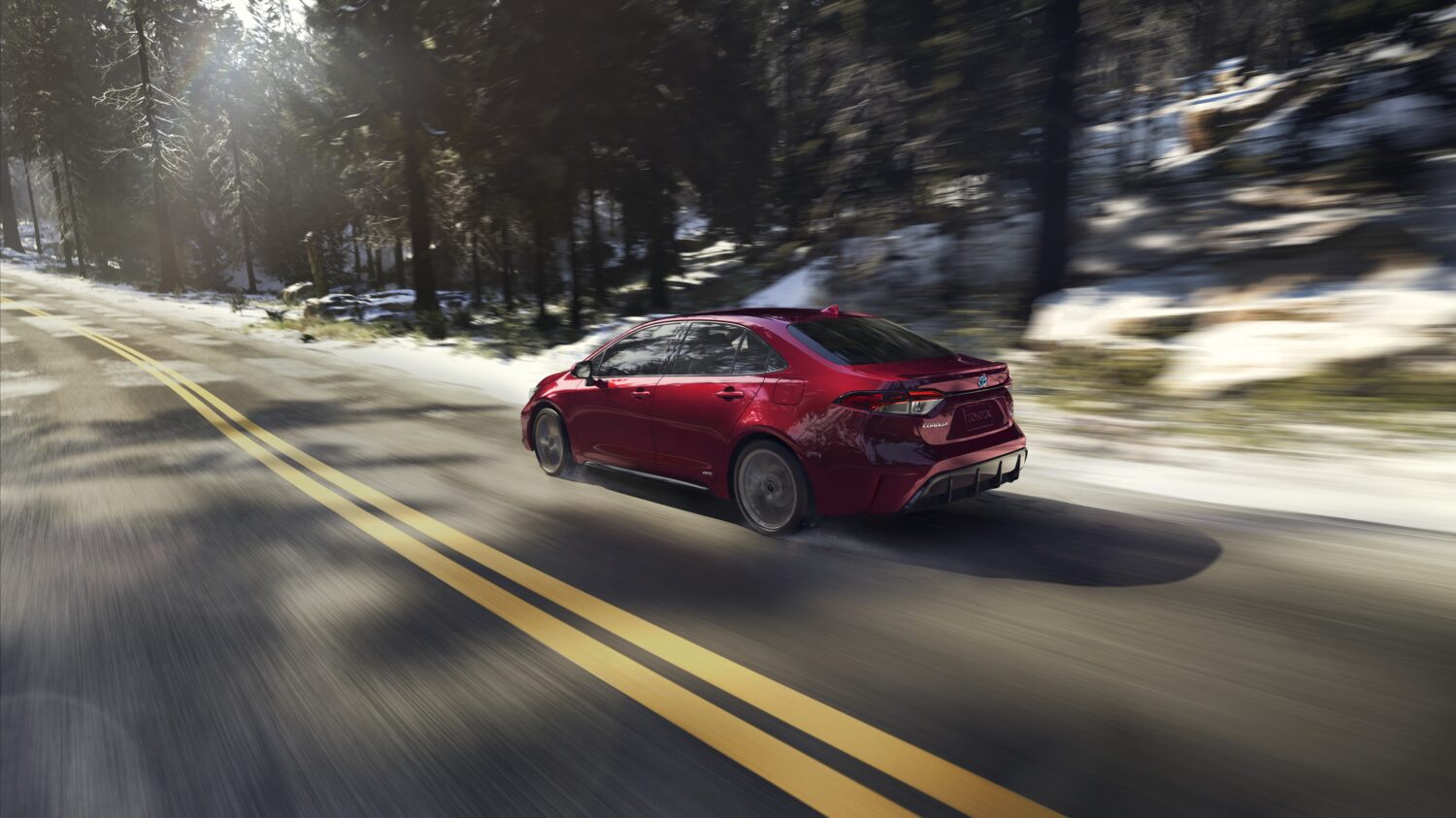
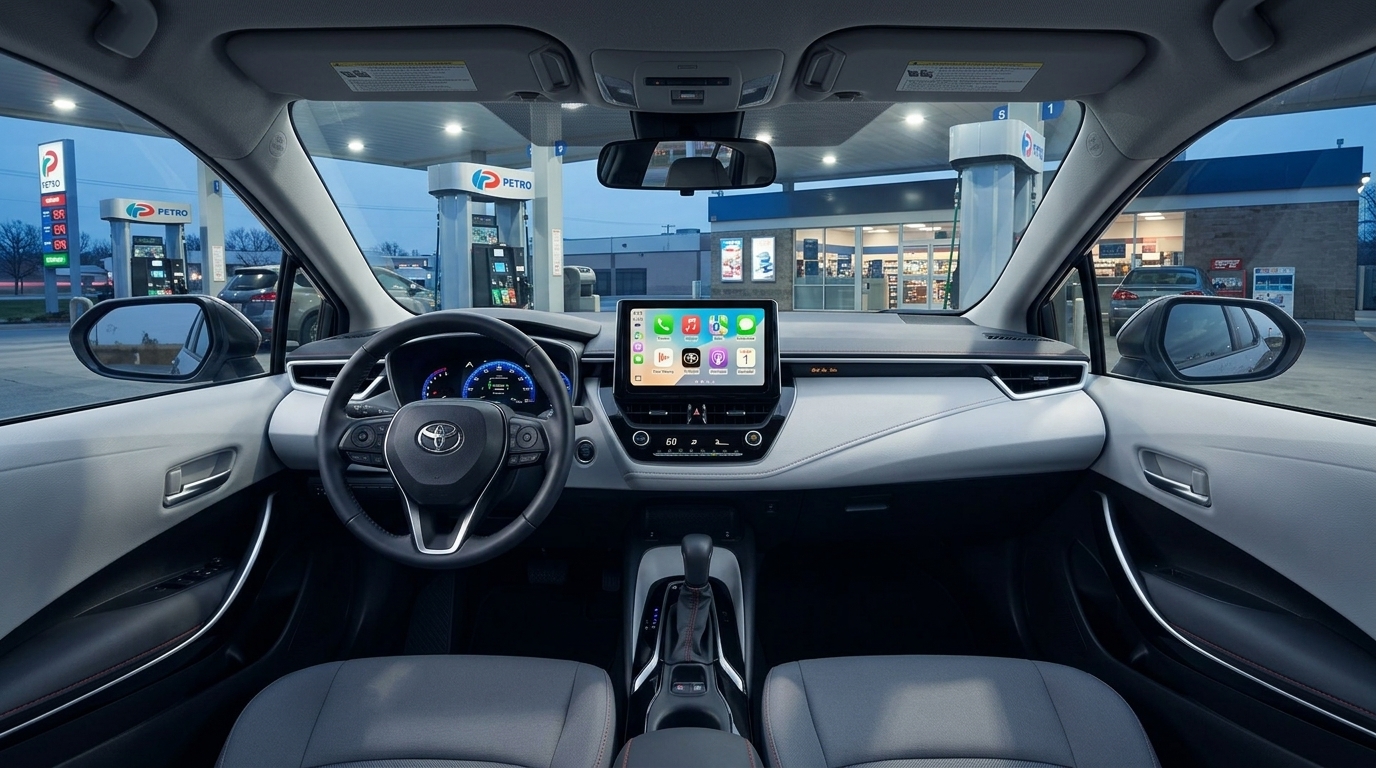
The 2026 Corolla Hybrid LE’s design strikes a balance between modern aesthetics and a conservative, functional approach. The exterior features clean lines and a contemporary front fascia but settles into a traditional and broadly appealing sedan silhouette, avoiding the more aggressive styling of some rivals like the Hyundai Elantra. It is designed to look current without being provocative, aligning with Toyota’s history of creating designs that age gracefully. Inside, the cabin prioritizes user-friendliness and durability over visual flair. The dashboard layout is straightforward and uncluttered, with a high-mounted touchscreen and critically, physical knobs and buttons for core climate functions. While hard plastics are present, the materials feel robust and are assembled with precision, reinforcing a sense of long-term durability over premium luxury.
5. Interior & cargo room
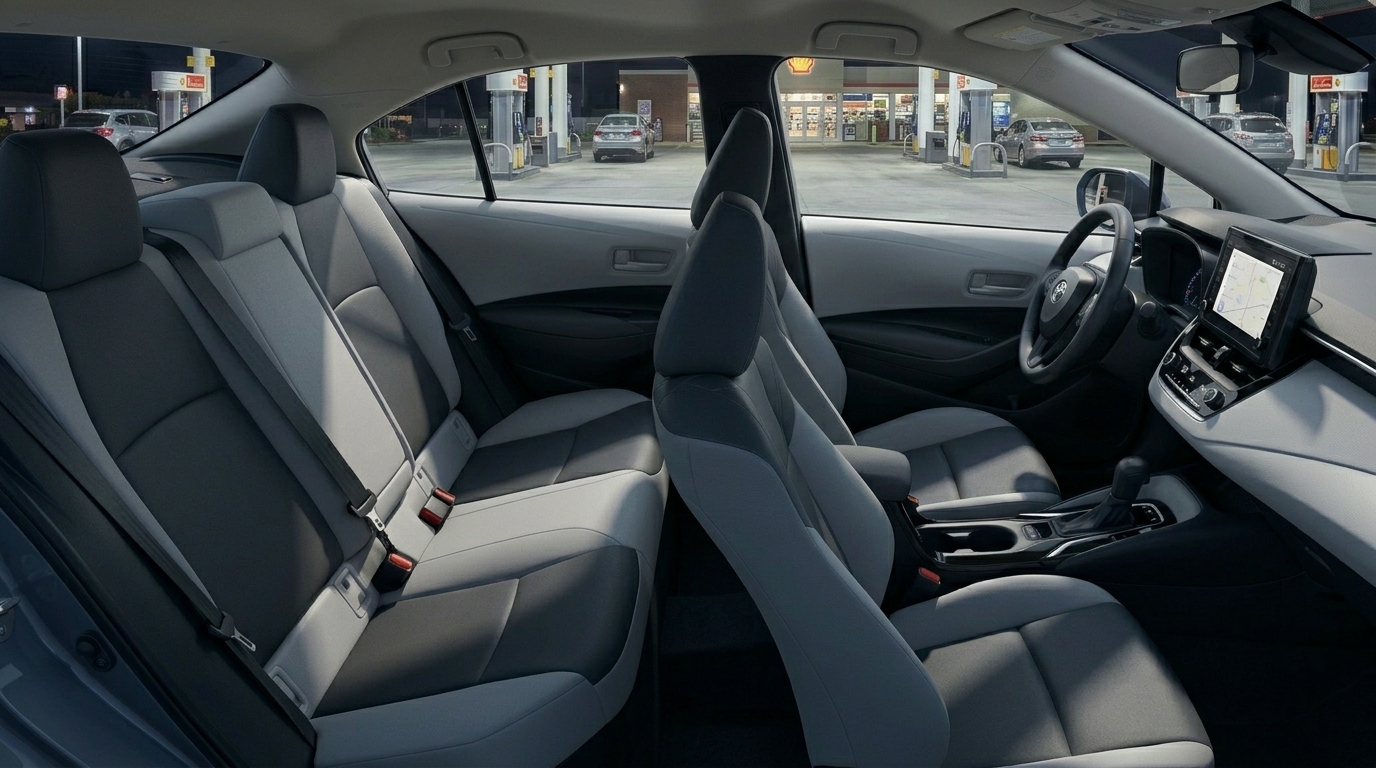
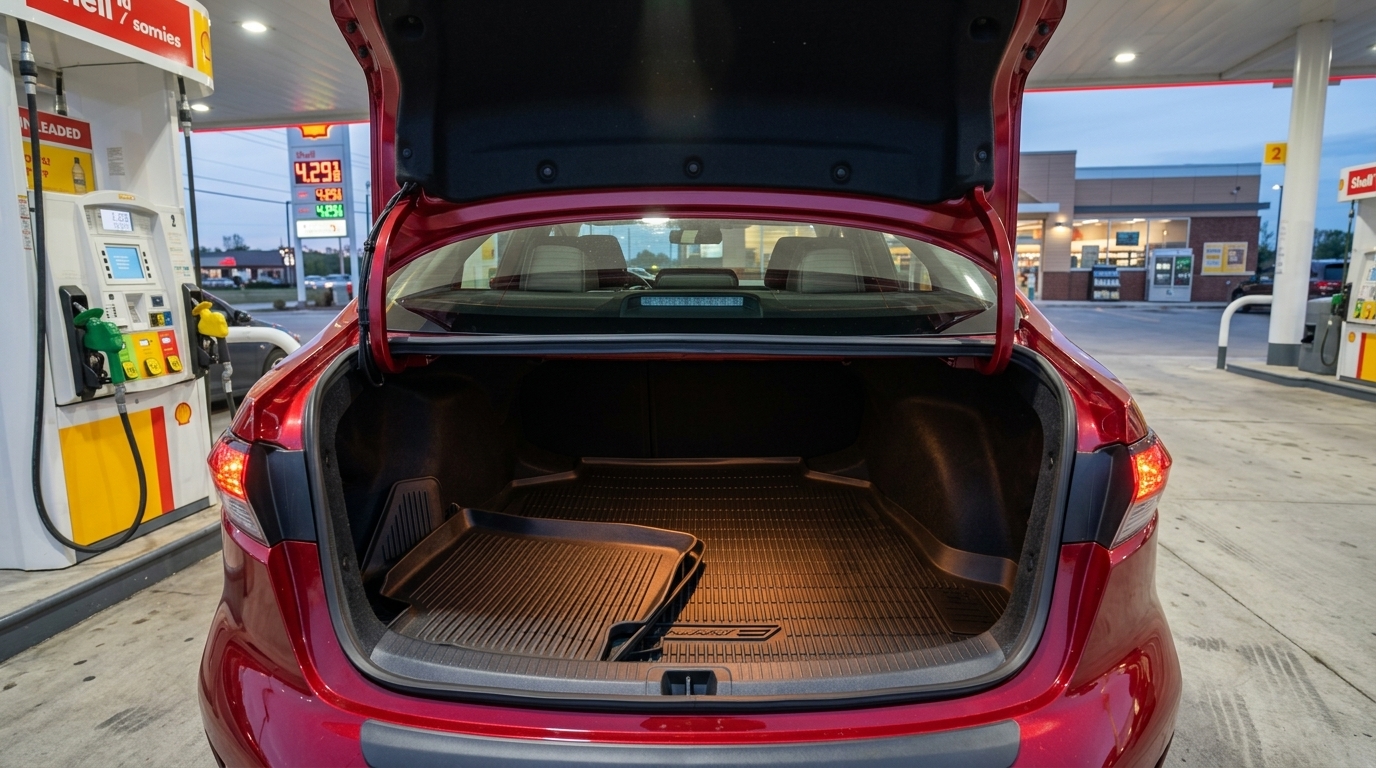
The Corolla Hybrid’s interior space favors the front occupants, who enjoy ample headroom, generous legroom, and a comfortable seating position. Outward visibility from the driver’s seat is a notable strength. However, the rear passenger area is a point of compromise, with rear legroom that is noticeably tighter than in key competitors like the Honda Civic and Hyundai Elantra. While adequate for children and shorter trips with adults, the back seat can feel cramped on longer journeys. The trunk offers a functional 13.1 cubic feet of cargo space, which is usable for daily errands but slightly smaller than what top rivals provide. A key advantage is that the hybrid battery is placed under the rear seat, meaning cargo capacity is not compromised compared to the non-hybrid Corolla.
6. Ergonomics & comfort
The cabin’s layout is a masterclass in straightforward ergonomics, with all primary controls placed logically and within easy reach. A standout advantage is the retention of physical knobs and buttons for the climate control system, allowing for quick adjustments without diverting attention to the touchscreen. Outward visibility is excellent, aided by thin front pillars and well-placed mirrors. Front seat comfort is good for daily commuting, though the lack of adjustable lumbar support can lead to fatigue on extended road trips. Small-item storage is adequate, with functional cupholders and door pockets, although the center console bin is not as spacious as in some rivals. Generous USB-C port availability for both front and rear passengers ensures devices stay charged, which is a competitive feature in this class.
7. Interior, fit & finish
The interior of the Corolla Hybrid LE prioritizes durability over luxury, mixing soft-touch materials on high-contact areas like the dashboard with cost-effective hard plastics on lower panels. While some surfaces feel budget-oriented, the cabin’s assembly quality is a significant strength. Panel gaps are consistently tight, switches have a solid and precise feel, and the entire structure remains free of squeaks or rattles, even over rough pavement. This excellent build quality gives the interior a robust, long-lasting feel, perfectly aligning with Toyota’s reputation for manufacturing durable vehicles. The overall impression is that while the cabin may not feel opulent, it is flawlessly screwed together and designed to withstand years of daily use without showing significant wear, a trade-off many buyers in this segment willingly accept.
8. Driver & Pass UX
The driver and passenger user experience is centered around an 8-inch touchscreen that is praised for being responsive, intuitive, and easy to learn. The system’s menu structure is simple, featuring large icons and avoiding confusing sub-menus for core functions. A key feature is the standard inclusion of wireless Apple CarPlay and Android Auto, which integrate seamlessly and are a notable advantage over some rivals that still require a wired connection on base trims. The voice command system, activated by saying “Hey Toyota,” understands natural language for tasks like adjusting audio or navigation. Bluetooth pairing is quick and the connection remains stable, contributing to a user-friendly and frustration-free technological experience that enhances the car’s daily usability without overwhelming the driver with complexity.
9. Sound system
The standard six-speaker audio system in the Corolla Hybrid LE is best described as functional and perfectly adequate for casual listening. It excels at reproducing spoken-word content like podcasts and talk radio, where vocal clarity is crisp and clear even at moderate volumes. For music, the performance is acceptable but reveals the system’s entry-level nature. The soundstage feels somewhat narrow, and low-end bass response is noticeably weak, lacking the depth and punch found in premium audio options. At higher volumes or on the highway, where it must overcome road and wind noise, the system can sound strained. While it reliably handles background music for daily commutes, it is not designed to impress audiophiles and falls squarely into the average category for a base model compact sedan.
10. Acceleration
The powertrain combines a four-cylinder gasoline engine with electric motor assistance through an electronically controlled CVT. Its greatest strength is the smooth, instant torque delivery from the electric motor at low speeds, which makes the car feel responsive and agile in city traffic. However, its primary weakness is a lack of high-speed passing power, as the modest system output of around 134-138 horsepower results in leisurely acceleration, with 0-60 mph times around 9 to 10 seconds. Under hard acceleration, the engine can become loud and drone at a high, steady RPM, a common trait of this type of hybrid transmission. Overall, the powertrain is masterfully tuned for efficiency and refined city driving but is not intended for drivers who prioritize spirited performance.
11. Braking
The Corolla Hybrid’s braking performance is confident and well-suited for a daily commuter, with emergency stopping distances that are competitive for the compact sedan class. The system smoothly blends regenerative braking from the hybrid powertrain with the traditional friction brakes. This handoff is generally seamless, though some drivers may notice a subtle, non-linear feel in the pedal that is characteristic of many hybrids, making it feel slightly less natural than a conventional gas car’s brakes. In everyday driving, the pedal is easy to modulate for smooth stops in traffic, and the system shows good resistance to fade under repeated use. While not the sharpest or most athletic in its segment, the braking system inspires confidence through its predictable and reliable performance in all normal driving conditions.
12. Handling
On the highway, the Corolla Hybrid LE emphasizes stable, relaxed cruising over sporty agility. The steering is light and predictable, making it easy to track straight on long drives with minimal effort, though it offers limited feedback from the road. Body roll is present in corners but remains well-controlled, ensuring the car feels secure and composed rather than sloppy. In urban environments, its handling shines; the light steering, manageable size, and good turning circle make it exceptionally nimble for navigating tight city streets and parking lots. The suspension is tuned for comfort, effectively absorbing most road imperfections to maintain a smooth ride. The car’s handling is safe and predictable, perfectly calibrated for the realities of daily commuting rather than for enthusiastic driving on winding roads.
13. Interior noise
The acoustic environment inside the Corolla Hybrid LE is a tale of two scenarios. During low-speed city driving, the cabin is remarkably quiet, often running on silent electric power. However, under hard acceleration for merging or climbing hills, the engine becomes quite audible, producing a sustained drone common to CVT-equipped hybrids. At steady highway speeds, the powertrain settles down, but wind and tire noise become more apparent, particularly on coarse pavement surfaces. The car relies on traditional passive sound insulation rather than more advanced active noise-cancellation technology. Overall, the interior noise level is acceptable for the class, providing a peaceful experience when cruising gently but reminding you of its economy-focused powertrain when you demand maximum power.
14. Ride quality
The ride quality of the 2026 Corolla Hybrid LE is a clear strength, with a suspension tuned for comfort and composure. On the freeway, it feels smooth and planted, effectively soaking up expansion joints and gentle undulations without feeling floaty or unsettled. This makes it a pleasant companion for long road trips. In the city, the ride remains compliant, managing to cushion occupants from most bumps, patched asphalt, and manhole covers. While the suspension handles most imperfections gracefully, sharp-edged impacts like deep potholes can send a noticeable thump through the cabin. Overall, the ride provides a pleasing balance of control and softness that insulates occupants from the harshness of daily driving, making it one of the more comfortable options in its segment.
15. Driver assist systems
The Corolla Hybrid LE comes standard with a comprehensive suite of driver aids, typically including the latest version of Toyota Safety Sense. The adaptive cruise control system is a standout, functioning smoothly in a variety of conditions, including stop-and-go traffic where it manages speed and distance without jerky inputs. The lane centering technology provides gentle steering assistance to reduce fatigue on well-marked highways. Other valuable features like the pre-collision system, automatic high beams, and rear cross-traffic alert function reliably and are generally well-calibrated to be helpful without being overly intrusive. These systems work cohesively to enhance safety and reduce driver workload, making the daily commute feel safer and less stressful, and their standard inclusion is a strong value proposition in this class.
16. Mileage
Exceptional fuel efficiency is the Corolla Hybrid LE’s defining characteristic and a primary reason for purchase. Official EPA ratings are highly competitive and often place it at or near the top of the compact hybrid sedan class. Its real-world performance is particularly strong in city and stop-and-go driving, where the hybrid system can maximize the use of its electric motor and regenerative braking. Owners frequently report achieving mileage figures that meet or even exceed the official EPA estimates, especially with smooth driving habits. This fuel-sipping nature results in a low carbon footprint for a gasoline-powered vehicle and translates directly into significant savings at the pump, making it an economically and environmentally sensible choice for high-mileage commuters and budget-conscious drivers alike.
17. Safety
The 2026 Toyota Corolla Hybrid LE is built on a platform that has historically earned top marks for safety, and it comes standard with a robust suite of active safety technologies. The standard Toyota Safety Sense package includes crucial features like a pre-collision system with pedestrian detection, lane departure alert, and full-speed adaptive cruise control. While official crash test ratings from the IIHS and NHTSA for the specific 2026 model year require verification, the Corolla line consistently receives high scores for crashworthiness, including top ratings for its performance in demanding frontal and side-impact tests. The combination of a strong underlying structure and a comprehensive set of standard driver aids positions the Corolla Hybrid as a leader in its class for safety.
18. Pricing
The Corolla Hybrid LE is positioned as the accessible, value-oriented entry point to Toyota’s hybrid sedan lineup. Its MSRP is highly competitive within the compact hybrid segment, typically priced similarly to the Hyundai Elantra Hybrid while undercutting the Honda Civic Hybrid. This strategic pricing makes it a popular choice for buyers, as it delivers the full benefit of the advanced hybrid powertrain and standard safety features without the added cost of the convenience or appearance upgrades found on higher trims. The LE successfully hits a sweet spot that combines excellent fuel economy, modern technology, and an affordable purchase price, reinforcing its status as a smart buy for those focused on maximizing value and minimizing long-term expenses.
19. Value
The value proposition of the Corolla Hybrid LE is exceptionally strong, resting on the dual pillars of low operating costs and outstanding resale value. Its excellent fuel economy and Toyota's reputation for minimal maintenance needs ensure that day-to-day expenses are predictably low. More importantly, the Corolla nameplate, combined with the high demand for efficient hybrid models, results in remarkably low depreciation. It consistently holds its value better than most competitors in the compact sedan class, protecting the owner’s investment over the long term. For high-mileage commuters or anyone focused on total cost of ownership, the combination of fuel savings, reliability, and strong value retention makes the Corolla Hybrid LE one of the most financially sound vehicle choices available.
20. Reliability
The Corolla Hybrid LE’s reputation for reliability is a cornerstone of its appeal. It leverages Toyota’s decades of experience with its proven Hybrid Synergy Drive system, which is widely regarded as one of the most durable and trouble-free powertrains on the market. Both owner feedback and reliability survey data consistently place the Corolla Hybrid at the top of its class for dependability. Issues are rare and typically minor, often related to infotainment software that can be fixed with updates. The core mechanical and electrical components have a track record of longevity, with many examples lasting well over 200,000 miles with only routine maintenance. This bulletproof reputation provides owners with invaluable peace of mind and reinforces its standing as a safe and reliable investment.
Frequently asked questions about the 2026 Toyota Corolla Hybrid LE (FWD)
Is the 2026 Toyota Corolla Hybrid LE (FWD) worth buying?
The 2026 Toyota Corolla Hybrid LE (FWD) is a compact sedan combining the brand’s famous nameplate with a mature and highly efficient gas-electric hybrid powertrain. Positioned as an accessible entry into electrified driving, it targets pragmatic consumers who prioritize low operating costs, high fuel economy, and proven reliability over thrilling performance. The car’s greatest strength is its refined hybrid system, which delivers a familiar and easy driving experience that requires no change in user habits. Praised for its excellent real-world fuel economy and straightforward usability, the o
How much does the 2026 Toyota Corolla Hybrid LE (FWD) cost?
The 2026 Toyota Corolla Hybrid LE (FWD) is priced at $22,925 – $29,140, before destination, options, and incentives.
What is the fuel economy of the 2026 Toyota Corolla Hybrid LE (FWD)?
The 2026 Toyota Corolla Hybrid LE (FWD) returns 50 MPG combined per published EPA figures.
How this review is produced
moblr meta-reviews are generated by aggregating multiple published expert road tests using AI consensus and sentiment analysis, then read and reviewed by a human editor before publication. Category ratings on the −50 to +50 scale show how each vehicle compares to the average for its segment. Learn more about the moblr review process.