2026 Toyota RAV4 XLE Premium FWD
Consensus at a glance
- Consensus score
- Not yet rated
- Price
- $31,900 – $43,300
- Powertrain
- Hybrid
- Combined fuel economy
- 42 MPG
- Body type
- suv
.jpg)
title
1. Quick Take
The 2026 Toyota RAV4 XLE Premium FWD Hybrid is widely regarded as the automotive equivalent of a reliable high-end household appliance: it doesn’t exist to thrill you, but to serve you with unwavering competence. Sitting in the lineup’s "sweet spot," this trim bridges the gap between utilitarian base models and luxury variants by adding 18-inch wheels, LED lighting, and a cabin dressed in durable SofTex synthetic leather. It serves as the definitive choice for pragmatists who want to maximize fuel savings without the "rental fleet" aesthetic. While driving dynamics are described as competent rather than exciting, the vehicle excels in ownership fundamentals of low operating costs, high resale value, and bulletproof hybrid reliability. Ultimately, this SUV is the safe, default recommendation for buyers prioritizing efficiency and peace of mind over emotional flair.
2. Its Main Competition
The RAV4 Hybrid occupies a fiercely contested segment, with the Honda CR-V Hybrid serving as its primary arch-rival. While the Honda is almost universally praised for a more refined driving demeanor and superior rear-seat spaciousness, the RAV4 counters with a rugged aesthetic and a longer track record for powertrain reliability. Beyond Honda, the fiercest competition comes from the Hyundai Tucson and Kia Sportage Hybrids, which attack the Toyota with bold futuristic styling, larger infotainment screens, and longer warranties. Meanwhile, the Mazda CX-50 offers a premium alternative for driving enthusiasts, and the Ford Escape Hybrid competes on fuel economy but often lags in interior material quality. Ultimately, while rivals may beat the RAV4 on specific metrics like quietness or screen size, the Toyota remains the segment leader for buyers wary of long-term ownership risks.
3. Its Buyer’s Demographics
The demographic profile for the 2026 RAV4 XLE Premium Hybrid buyer is best described as "mainstream pragmatic." These consumers buy with spreadsheets rather than impulse, prioritizing total cost of ownership, reliability expectations, and resale value over luxury prestige. The owner base is broad, concentrating heavily on adults in their 30s to 50s, capturing both young families needing a durable "do-everything" vehicle and empty nesters downsizing from larger SUVs. Household income typically lands in the upper-middle-class range, reflecting a willingness to pay a premium for the hybrid powertrain’s long-term math. Psychographically, these buyers are research-heavy and risk-averse, viewing the "Toyota tax" not as an expense, but as a worthwhile investment in a hassle-free ownership experience.
4. Design
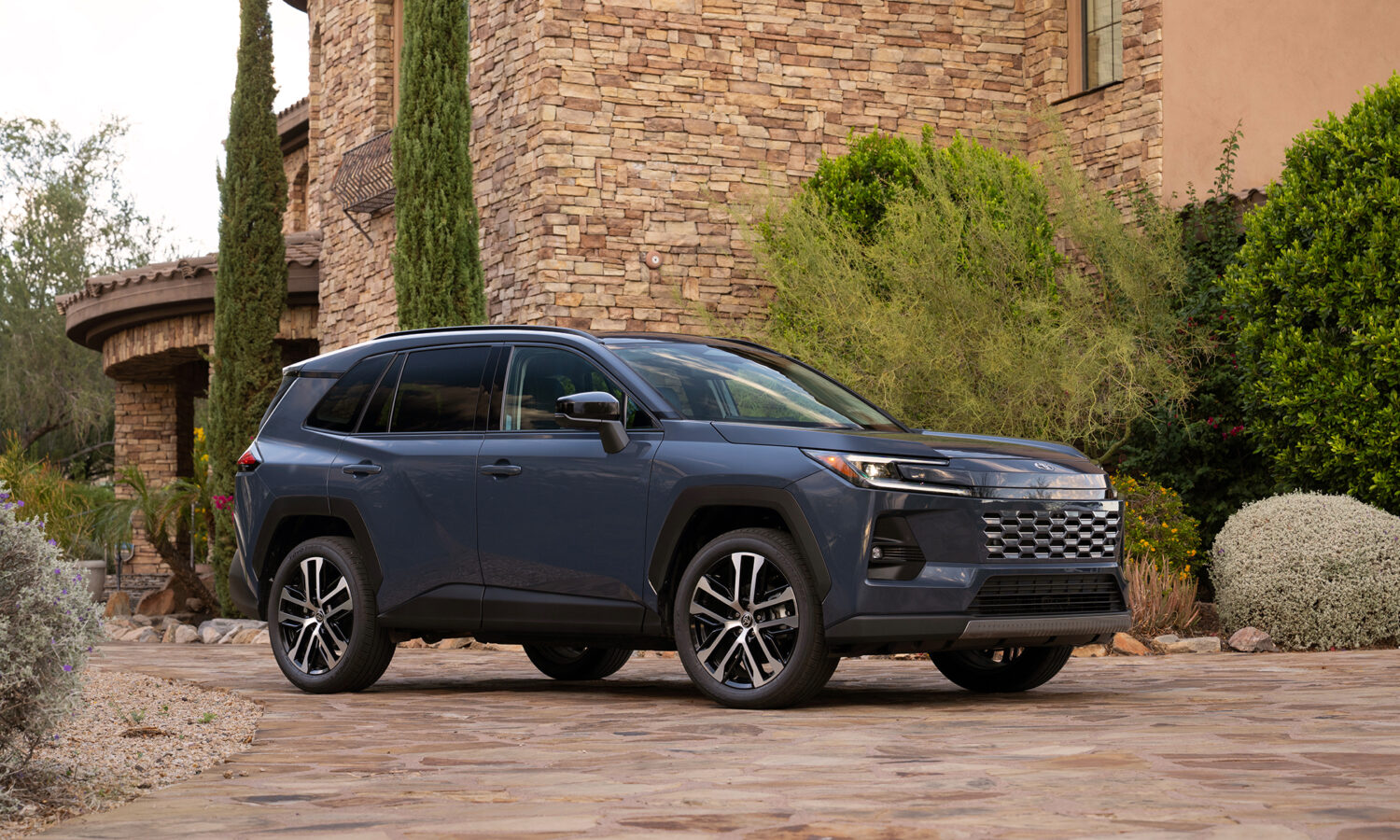
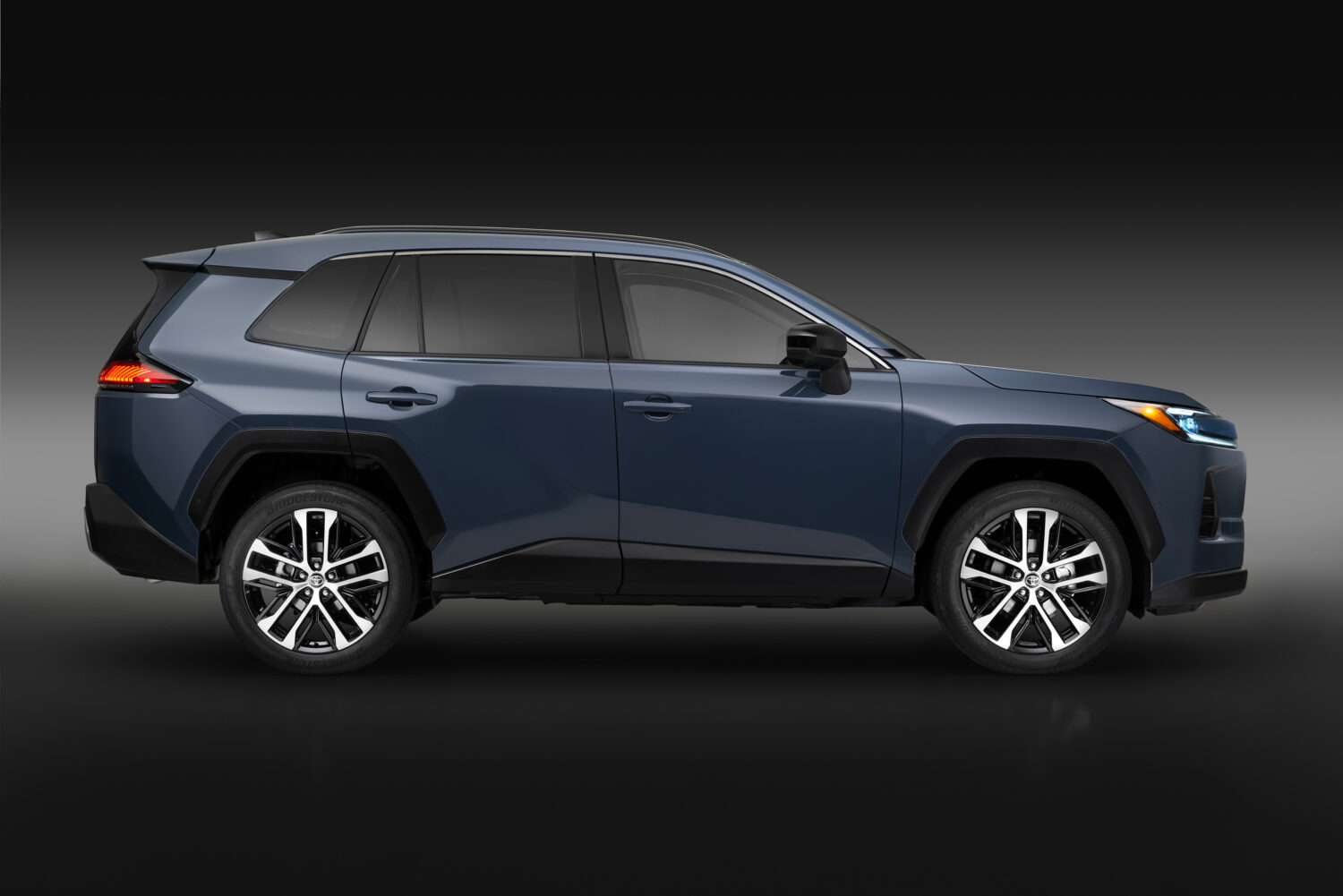
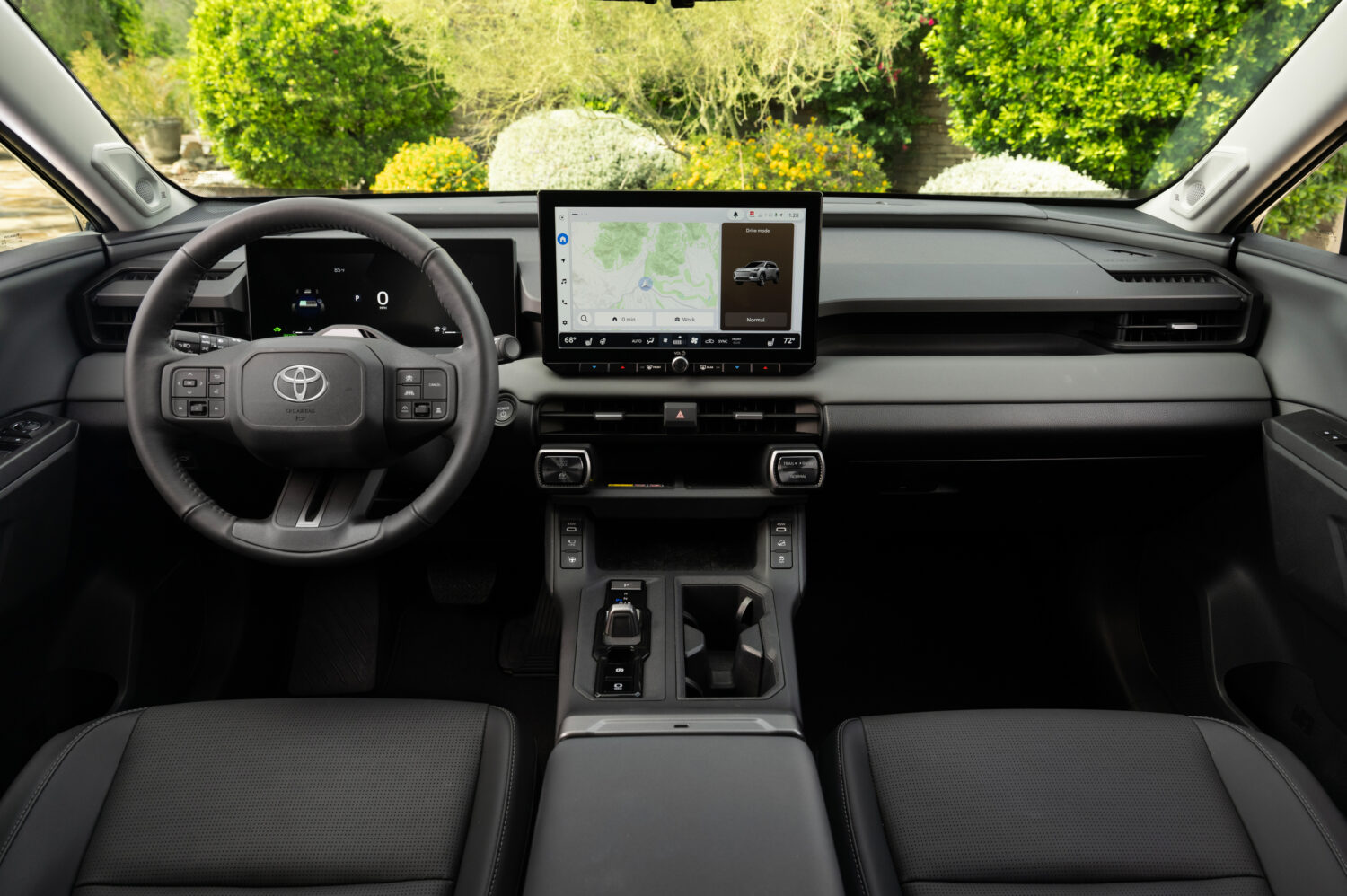
The design language of the 2026 RAV4 XLE Premium Hybrid is recognized as "adventure-refined," striking a balance between rugged cues and suburban approachability. Toyota consciously employs a squared-off, truck-like silhouette inspired by the Tacoma and 4Runner, giving it a capable presence that contrasts with the softer curves of previous generations. Inside, the philosophy shifts from rugged to purely functional, prioritizing large, rubberized knobs for climate and audio controls that are easy to grip and operate. While reviewers appreciate this superior ergonomics, the interior design is frequently critiqued as looking busy and dated compared to the sleek, minimalist cabins of modern rivals like the Mazda CX-50. Ultimately, the aesthetic is attractive in a safe, inoffensive way, looking purposeful without being polarizing.
5. Interior & Cargo Room
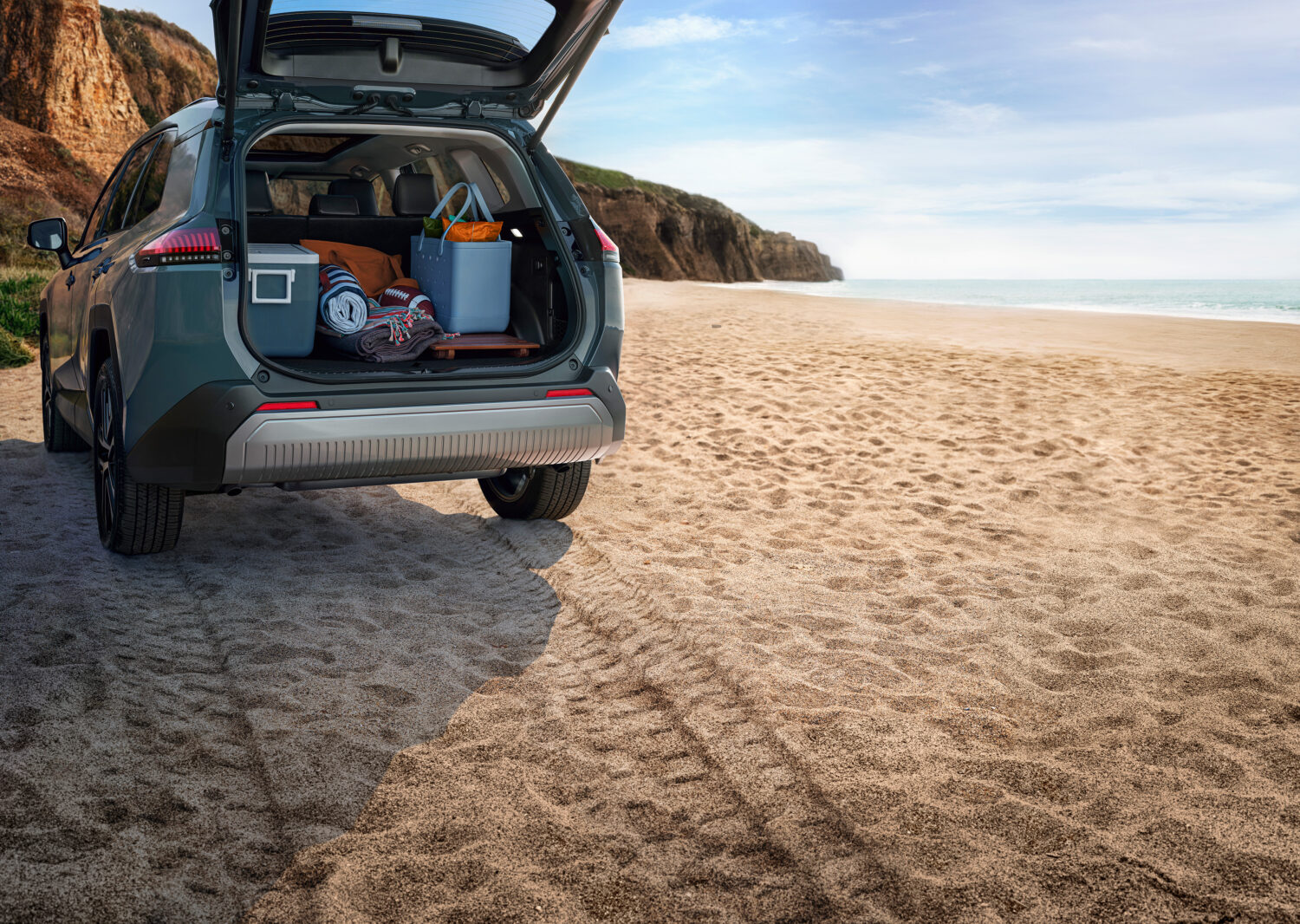
When measuring interior utility, the RAV4 XLE Premium Hybrid prioritizes practical packaging over class-leading sprawl. Front-seat occupants enjoy ample headroom and a commanding view, but the rear seat trails behind the Honda CR-V Hybrid, which offers notably more legroom and airiness. However, cargo capacity is a major strength, providing approximately 37.5 cubic feet of space behind the rear seats with a low, wide load floor that makes packing heavy items effortless. Crucially, the hybrid battery is packaged beneath the rear seat, meaning buyers suffer no penalty in cargo volume compared to the gas-only model. While it may not win the geometry war on paper against every rival, its real-world usability is rated highly by families who find the square cargo hold exceptionally easy to pack.
6. Ergonomics & Comfort
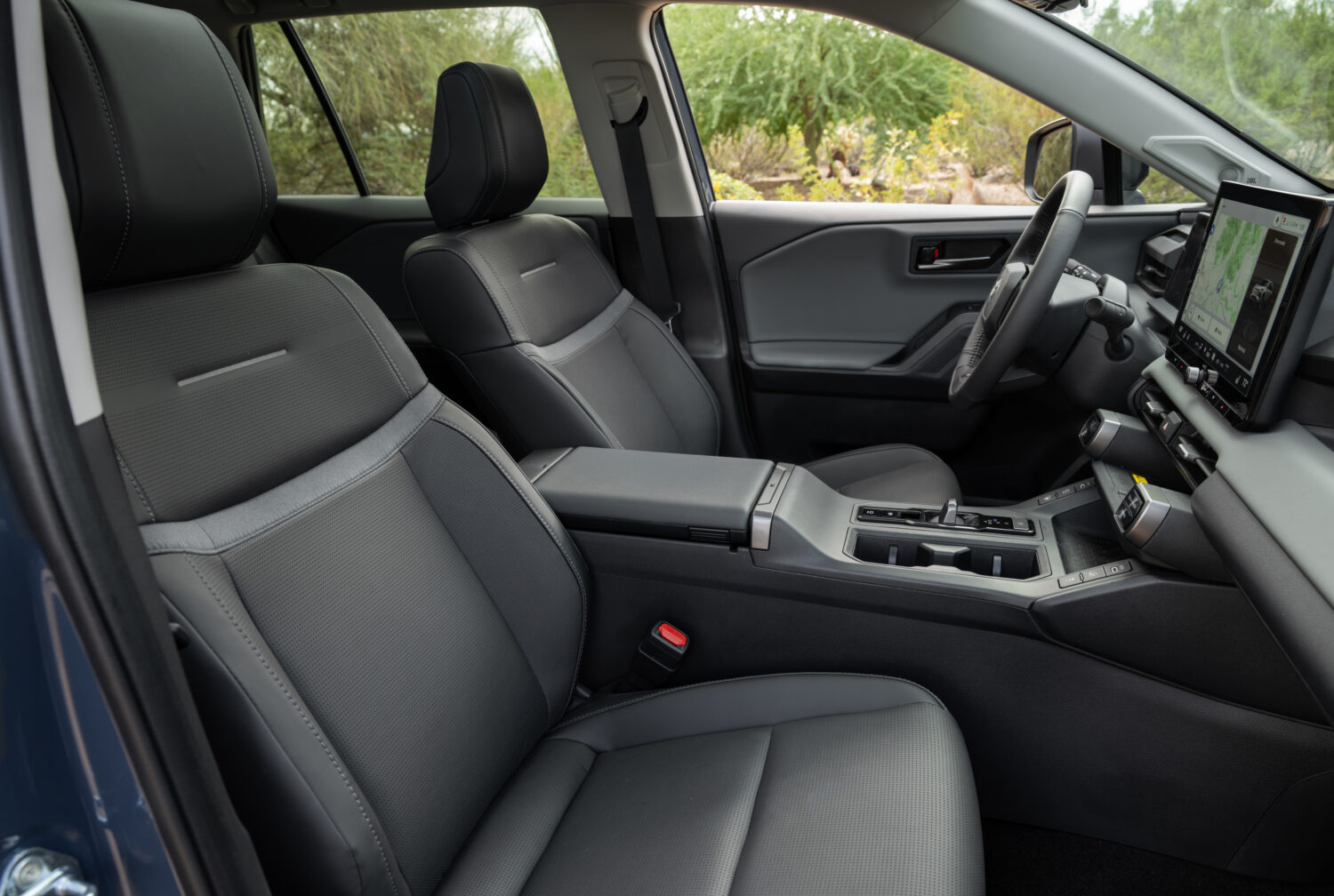
The ergonomics of the 2026 RAV4 XLE Premium Hybrid are widely celebrated as "Toyota-simple," prioritizing immediate usability over steep learning curves. Reviewers and owners praise the control layout, which retains large, distinct physical buttons and rubberized knobs for frequently used functions rather than burying them in touchscreens. Seat comfort in this trim is generally rated as "good but not great," with SofTex synthetic leather that is lauded for durability but criticized by some for providing flat, firm cushioning on long trips. Daily practicality is well-executed with varied storage options, including a useful dash shelf and ample cupholders. While forward visibility is excellent, the chunky rear pillars create blind spots that make the standard blind-spot monitoring system a welcome necessity.
7. Interior, Fit & Finish
The interior fit and finish of the RAV4 XLE Premium Hybrid is best summarized as "durable utility" rather than near-luxury. The cabin materials reflect a clear hierarchy: touchpoints like the steering wheel and armrests feature soft surfaces and stitched synthetic leather that elevate the perceived quality. However, reviewers consistently critique the abundance of hard, scratchy plastics used on the lower dashboard and door panels, which can feel economy-grade compared to premium-leaning rivals like the Mazda CX-5. Despite the humble material choices, the build quality itself is rated exceptionally high, with tight panel gaps and solid switchgear that feels built to last for decades. The consensus is that the interior is designed to withstand the rigors of family life without falling apart, even if it doesn't pamper occupants with plushness.
8. Driver & Pass UX
The user experience in the RAV4 XLE Premium Hybrid is characterized by a "competent but conventional" approach that favors stability over flashiness. The vehicle utilizes Toyota’s newer Audio Multimedia system, which is universally viewed as a massive improvement over past iterations, offering snappy responses and reliable wireless Apple CarPlay and Android Auto connectivity. Intuitiveness is a strong point, with a relatively flat menu structure that ensures users don't have to dig through endless sub-folders for basic settings. However, the experience works best for those who prefer function over form; the graphics lack the cinematic "wow factor" found in Hyundai or Kia interfaces, and native navigation often requires a subscription, leading many users to stick to phone projection. Ultimately, the technology focuses on friction-free daily use rather than dazzling the driver with gimmicks.
9. Sound System
The audio experience in the standard RAV4 XLE Premium Hybrid is widely described as utilitarian, serving the needs of the average commuter but falling short for audiophiles. The basic 6-speaker setup focuses on vocal clarity, performing perfectly well for podcasts and news radio, but struggles with muddy bass and thin high frequencies when pushed with complex music. Because the cabin allows a fair amount of road noise at highway speeds, the standard system often has to work hard to compete, resulting in harshness at high volumes. For buyers who care about audio quality, the optional JBL premium audio system is universally recommended by reviewers. This typically available upgrade resolves the stock system's deficiencies, adding the depth, dynamic range, and low-end punch necessary for an enjoyable musical experience.
10. Acceleration
The acceleration of the RAV4 XLE Premium Hybrid is best understood as "efficiently brisk" rather than sporty. The powertrain pairs a 2.5-liter four-cylinder engine with electric motors to produce a combined 219 horsepower, offering excellent low-speed response that makes the vehicle feel punchy and urgent in city traffic. While the 0-60 mph time in the mid-7-second range is competitive for the class, the experience changes during highway passing. When calling for maximum power, the e-CVT pins the engine at high RPMs, creating a sustained, coarse drone that many reviewers find intrusive. Despite the acoustical complaints, the system is functionally effective, delivering linear power for safe merging and overtaking while prioritizing the smooth efficiency that defines the hybrid experience.
11. Braking
Braking performance in the RAV4 XLE Premium Hybrid is widely regarded as competent and safe, though it comes with specific quirks inherent to Toyota’s hybrid architecture. In terms of raw stopping power, the vehicle performs well within segment standards, offering stable and repeatable panic stops comparable to the Honda CR-V Hybrid. However, the "feel" of the brake pedal is a frequent topic of critique. Like many hybrids, the RAV4 utilizes a blended system that transitions between regenerative and friction braking, which reviewers often describe as grabby, non-linear, or occasionally "mushy." While long-term owners report acclimating to this sensation relatively quickly, it contrasts with the more natural, progressive pedal feel found in non-hybrid rivals, requiring a delicate touch to remain perfectly smooth in stop-and-go traffic.
12. Handling
The handling dynamics of the RAV4 XLE Premium Hybrid are tuned unapologetically for stability and ease of use rather than excitement. On the highway, the vehicle is praised for its composed tracking, settling into lanes with a security that makes it a relaxing mile-eater for long trips. In the city, the light, electrically assisted steering makes maneuvering into tight parking spaces stress-free, despite the lack of communicative feedback. While the low-mounted hybrid battery helps keep the center of gravity down, the suspension prioritizes comfort over cornering precision, resulting in safe, predictable understeer if pushed hard. Ultimately, the consensus frames the handling as "appliance-like"—it goes where you point it and handles emergency maneuvers with confidence, but it never encourages spirited driving in the way a Mazda CX-5 might.
13. Interior Noise
The acoustic profile of the RAV4 XLE Premium Hybrid is a "Jekyll and Hyde" experience depending on how it is driven. In city environments and low-speed parking maneuvers, the vehicle is exceptionally quiet, often running in pure EV mode where the silence is a major selling point. However, the cabin loses its composure under load; the moment the driver demands significant power, the gas engine intrudes with a coarse, grainy drone that permeates the interior. At cruising speeds, the vehicle offers average noise isolation for the class, with reviewers noting that wind and tire noise are more prominent than in the refined Honda CR-V Hybrid. While acceptable for daily conversation, the cabin lacks the "hushed vault" quality of premium competitors, often requiring a volume bump on the stereo during highway travel.
14. Ride Quality
The ride quality of the RAV4 XLE Premium Hybrid is designed to be a crowd-pleaser, striking a balance that most buyers will find "firm but comfortable." On smooth pavement and highways, the suspension does an excellent job of filtering out undulations, providing a stable and planted ride that avoids the floatiness of older SUVs. The XLE Premium trim benefits from riding on 18-inch wheels with decent tire sidewall height, which helps absorb the initial impact of urban potholes effectively. However, the suspension tune is not perfect; some sources note a tendency for the ride to feel "busy" or slightly jittery on varied surfaces, transmitting road texture into the cabin that softer competitors might isolate. Ideally, it is a middle-of-the-road tune that prioritizes dependable control over cloud-like isolation.
15. Driver Assist Systems
The RAV4 XLE Premium Hybrid comes armed with Toyota’s Safety Sense suite, which is widely praised for democratizing advanced safety tech. The standard inclusion of features like Adaptive Cruise Control (ACC) is a major value add, with the system consistently highlighted as smooth and trustworthy in stop-and-go traffic. While the Lane Tracing Assist effectively centers the vehicle on highways, reviewers note it can sometimes "ping-pong" between lines or struggle on curves compared to more sophisticated Korean systems. Crucially, Blind Spot Monitoring and Rear Cross-Traffic Alert are standard on this trim and are frequently cited as the most practical daily features, compensating for the vehicle’s thick rear pillars. Overall, the safety suite is robust, easy to use, and comprehensively standard, providing a high level of reassurance for the safety-conscious buyer.
16. Mileage
The raison d'être of the 2026 RAV4 XLE Premium Hybrid is its mileage, and in this category, it delivers an absolute knockout punch. Aggregated testing and EPA estimates consistently place this vehicle at the top of the food chain, with combined fuel economy ratings hovering around 40 mpg. Crucially, real-world testing confirms these numbers are achievable, with the hybrid system often outperforming its gas-only siblings by more than 10 mpg in mixed driving. The vehicle shines brightest in city environments where the electric motor shoulders the load, often exceeding highway efficiency figures. Even with the standard AWD system, the efficiency penalty is negligible. For buyers prioritizing the reduction of fuel spend without the hassle of plugging in, the RAV4 Hybrid remains the undisputed benchmark for mainstream efficiency.
17. Safety
Safety is a cornerstone of the RAV4’s appeal, validated by strong historical crash test ratings and a comprehensive suite of standard active technology. The vehicle typically earns a 5-Star Overall Safety Rating from the NHTSA and performs admirably in IIHS testing, often securing "Top Safety Pick" status. However, reviewers advise that recent updates to crash protocols—specifically tougher side-impact and overlap tests—have challenged the aging platform compared to newer redesigns from rivals. Despite this, the RAV4 remains an exceptionally safe choice, with the XLE Premium trim benefitting from upgraded LED projector headlights that offer superior illumination. When combined with the reliable active collision-prevention systems, the aggregated opinion positions the RAV4 Hybrid as a protective, trustworthy family fortress that meets or exceeds industry standards.
18. Pricing
Pricing for the 2026 RAV4 XLE Premium Hybrid reflects its status as a high-demand product, typically commanding an MSRP in the $37,000 to $40,000 range. This positions it as a "premium mainstream" option, priced similarly to the Honda CR-V Hybrid but above entry-level Korean competitors. Market reality often equates to sticky transaction prices; due to immense popularity, discounts are rare, and the "Toyota Tax" often negates the incentives found on domestic rivals like the Ford Escape. However, the XLE Premium trim is universally identified as the lineup's value sweet spot, bundling desirable features like a power liftgate, moonroof, and SofTex seats without the steep cost of the Limited trim. Buyers generally accept the firm pricing as a worthy entry fee for the vehicle's predicted resale retention.
19. Value
The value proposition of the RAV4 XLE Premium Hybrid is best viewed through the lens of a long-term investment rather than a short-term bargain. In terms of immediate "bang for the buck," it faces stiff competition from Hyundai and Kia, which often offer more modern technology and luxury features for a similar price. However, the RAV4 dominates when the timeline is extended to five years, widely cited as the resale retention king of the segment. The combination of exceptional reliability, low fuel costs, and shallow depreciation curves makes the Total Cost of Ownership significantly lower than most competitors. Buyer consensus suggests that while you might get less "flash" for your money on day one, you recover that value—and then some—through hassle-free ownership and high residual value at resale.
20. Reliability
Reliability is the ace up the RAV4 Hybrid’s sleeve and the primary driver of its sales dominance. The powertrain uses Toyota’s signature 2.5-liter engine paired with a planetary gearset e-CVT—a system that eliminates the belts, clutches, and torque converters that are common failure points in competitor transmissions. Engineering analysis consistently ranks this setup as one of the most robust in the industry, capable of high mileage with minimal mechanical drama. While specific issues like "Cablegate" (high-voltage cable corrosion) have been known talking points in salt-belt states, Toyota has implemented warranty extensions to address them. Overall, the RAV4 Hybrid stands shoulder-to-shoulder with the Honda CR-V Hybrid as the gold standard for dependability, making it the safest statistical bet for buyers who prioritize a car that starts every single time.
Frequently asked questions about the 2026 Toyota RAV4 XLE Premium FWD
Is the 2026 Toyota RAV4 XLE Premium FWD worth buying?
The 2026 Toyota RAV4 XLE Premium FWD Hybrid is widely regarded as the automotive equivalent of a reliable high-end household appliance: it doesn’t exist to thrill you, but to serve you with unwavering competence. Sitting in the lineup’s "sweet spot," this trim bridges the gap between utilitarian base models and luxury variants by adding 18-inch wheels, LED lighting, and a cabin dressed in durable SofTex synthetic leather. It serves as the definitive choice for pragmatists who want to maximize fuel savings without the "rental fleet" aesthetic. While driving dynamics are described as competent r
How much does the 2026 Toyota RAV4 XLE Premium FWD cost?
The 2026 Toyota RAV4 XLE Premium FWD is priced at $31,900 – $43,300 , before destination, options, and incentives.
What is the fuel economy of the 2026 Toyota RAV4 XLE Premium FWD?
The 2026 Toyota RAV4 XLE Premium FWD returns 42 MPG combined per published EPA figures.
How this review is produced
moblr meta-reviews are generated by aggregating multiple published expert road tests using AI consensus and sentiment analysis, then read and reviewed by a human editor before publication. Category ratings on the −50 to +50 scale show how each vehicle compares to the average for its segment. Learn more about the moblr review process.