2026 Honda HR-V Sport (FWD)
Consensus at a glance
- Consensus score
- Not yet rated
- Price
- $26,500 – $31,850
- Powertrain
- Gasoline
- Combined fuel economy
- 28 MPG
- Body type
- suv
title
1. Quick Take
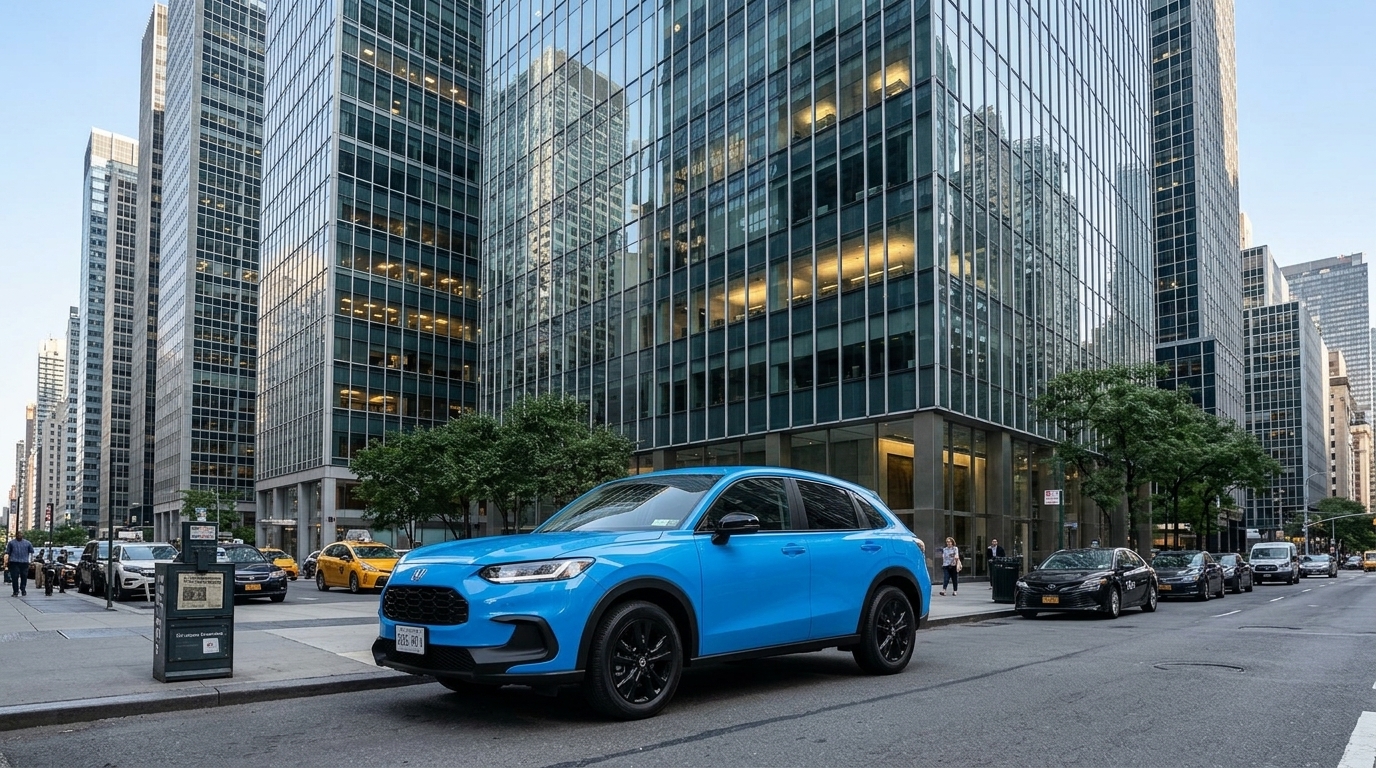
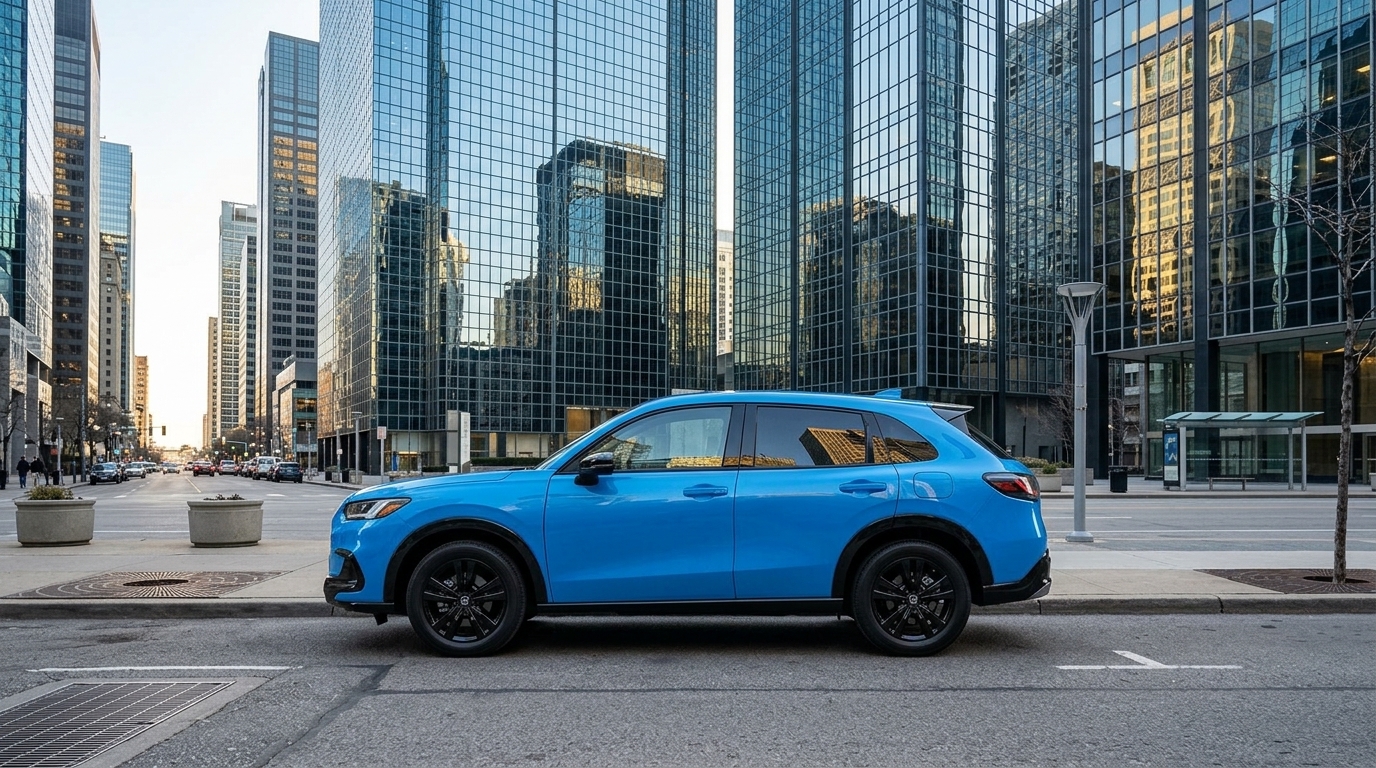
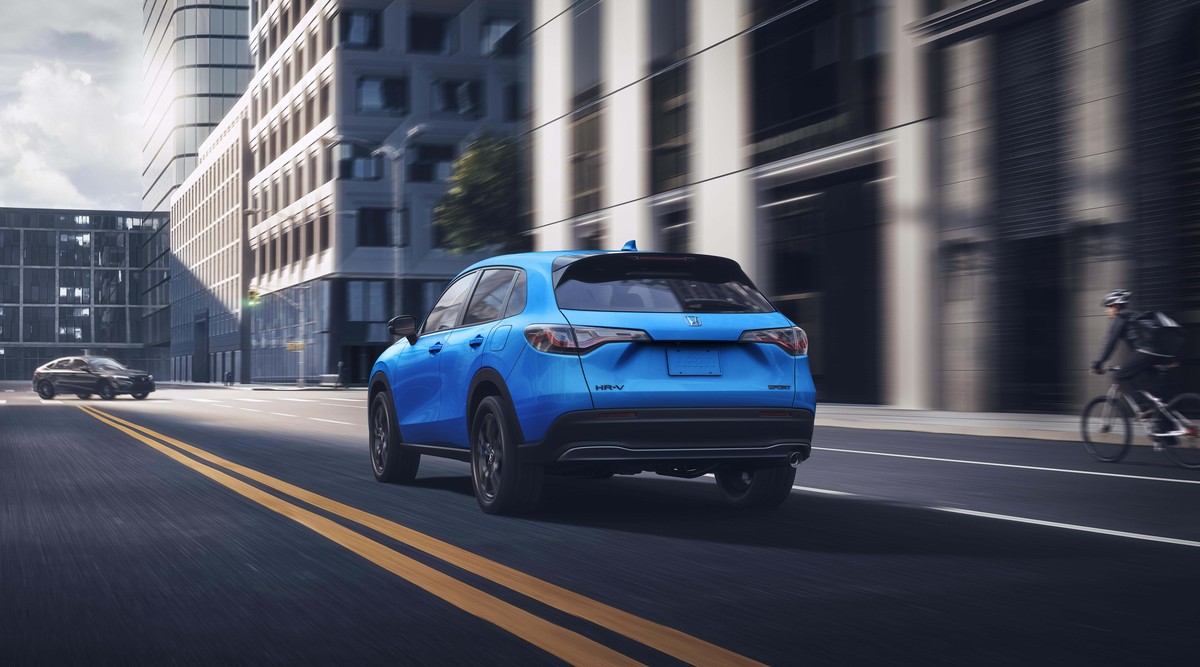
The 2026 Honda HR-V Sport is the brand’s entry-level crossover, positioned below the CR-V as a practical, city-friendly option. It is built on the same platform as the modern Civic, giving it a surprisingly refined and composed ride quality that feels mature for the subcompact segment. Its design is clean and contemporary, with the Sport trim adding stylish blacked-out accents and 18-inch wheels for a more aggressive look. Buyers are typically younger professionals or older downsizers who prioritize Honda’s reputation for reliability and strong resale value. Inside, the cabin feels upscale for its class, but the vehicle draws consistent criticism for its modest 2.0-liter engine, which provides adequate but underwhelming acceleration. It is broadly seen as a comfortable, well-rounded commuter that blends practicality and a premium feel, with the main trade-off being a lack of power.
2. Its Main Competition
The HR-V Sport FWD contends with a packed field of subcompact crossovers, including the Toyota Corolla Cross, Mazda CX-30, Subaru Crosstrek, Hyundai Kona, and Kia Seltos. A key difference is the HR-V’s single, naturally aspirated engine, which feels less powerful than the optional turbo and hybrid powertrains offered by many rivals. Against the sporty Mazda CX-30, the HR-V offers superior rear passenger and cargo space at the expense of driving excitement. Compared to the rugged Subaru Crosstrek with its standard AWD, the FWD HR-V feels more urban and pavement-focused, with a more polished ride. Versus the Toyota Corolla Cross, the HR-V is praised for a more upscale interior feel, while the Toyota often counters with better fuel economy. The HR-V’s conservative design provides a contrast to the bolder styling of the Hyundai Kona and Kia Seltos.
3. Its Buyer’s Demographics
The buyer profile for the 2026 Honda HR-V Sport is largely split into two groups: younger individuals in their late 20s to early 40s and older empty-nesters downsizing from larger vehicles. Household income generally falls in the middle-to-upper-middle-class range, often between $60,000 and $100,000. These consumers are typically college-educated and prioritize practicality, reliability, and long-term ownership costs over raw performance. The HR-V is most popular with singles, couples, or families with no more than one or two young children due to its subcompact size. The Sport trim in particular resonates with younger buyers who are drawn to its more aggressive styling cues and blacked-out accents. The FWD configuration is often chosen by those in milder climates who value the lower purchase price and slightly better fuel efficiency over all-weather traction.
4. Design
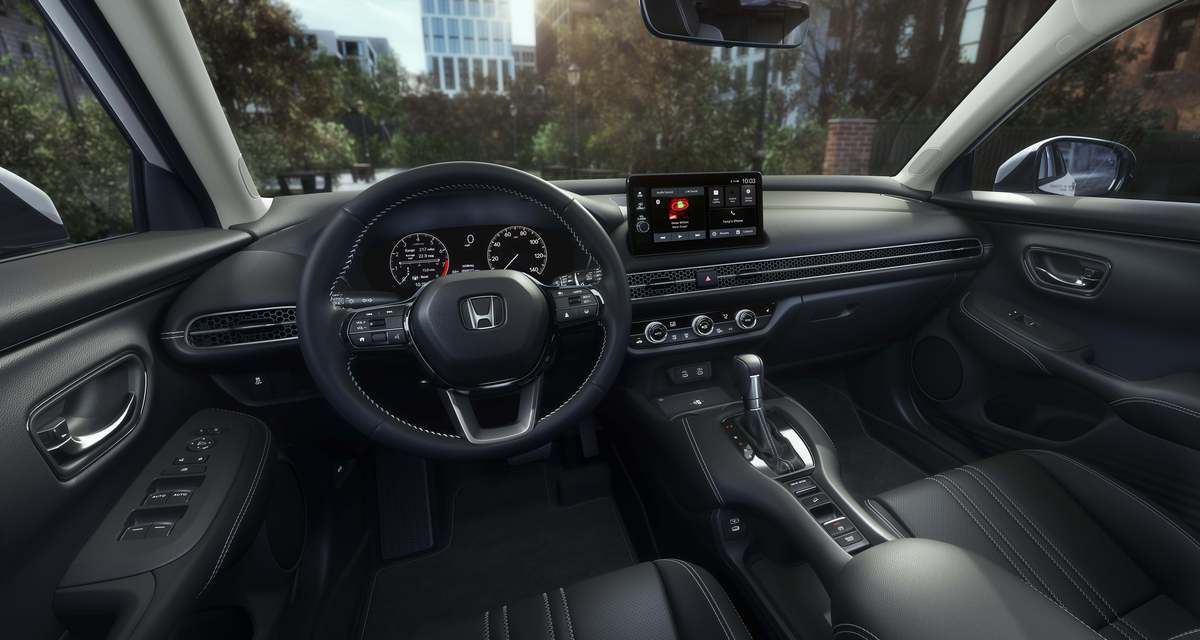
The 2026 HR-V Sport’s design is characterized by its clean, mature, and understated exterior styling. Its silhouette is smooth and cohesive, avoiding the busy or polarizing designs of some competitors, giving it an almost European aesthetic. The Sport trim enhances this look with aggressive blacked-out trim, a unique grille pattern, and striking 18-inch black alloy wheels. Inside, the design is a standout, featuring a minimalist and highly functional layout that feels more upscale than many rivals. The cabin borrows heavily from the acclaimed Civic, with a high-quality feel and a layout that emphasizes user-friendly physical controls for functions like climate. This approach aligns with Honda’s reputation for straightforward ergonomics and thoughtful design, creating an attractive and modern vehicle that avoids feeling overly trendy or gimmicky.
5. Interior & Cargo Room
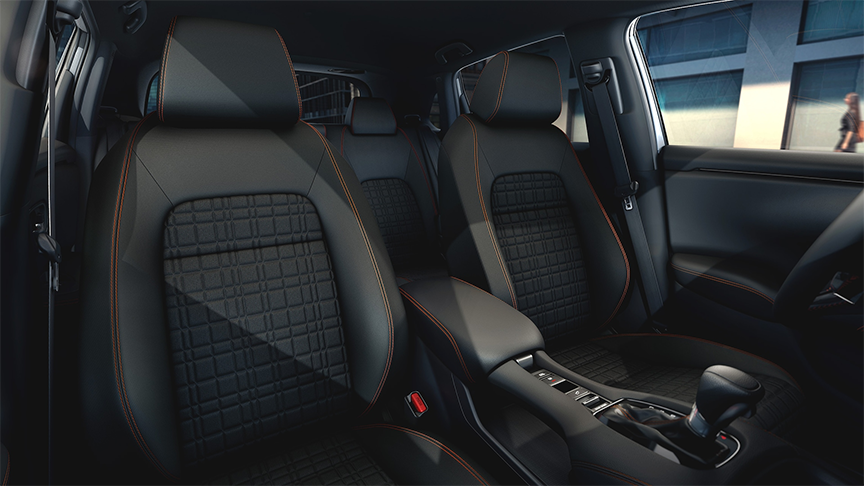
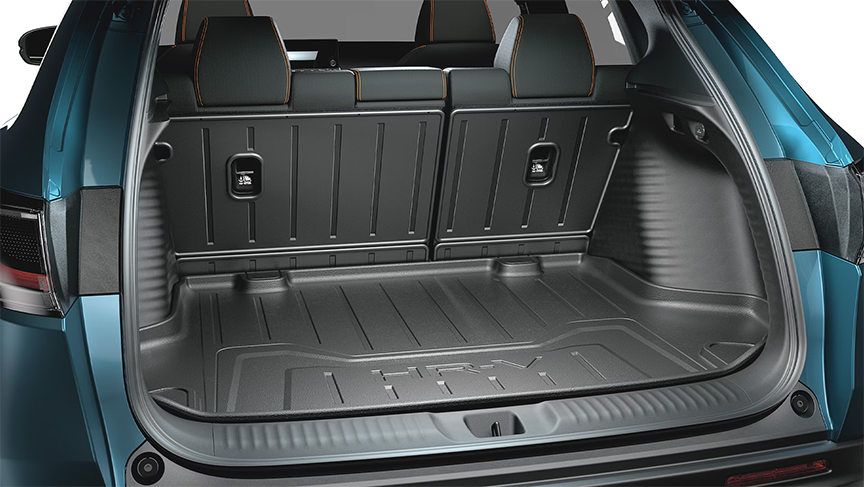
Inside, the 2026 Honda HR-V Sport feels impressively spacious for a subcompact crossover, particularly in the front row, which offers ample head and legroom. A key advantage for the HR-V is its generous rear-seat legroom, providing more space for adult passengers than several key competitors and making longer journeys more comfortable. Cargo space is also highly competitive and practical for the segment. The cargo area provides around 24.4 cubic feet of storage behind the rear seats, which expands to over 55 cubic feet when the second row is folded flat. Loading and unloading are generally easy thanks to a wide opening and a reasonably low lift-over height. A notable negative for some is the elimination of the previous generation’s ultra-versatile “Magic Seat,” but the current cargo hold remains one of the most usable in its class.
6. Ergonomics & Comfort
The HR-V’s cabin is designed with impressive, human-centric ergonomics, making it feel immediately intuitive. Core controls for audio and climate are logically placed within easy reach, and the inclusion of physical knobs and buttons is a widely celebrated feature that enhances usability while driving. Front seat comfort is a strong point, with supportive, well-bolstered buckets that are suitable for both commuting and longer trips. Outward visibility is excellent toward the front, thanks to thin A-pillars and a low dashboard that create a panoramic view. However, this is contrasted by compromised rear three-quarter visibility due to thick C-pillars and a rising beltline, a common trait in modern crossovers. For connectivity and storage, the HR-V is practical, offering multiple USB ports and a competitive number of cupholders and small storage bins for everyday items.
7. Interior, Fit & Finish
The interior of the HR-V Sport presents a quality that punches above its price point, with soft-touch materials strategically placed on the upper dashboard and door panels. This creates a refined ambiance that feels more mature than many segment rivals. The Sport trim adds visual appeal with details like contrast stitching, enhancing its athletic character. However, this premium feel is offset by the use of harder, more durable plastics in the lower portions of the cabin, such as the lower door panels and center console sides. Where the HR-V truly shines is in its fit and finish. Assembly quality is meticulous, with tight, uniform panel gaps and a solid construction that remains largely free of squeaks or rattles on the road. The switchgear and controls also provide a satisfying, tactile feedback that reinforces the sense of high build quality.
8. Driver & Pass UX
The 2026 HR-V Sport’s user experience is defined by simplicity and ease of use. Its infotainment touchscreen features a straightforward layout with large, clear icons, making it easy to navigate without a steep learning curve. While the screen’s response time is average—not the fastest in the class, but reliable enough to avoid frustration—the system’s true strength lies in its intuitive design. It smartly retains physical controls, including a volume knob and shortcut buttons, which makes operating it while driving much safer and simpler. The native voice command system is adequate for basic tasks but can struggle with natural language, prompting many users to default to their smartphone’s superior assistant. Bluetooth pairing is a highlight, as devices connect quickly and reliably without the frustrating dropouts or hiccups that can plague other systems in the segment.
9. Sound System
The standard six-speaker audio system in the 2026 HR-V Sport is best described as solid and serviceable for everyday listening. It performs admirably with spoken-word content like podcasts and talk radio, where clear vocal reproduction is paramount. For casual music listening at moderate volumes, the sound is balanced and clean. However, its limitations become apparent when pushed. The system lacks a dedicated subwoofer, resulting in modest bass response that may underwhelm fans of bass-heavy genres. At higher volumes, sound quality can degrade, becoming somewhat harsh or tinny. Compared to premium branded systems available in some rivals, it is distinctly average. Road and tire noise can also intrude at highway speeds, forcing drivers to increase the volume and further expose the system’s lack of dynamic range and high-volume polish.
10. Acceleration
The HR-V Sport is powered by a 2.0-liter four-cylinder engine paired with a continuously variable transmission (CVT), a combination that produces 158 horsepower. This powertrain is tuned to prioritize smoothness and fuel efficiency over brisk performance, resulting in acceleration that is widely described as modest or even sluggish. Its 0-60 mph time lands in the slower mid-to-high 9-second range, which feels underpowered during highway merging or passing maneuvers. From a stop, the HR-V feels reasonably responsive for city driving, but this initial pep quickly fades at higher speeds. Under hard acceleration, the engine becomes noticeably loud, with a prominent drone that permeates the cabin. Lacking the optional turbocharged or hybrid engines found in many key competitors, the HR-V’s powertrain is adequate for daily duty but fails to deliver a truly sporty experience.
11. Braking
The 2026 Honda HR-V Sport delivers confident and predictable braking performance that inspires driver trust. While its emergency stopping distances from 60 mph are competitive but not class-leading, its real-world feel is a standout positive. The brake pedal response is praised for being exceptionally natural, linear, and progressive. This allows for smooth, easily modulated stops in daily traffic without any of the grabbiness or vague sponginess found in some rival systems. The pedal feels firm from the initial application and builds pressure in a predictable way, contributing to a sense of controlled stability during both casual and hard braking events. This excellent pedal feel and modulation make the HR-V feel secure and easy to drive smoothly, even if it doesn’t post the absolute shortest stopping distances recorded in the segment.
12. Handling
The HR-V Sport offers handling that is composed, stable, and surprisingly sophisticated for its class. On the highway, it tracks straight and true with minimal need for steering corrections, feeling planted and secure at speed. Body roll is well-managed for a crossover, staying relatively flat through corners without feeling harsh. The steering is light but offers precise and linear responses, making the vehicle feel competent and easy to place, although it lacks the sporty feedback of more enthusiast-focused rivals. In city environments, the HR-V is nimble and unintimidating to drive. Its good turning circle makes it easy to maneuver in tight parking lots and on narrow streets. Overall, the handling strikes an excellent balance between everyday comfort and confident control, making it both a relaxing highway cruiser and an agile urban companion.
13. Interior Noise
The HR-V Sport’s cabin acoustics present a mixed experience. At steady cruising speeds, the interior is reasonably quiet for its class, but this changes dramatically under acceleration. When the driver demands power for merging or climbing hills, the 2.0-liter engine becomes loud and produces a strained, buzzy drone that is the most prominent source of noise. At highway speeds, wind noise from around the mirrors and road noise from the tires are present but generally manageable, though coarse pavement textures significantly increase tire roar. The vehicle does incorporate Active Noise Cancellation technology, which helps reduce some of the persistent low-frequency drone during steady cruising. However, the overall impression is a cabin that is calm enough for daily commuting but becomes noticeably loud when the powertrain is working hard.
14. Ride Quality
The 2026 Honda HR-V Sport delivers a ride quality that is composed, comfortable, and feels more mature than its subcompact classification suggests. A key contributor is its sophisticated independent rear suspension, which helps the vehicle remain stable and settled on the freeway, capably absorbing expansion joints and minor imperfections without feeling floaty. In the city, the ride remains comfortable, filtering out most everyday bumps and cracks in the pavement, though sharper potholes can send a distinct thud through the cabin. The suspension tuning strikes a balance that leans slightly firm, prioritizing control over cushiness. This allows it to handle obstacles like speed bumps with good composure, managing the motion without any excessive or prolonged bouncing. The result is a ride that is agreeably refined for both highway cruising and navigating urban streets.
15. Driver Assist Systems
The HR-V Sport comes standard with the comprehensive Honda Sensing suite of driver aids, which operates with a high degree of refinement. Its adaptive cruise control is praised for its smooth and predictable behavior in managing following distance, though it can sometimes brake conservatively if another vehicle cuts in abruptly. The lane-keeping and lane-centering systems work effectively on well-marked roads, applying gentle steering inputs that reduce driver fatigue without feeling intrusive. However, performance can degrade on roads with faint lines or sharp curves. The package also includes blind-spot monitoring and rear cross-traffic alert, which are considered invaluable for safe lane changes and reversing out of obscured parking spots. Overall, the systems function as a reliable and confidence-boosting safety net that enhances everyday driving without being overly aggressive.
16. Mileage
As a gasoline-only vehicle in the U.S. market, the 2026 HR-V Sport FWD offers fuel economy that is competitive but not class-leading. Official EPA ratings are approximately 26 mpg in the city, 32 mpg on the highway, and 28 mpg combined. These figures are considered average to slightly below average for the subcompact crossover segment. The HR-V is less efficient than some key rivals, particularly the Toyota Corolla Cross and Nissan Kicks. Its position is further hampered by the lack of a hybrid powertrain option, a feature increasingly offered by competitors to achieve significantly higher mileage. While the HR-V’s fuel economy is reasonable for daily commuting, its efficiency doesn't stand out as a primary selling point, instead representing a fair compromise for its size and proven powertrain.
17. Safety
Safety is a significant strength for the 2026 Honda HR-V Sport, which is equipped with a robust set of standard protective features. Every model includes the Honda Sensing suite of active driver aids, and the Sport trim adds valuable technologies like blind-spot monitoring and rear cross-traffic alert. Structurally, the vehicle is built with Honda’s Advanced Compatibility Engineering (ACE) body structure, designed to effectively manage crash energy. This engineering has resulted in excellent official crash-test performance. The HR-V has earned top marks, including a 5-Star Overall Safety Rating from the NHTSA and a coveted Top Safety Pick+ designation from the IIHS. This combination of a comprehensive standard safety suite and proven crashworthiness makes the HR-V one of the stronger safety contenders in its competitive segment.
18. Pricing
The 2026 Honda HR-V Sport FWD is positioned in the middle of the subcompact SUV market, with pricing that reflects its status as a mainstream, well-equipped offering. The Sport trim typically lands in the sweet spot of the lineup, with an MSRP of around $28,000, including the destination charge of approximately $1,350. This places it competitively against rivals like the Toyota Corolla Cross and Subaru Crosstrek once features are equalized. While it is not the cheapest option available—budget-focused competitors like the Chevrolet Trax and Nissan Kicks start for less—its price is justified by its build quality, standard features, and strong brand reputation. The HR-V is neither a bargain-basement pick nor a premium-priced vehicle, striking a fair and rational balance that appeals to a broad range of buyers in the segment.
19. Value
The HR-V Sport’s value proposition is a tale of two metrics: strong long-term retention but average at-purchase cost. Its standout strength is excellent resale value, where it consistently ranks near the top of its class thanks to Honda's reputation for reliability. While it may trail the absolute leaders like the Toyota Corolla Cross and Subaru Crosstrek, it dependably holds its value far better than many domestic or European rivals. At the time of purchase, its value is more mixed. It is not the cheapest crossover available, and some Korean competitors may offer more features for a similar or lower upfront price. However, many find its sticker price justified by an interior that feels more premium and refined than its cost suggests. For buyers focused on total cost of ownership, the HR-V’s strong resale value makes it a compelling long-term choice.
20. Reliability
Reliability is a cornerstone of the 2026 HR-V Sport’s appeal, anchored by Honda’s formidable reputation for building durable vehicles. It uses a tried-and-true powertrain, featuring a naturally aspirated 2.0-liter engine and a well-vetted CVT, which avoids the potential long-term complexity of some rivals’ small turbocharged engines or dual-clutch transmissions. In reliability studies and owner discussions, the HR-V is viewed favorably, generally seen as more dependable than competitors like the Jeep Renegade and on par with other trusted options from Toyota and Subaru. While no vehicle is perfect, reported issues are typically minor, often related to infotainment software glitches rather than significant mechanical failures. For buyers prioritizing a low-stress, trouble-free ownership experience, the HR-V’s proven mechanicals make it an exceptionally confident choice in the subcompact segment.
Frequently asked questions about the 2026 Honda HR-V Sport (FWD)
Is the 2026 Honda HR-V Sport (FWD) worth buying?
The 2026 Honda HR-V Sport is the brand’s entry-level crossover, positioned below the CR-V as a practical, city-friendly option. It is built on the same platform as the modern Civic, giving it a surprisingly refined and composed ride quality that feels mature for the subcompact segment. Its design is clean and contemporary, with the Sport trim adding stylish blacked-out accents and 18-inch wheels for a more aggressive look. Buyers are typically younger professionals or older downsizers who prioritize Honda’s reputation for reliability and strong resale value. Inside, the cabin feels upscale for
How much does the 2026 Honda HR-V Sport (FWD) cost?
The 2026 Honda HR-V Sport (FWD) is priced at $26,500 – $31,850 , before destination, options, and incentives.
What is the fuel economy of the 2026 Honda HR-V Sport (FWD)?
The 2026 Honda HR-V Sport (FWD) returns 28 MPG combined per published EPA figures.
How this review is produced
moblr meta-reviews are generated by aggregating multiple published expert road tests using AI consensus and sentiment analysis, then read and reviewed by a human editor before publication. Category ratings on the −50 to +50 scale show how each vehicle compares to the average for its segment. Learn more about the moblr review process.