2026 Hyundai Tucson SEL FWD
Consensus at a glance
- Consensus score
- Not yet rated
- Price
- $29,450 – $42,075
- Powertrain
- Gasoline
- Combined fuel economy
- 28 MPG
- Body type
- suv
%20USE.jpg)
hyundai tucson sel fwd main text
1. Quick Take
The 2026 Hyundai Tucson SEL FWD is the volume-selling heart of the lineup, balancing a value-focused price with features that often cost extra on rivals. Positioned between the Kona and Santa Fe, it targets commuters and families who prioritize a "class-above" interior and connectivity over performance. Its "parametric dynamics" styling blends with a tech-forward cabin featuring a panoramic curved display. While not the fastest or most efficient in its segment, it is among the most generous. Reviewers highlight the strong standard safety equipment and Hyundai’s industry-leading warranty. The driving experience is comfort-first, engineered for daily errands rather than sportiness. Despite an adequate 2.5-liter engine, it remains a compelling, spacious alternative to more conservative competitors.
2. Its Main Competition
The 2026 Tucson SEL FWD operates in a ruthless American market. Primary rivals are sales leaders like the Toyota RAV4 and Honda CR-V. Secondary threats include the Mazda CX-5, Nissan Rogue, Subaru Forester, and its mechanical cousin, the Kia Sportage. While the RAV4 and CR-V are viewed as "safe" bets for reliability and resale , the Tucson acts as a disruptor with an extroverted design and more features-per-dollar. Against the driver-focused Mazda CX-5, the Tucson offers significantly more rear-seat room and a softer ride. Compared to the Nissan Rogue or Ford Escape, it provides a more modern interior and superior 10-year powertrain warranty. The Kia Sportage battle is largely aesthetic, as they share DNA. Ultimately, the Tucson uses value and technology to lure buyers from entrenched Japanese leaders.
3. Its Buyer’s Demographics
The typical Tucson SEL buyer is a pragmatic consumer, usually aged early 30s to mid-50s. This group includes starting families, commuters, and empty-nesters downsizing from larger SUVs. Many are transitioning from sedans, seeking better cargo flexibility without three-row bulk. Financially, these buyers are middle to upper-middle class, with household incomes between $70,000 and $95,000. They are value-conscious researchers who prioritize "bang for the buck" and strong warranty coverage. While marketing often suggests rugged adventure, real-world use focuses on suburban utility like school runs and highway commuting. They prioritize monthly payments and safety tech over 0-60 mph times, often planning to keep the vehicle long-term to maximize warranty benefits.
4. Design
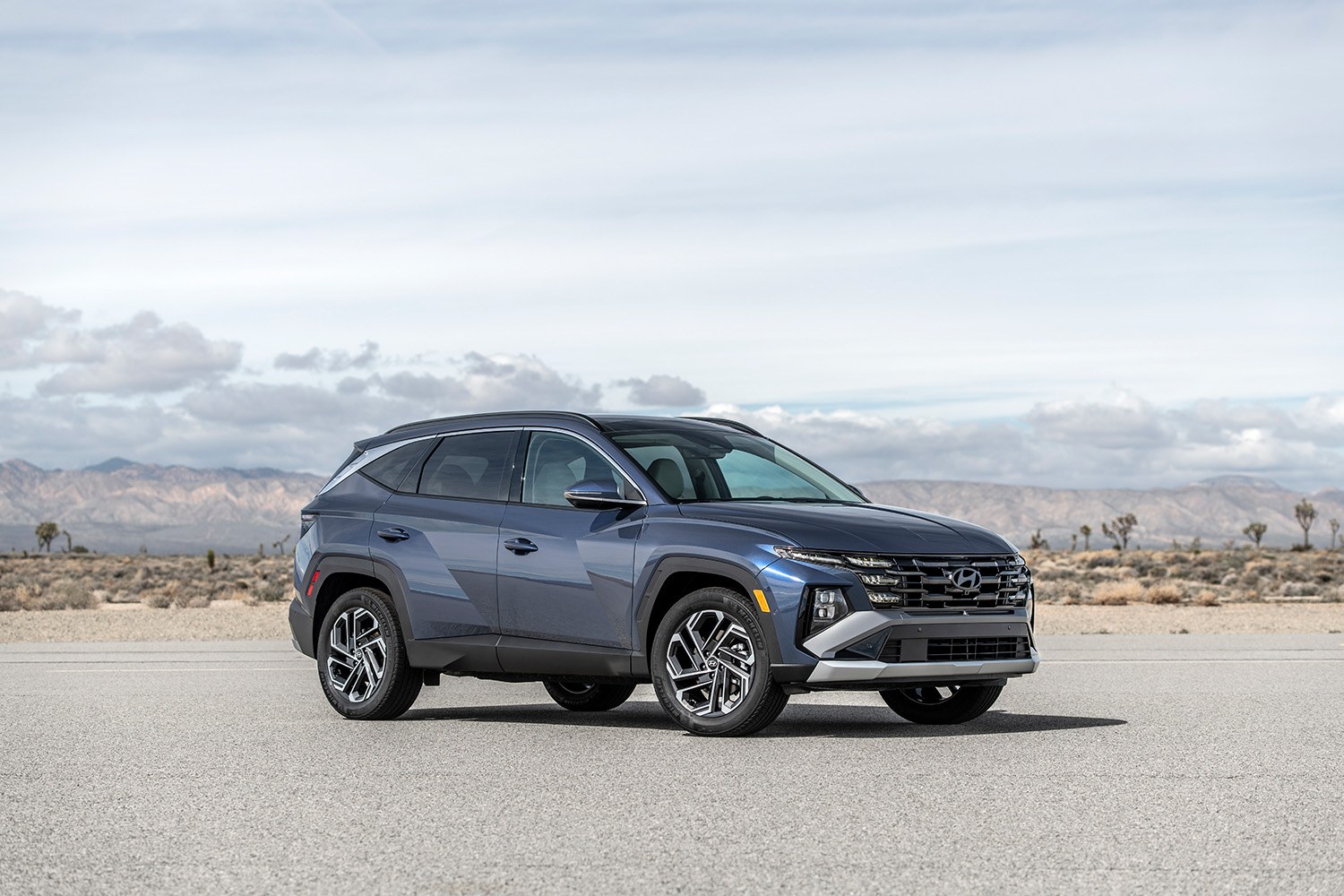
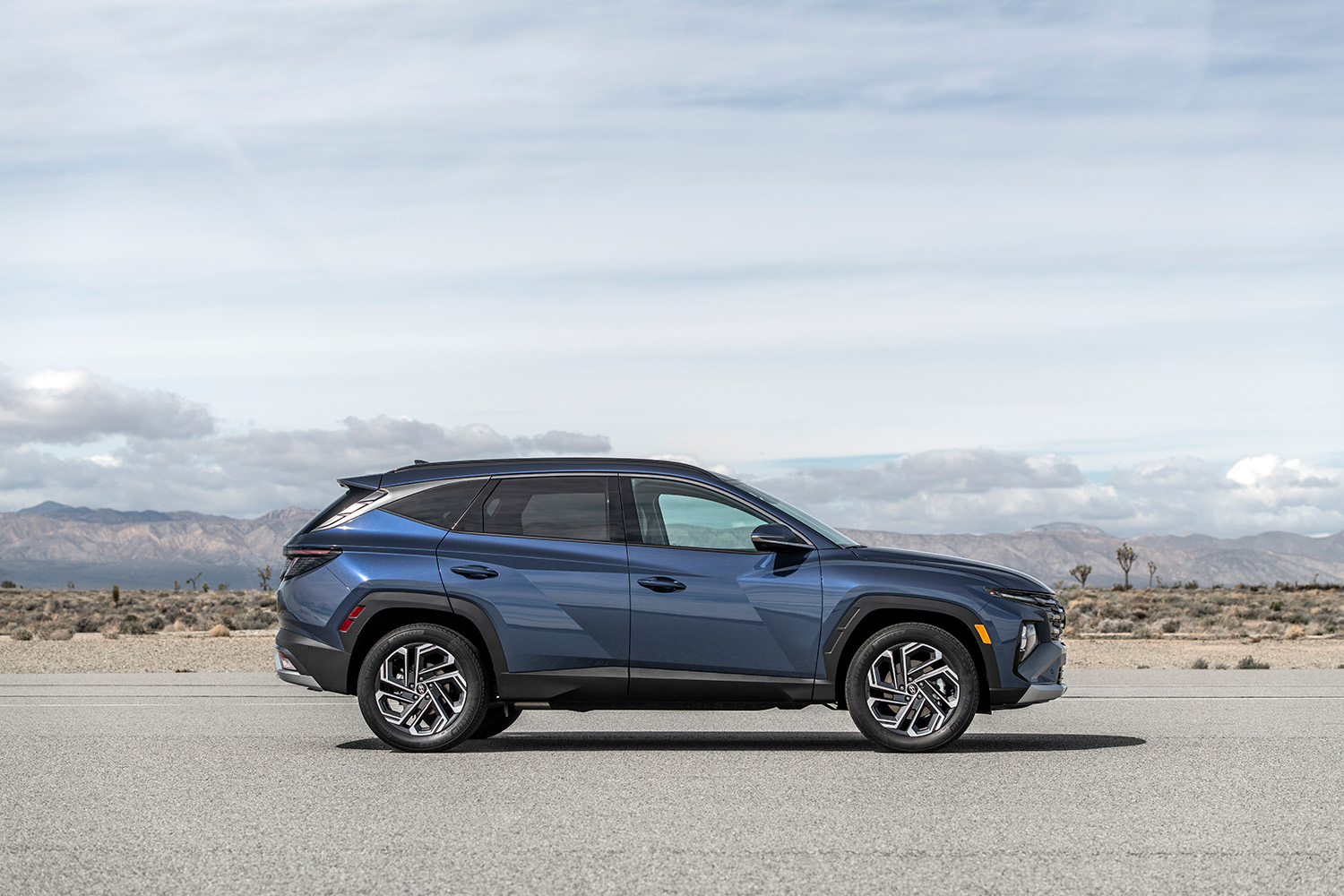
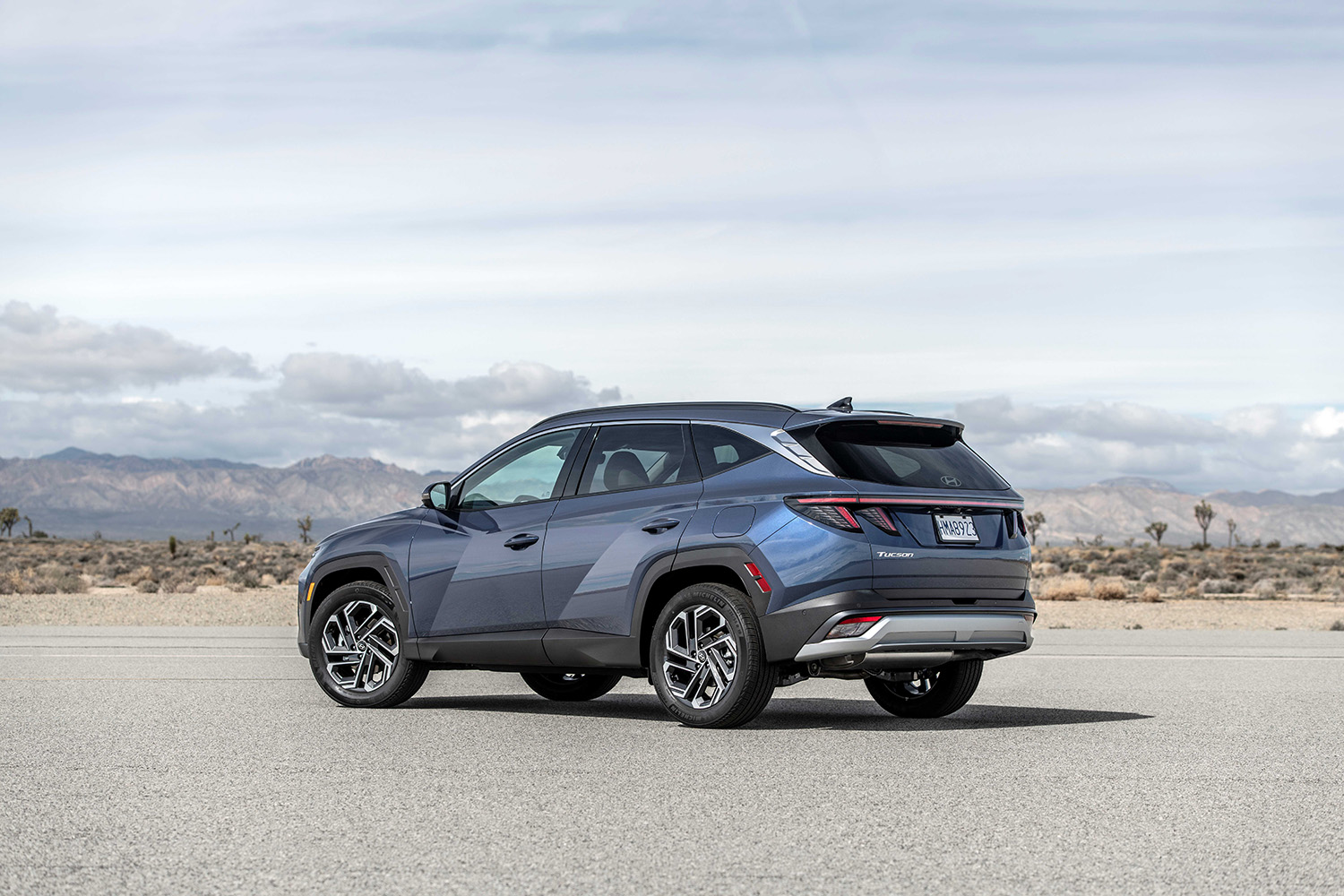
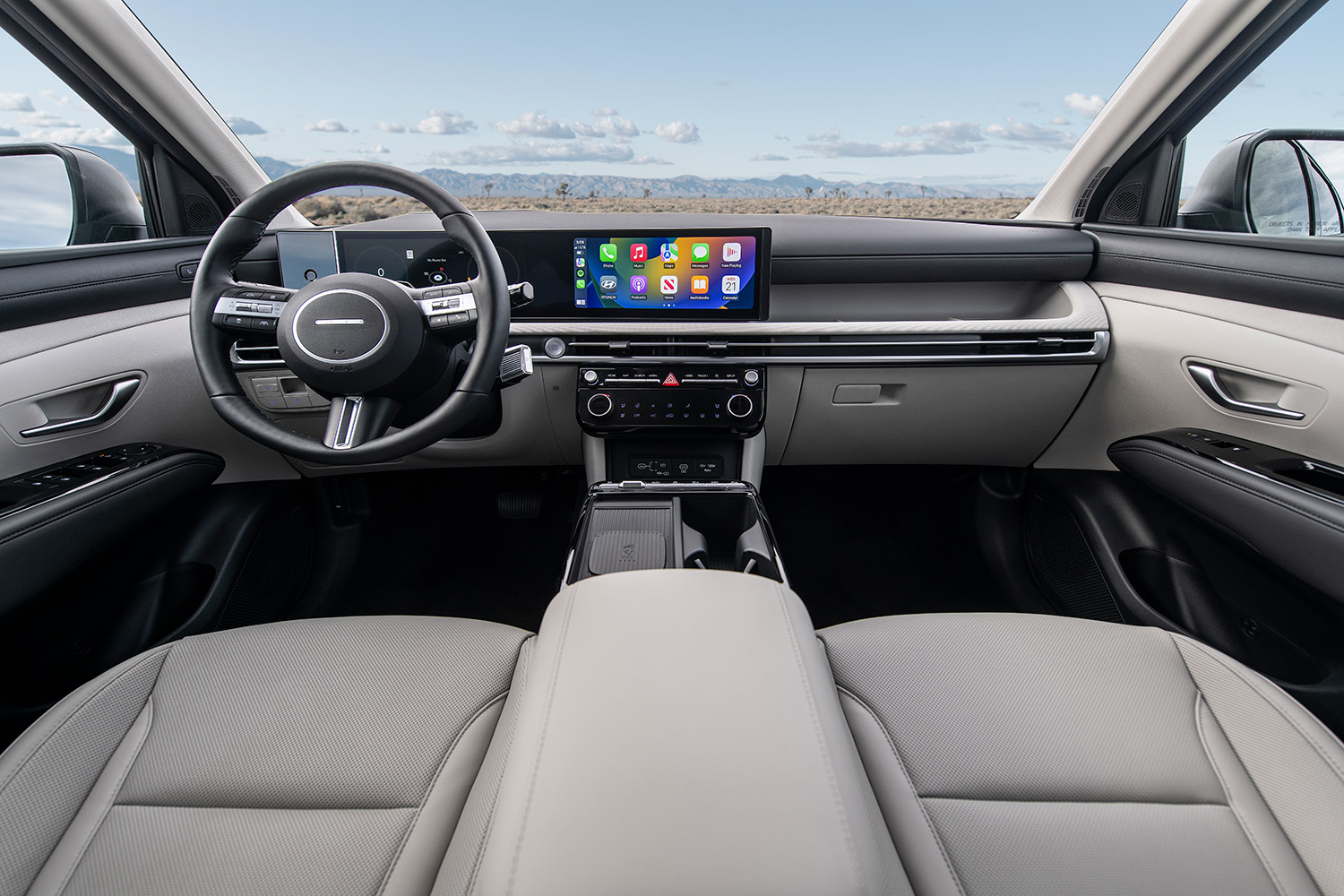
The Tucson’s design is its most "love it or hate it" trait—daring, expressive, and distinct. Defined by "parametric dynamics," the exterior features sharp geometric angles and a signature grille with hidden LED lights. While this prevents it from fading into the background, some critics fear the busy side profile may age poorly compared to cleaner designs. Inside, the narrative shifts toward tech-forward minimalism. The refreshed cabin features a panoramic curved display and an "airy" feel thanks to a low dashboard cowl. Crucially, Hyundai restored physical knobs for audio and climate controls on the SEL trim, balancing futuristic looks with tactile usability. This "near-luxury" aesthetic successfully distances the Tucson from the purely utilitarian vibes of its base-model competition.
5. Interior & Cargo Room
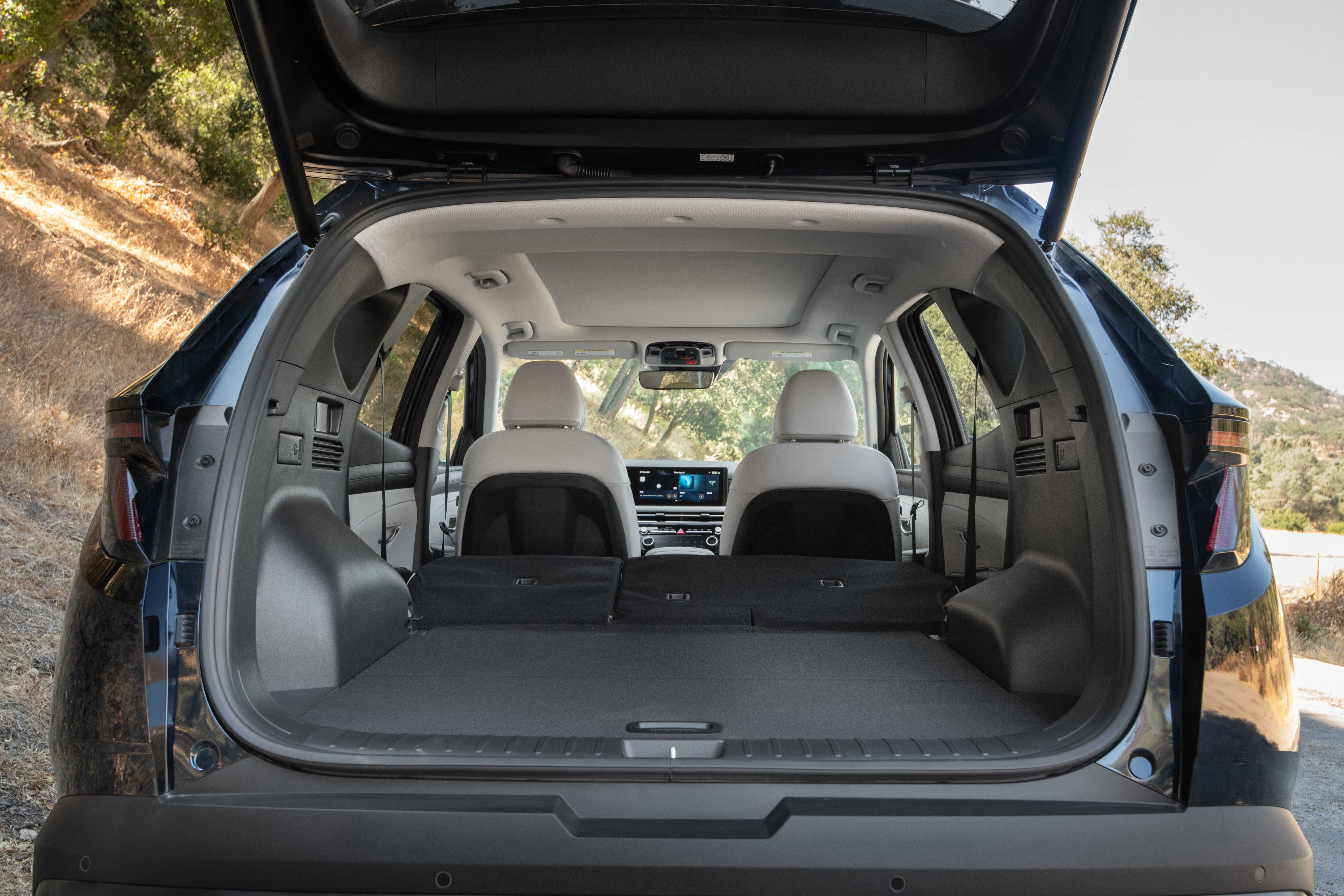
The 2026 Tucson SEL FWD dominates its class in interior volume. It effectively challenges the boundaries between compact and mid-size SUVs. Rear-seat legroom is a class-leading 41.3 inches, matching the Honda CR-V and surpassing the RAV4. Headroom is similarly generous in both rows. Cargo capacity is equally impressive, offering 38.7 cubic feet behind the rear seats and nearly 75 cubic feet when folded. This puts the Tucson in the top tier for hauling, well ahead of the Mazda CX-5. Practicality is enhanced by a dual-level cargo floor and remote release levers that drop the rear seats instantly from the back of the vehicle. Despite minor wheel well encroachment, it is a packaging triumph for family utility.
6. Ergonomics & Comfort
Recent refreshes have polished the Tucson’s ergonomics by addressing previous complaints about touch controls. Restoring physical knobs for volume and tuning, along with buttons for climate control, makes the interface much easier to operate by feel. Relocating the gear selector to the steering column frees up the center console for storage, including oversized cupholders. Seating comfort is good; the SEL’s cloth seats are supportive for long commutes, though taller drivers might want more under-thigh support. The "comfort-first" philosophy extends to reclining rear seats with generous legroom. While forward visibility is strong, thick rear pillars make the standard blind-spot monitoring essential. Overall, the cabin is intuitive and prioritizes ease of use over a sporty, cockpit-like feel.
7. Interior, Fit & Finish
The interior quality of the Tucson SEL "punches above its weight". Visually, the cabin is upscale and cohesive. A horizontal dashboard and integrated air vents create a sophisticated vibe that outclasses many domestic and Japanese rivals. Key touchpoints, like the steering wheel, use soft-touch materials to improve perceived quality. However, hard plastics become more prevalent lower on the door panels. A recurring complaint is the "piano black" trim; while it looks sleek in showrooms, it is a magnet for dust and fingerprints. Despite this, fit and finish are solid, with tight panel gaps and few reports of rattles. While it doesn't match the tactile richness of a high-trim Mazda, it avoids feeling cheap.
8. Driver & Pass UX
The user experience centers on the "Connected Car Navigation Cockpit" (ccNC), praised for its speed and modernization. Housed in a panoramic curved display, the system is snappy with little lag. The menu structure is logical, making the learning curve shallow. A major 2026 upgrade is the standardization of wireless Apple CarPlay and Android Auto across all trims. The digital instrument cluster adds visual engagement by changing themes with drive modes. While voice recognition is competent for basic tasks, it isn't quite a conversational assistant. Overall, the UX balances a futuristic look with practical physical controls, avoiding the frustration of buried menus.
9. Sound System
The audio in the Tucson SEL is best described as "functional". The standard unbranded 6-speaker system is designed for casual listeners rather than audiophiles. It performs admirably for podcasts and talk radio, delivering clear vocals through ambient noise. However, limitations appear with music at higher volumes. Without a dedicated subwoofer, low-end response is often "muddy" or thin. High frequencies are clear but lack the soundstage detail found in premium setups. While the head unit allows for basic equalization, these adjustments can only do so much for the hardware. It is perfectly serviceable for a daily commute, but those prioritizing high-fidelity audio will likely look to higher trim levels.
10. Acceleration
Acceleration is where the "value" compromise is most visible. Powered by a 2.5-liter engine with 187 horsepower, the Tucson is "adequate" but uninspired. With 0-60 mph times in the high-8 to low-9 second range, it trails the turbocharged Honda CR-V. In city driving, the power is sufficient, and the 8-speed automatic is smoother than the CVTs used by competitors. However, highway merging requires a heavy foot, often causing the transmission to kick down and the engine to produce a strained noise. There is no turbocharger for low-end torque, meaning the driver must work the engine harder for results. The powertrain is tuned for gentle, efficient commuting, making the experience "leisurely" at best.
11. Braking
Braking performance is safe, competent, and average for the class. Stopping distances from 60 mph fall between 118 and 124 feet, remaining competitive with the Toyota RAV4 and Honda CR-V. The system provides stable stops in emergency simulations, inspiring confidence without sporting flair. The pedal feel is designed for comfort; unlike some hybrid models, the gas-only SEL offers a linear, natural progression. It is easy to modulate in stop-and-go traffic, allowing for smooth stops without lurching. Some enthusiast-minded testers find the initial bite slightly soft or "spongy". This cushioned feel aligns with the car's comfort-first mission but may feel less responsive to drivers used to the sharper brakes of a Volkswagen or Mazda.
12. Handling
The Tucson SEL FWD prioritizes stability over agility. On the highway, it tracks straight and feels planted, resisting crosswinds and requiring minimal steering correction. This makes it an excellent long-distance cruiser that keeps driver fatigue low. The steering is light and accurate but largely numb. In corners, body roll is noticeable—average for the segment but more pronounced than in a Mazda CX-5. It is a vehicle that tolerates corners rather than attacking them. However, the softer setup pays dividends in the city, where light steering and a decent turning circle make it easy to park in tight lots. Overall, the handling is "safe and predictable," perfectly calibrated for buyers wanting a stress-free appliance.
13. Interior Noise
The acoustic profile is a tale of two driving states. At a steady cruise, the cabin is impressively hushed for its price. Investment in sound insulation and sealing pays off, with wind and road noise well-suppressed. Many reviewers rate it as quieter than the Toyota RAV4 on the highway. However, the tranquility is broken by the engine. Because the non-turbo engine lacks low-end torque, it must rev high to generate power, resulting in a coarse drone during hard acceleration. Tire noise can also vary based on the road surface; rough concrete can create a low-frequency hum. While it lacks active noise cancellation, passive sound deadening makes it a generally quiet commuter if the driver isn't flooring the throttle.
14. Ride Quality
Ride comfort is the Tucson’s dynamic ace card. The suspension is tuned for compliance, effectively smoothing out the rough edges of daily driving. On the highway, the ride is composed and settled, avoiding the jittery feel of smaller crossovers. It feels substantial and planted, implying a more expensive vehicle. In the city, the suspension soaks up potholes with a dull thud rather than a harsh crash. It manages speed bumps well, avoiding the excessive "head toss" found in stiffer rivals. Compared to the sportier Mazda CX-5, the Tucson is unapologetically soft. It aims to be a sanctuary from crumbling infrastructure, which is exactly what the vast majority of mainstream buyers desire.
15. Driver Assist Systems
Hyundai democratizes safety tech with the standard "SmartSense" suite, a top-tier mainstream implementation. Key features include Forward Collision-Avoidance, Blind-Spot Collision-Avoidance, and Rear Cross-Traffic Alert. Highway Driving Assist (HDA) is a standout, combining adaptive cruise control with lane-centering. Reviewers praise HDA for maintaining gaps smoothly without the "ping-pong" effect between lines seen in competitors. This significantly reduces driver workload on long trips. While some users find the audible alerts "nanny-ish," the false-positive rate is low. Blind-spot monitoring is essential given the car's thick rear pillars. Overall, the tech suite functions with a polish that rivals luxury brands, adding significant value to the package.
16. Mileage
Fuel economy is a statistical weakness for the Tucson. The 2.5-liter gas powertrain returns EPA estimates of approximately 25 mpg city, 32 mpg highway, and 28 mpg combined. While acceptable, these trail the benchmarks set by the base Toyota RAV4 and Honda CR-V. Real-world city mileage can dip lower in heavy traffic, and high-rev passing can dent highway figures. The vehicle emits roughly 310-320 grams of CO2 per mile, placing it in the middle of the pack—cleaner than old V6s but dirtier than modern hybrids. For those prioritizing the pump, the Tucson Hybrid is the answer; for the SEL FWD buyer, mileage is a compromise accepted for a lower purchase price.
17. Safety
Safety is a cornerstone of the Tucson’s value. Beyond driver-assist tech, the vehicle is built on a platform with a strong crashworthiness history. It has consistently earned "Top Safety Pick" honors from the IIHS and 5-Star ratings from the NHTSA. The SEL trim is praised because it doesn't hide the best safety features behind expensive higher tiers. Blind-spot intervention and rear cross-traffic braking are typically included. Occupant protection in impacts has been excellent in previous years. Minor critiques involve jumpy collision warnings and visibility issues caused by styling, though technology mitigates these blind spots. It is considered one of the safest vehicles for a family in its class.
18. Pricing
The 2026 Tucson SEL FWD occupies a pricing "sweet spot" estimated between $31,000 and $33,500. While no longer just the cheapest option, its value remains aggressive. Compared to a similarly equipped Honda CR-V EX or Toyota RAV4 XLE, the Tucson often undercuts them or matches their price while offering more standard equipment, such as larger screens and wireless charging. Analysis suggests its "feature-per-dollar" ratio remains higher than the competition. Shoppers often find they would need to step up to more expensive rival trims to get the technology found in this mid-range Tucson. Additionally, Hyundai dealers often have more flexibility for incentives than Toyota or Honda, potentially widening the real-world price gap.
19. Value
The Tucson SEL FWD is undeniably one of the industry's best values at the moment of purchase. Its combination of a lower-than-average price, premium interior, and massive tech list is a winner on the showroom floor. The 5-year comprehensive and 10-year powertrain warranties add thousands of dollars of implied value. However, long-term retention is a different story; the Tucson historically suffers from higher depreciation than the RAV4 or CR-V. Therefore, it is the superior financial choice for "buy and hold" owners who drive the car for 7-10 years, riding out depreciation while protected by the warranty. For those who trade in every three years, lower resale value may offset the initial savings.
20. Reliability
Reliability is generally "average to above-average," backed by a massive warranty. The 2.5-liter engine and 8-speed automatic are low-risk, avoiding the complexity of turbos or CVTs. Main owner complaints tend to be electronic: infotainment glitches or sensor warnings are the most common issues. While frustrating, these are typically not catastrophic failures. Hyundai lacks the "bulletproof" reputation of Toyota, and service experiences can vary. However, the 10-year warranty effectively mitigates financial risk. For most, the Tucson is a dependable choice where "practical reliability"—the likelihood of a surprise expensive bill—is kept very low by manufacturer backing.
Frequently asked questions about the 2026 Hyundai Tucson SEL FWD
Is the 2026 Hyundai Tucson SEL FWD worth buying?
The 2026 Hyundai Tucson SEL FWD is the volume-selling heart of the lineup, balancing a value-focused price with features that often cost extra on rivals. Positioned between the Kona and Santa Fe, it targets commuters and families who prioritize a "class-above" interior and connectivity over performance. Its "parametric dynamics" styling blends with a tech-forward cabin featuring a panoramic curved display. While not the fastest or most efficient in its segment, it is among the most generous. Reviewers highlight the strong standard safety equipment and Hyundai’s industry-leading warranty. The d
How much does the 2026 Hyundai Tucson SEL FWD cost?
The 2026 Hyundai Tucson SEL FWD is priced at $29,450 – $42,075 , before destination, options, and incentives.
What is the fuel economy of the 2026 Hyundai Tucson SEL FWD?
The 2026 Hyundai Tucson SEL FWD returns 28 MPG combined per published EPA figures.
How this review is produced
moblr meta-reviews are generated by aggregating multiple published expert road tests using AI consensus and sentiment analysis, then read and reviewed by a human editor before publication. Category ratings on the −50 to +50 scale show how each vehicle compares to the average for its segment. Learn more about the moblr review process.