2026 Kia Sorento Hybrid EX (AWD)
Consensus at a glance
- Consensus score
- Not yet rated
- Price
- $32,390 – $53,490
- Powertrain
- Gasoline
- Combined fuel economy
- 34 MPG

title
1. Quick Take
The Kia Sorento Hybrid EX AWD is a clever, right-sized solution for families who need versatility without the bulk of a full-size SUV. It strikes a compelling balance between a practical three-row layout and wallet-friendly fuel economy. Functioning like a conventional gas car, its turbocharged hybrid powertrain operates without needing to be plugged in. The Sorento’s primary appeal is its triple threat of expressive modern styling, a tech-forward interior, and Kia’s famously long warranty. While lauded for its upscale ambiance and real-world efficiency, its main compromise is a third-row seat best suited for children and limited cargo space when all seats are in use. It is a smart, stylish choice for those who value flexibility, fuel savings, and features in a manageably sized package.
2. Its Main Competition
The Sorento Hybrid’s primary rival is the Toyota Highlander Hybrid, the long-reigning champion of efficiency and reliability. Against the Highlander, the Sorento competes with more daring modern styling and a richer tech suite for the money, while the Toyota leverages its superior third-row space and reputation. The Sorento also faces competition from its boxy corporate cousin, the Hyundai Santa Fe Hybrid, as well as the Ford Explorer Hybrid, which offers more power but less efficiency. When cross-shopped with larger non-hybrid SUVs like the Honda Pilot, the Sorento’s key advantage is its significantly better fuel economy. Those rivals counter with more adult-friendly third rows and cavernous cargo holds. Ultimately, the Sorento carves its niche by prioritizing a balanced blend of style, efficiency, and value.
3. Its Buyer’s Demographics
The typical buyer for a Sorento Hybrid is a practical, tech-savvy, and value-conscious consumer, often from a young family in their late 30s to mid-50s. With a household income in the $80,000 to $175,000 range, they can afford a new, well-equipped vehicle but remain sensitive to long-term costs like fuel, making the hybrid powertrain and long warranty highly attractive. These buyers are digitally fluent, having done extensive online research. Crucially, they require a flexible “just-in-case” third row for occasional carpools or playdates, not for daily adult transport. They see the Sorento's spatial compromises as a smart trade-off for its superior maneuverability, stylish design, and excellent overall cost of ownership.
4. Design
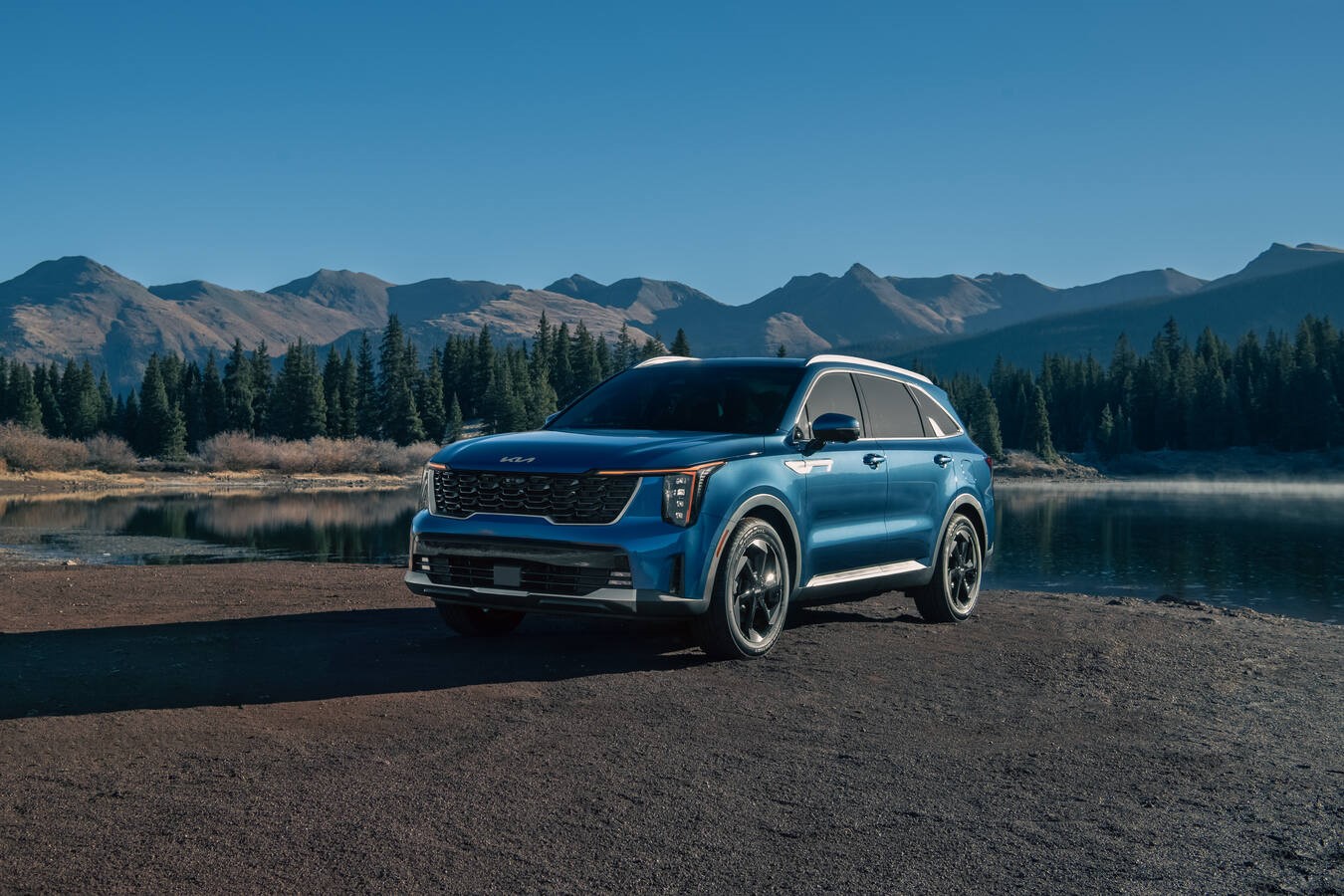
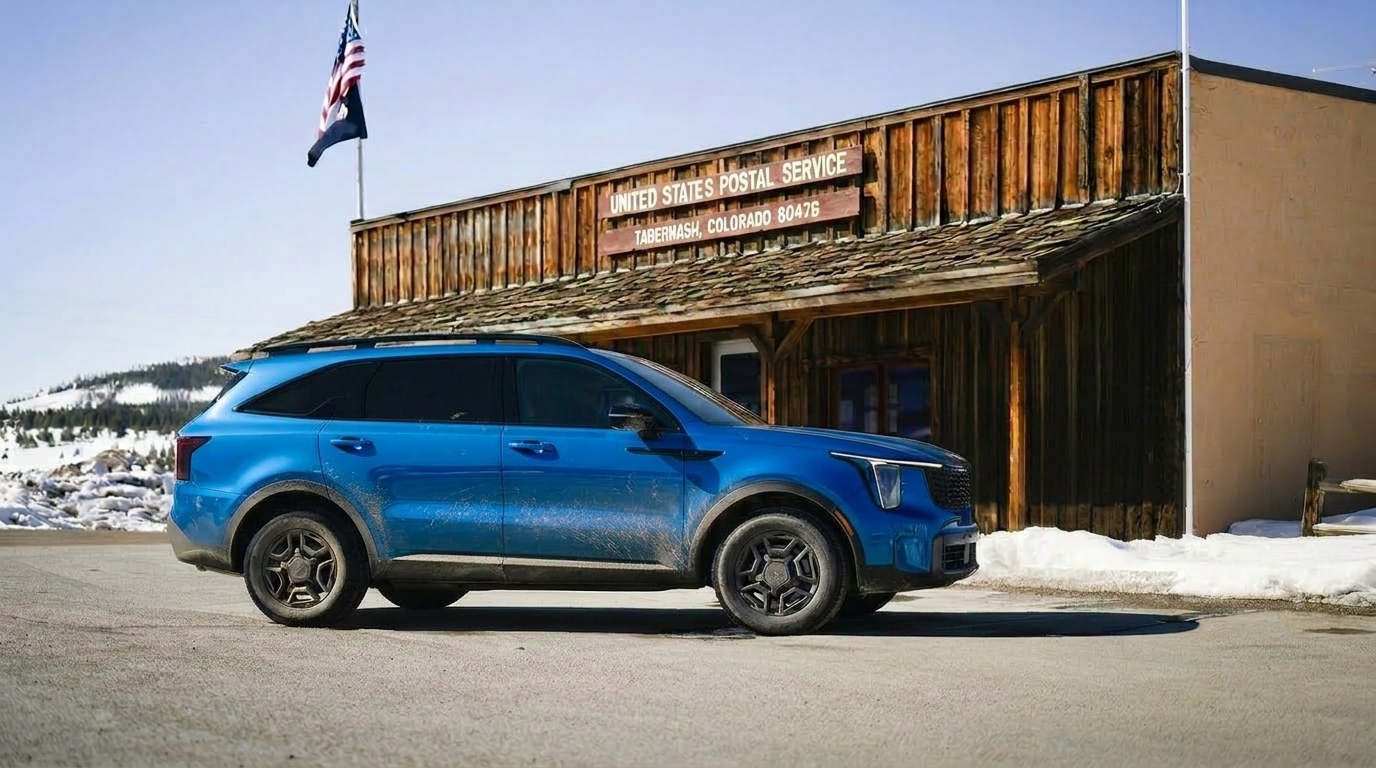
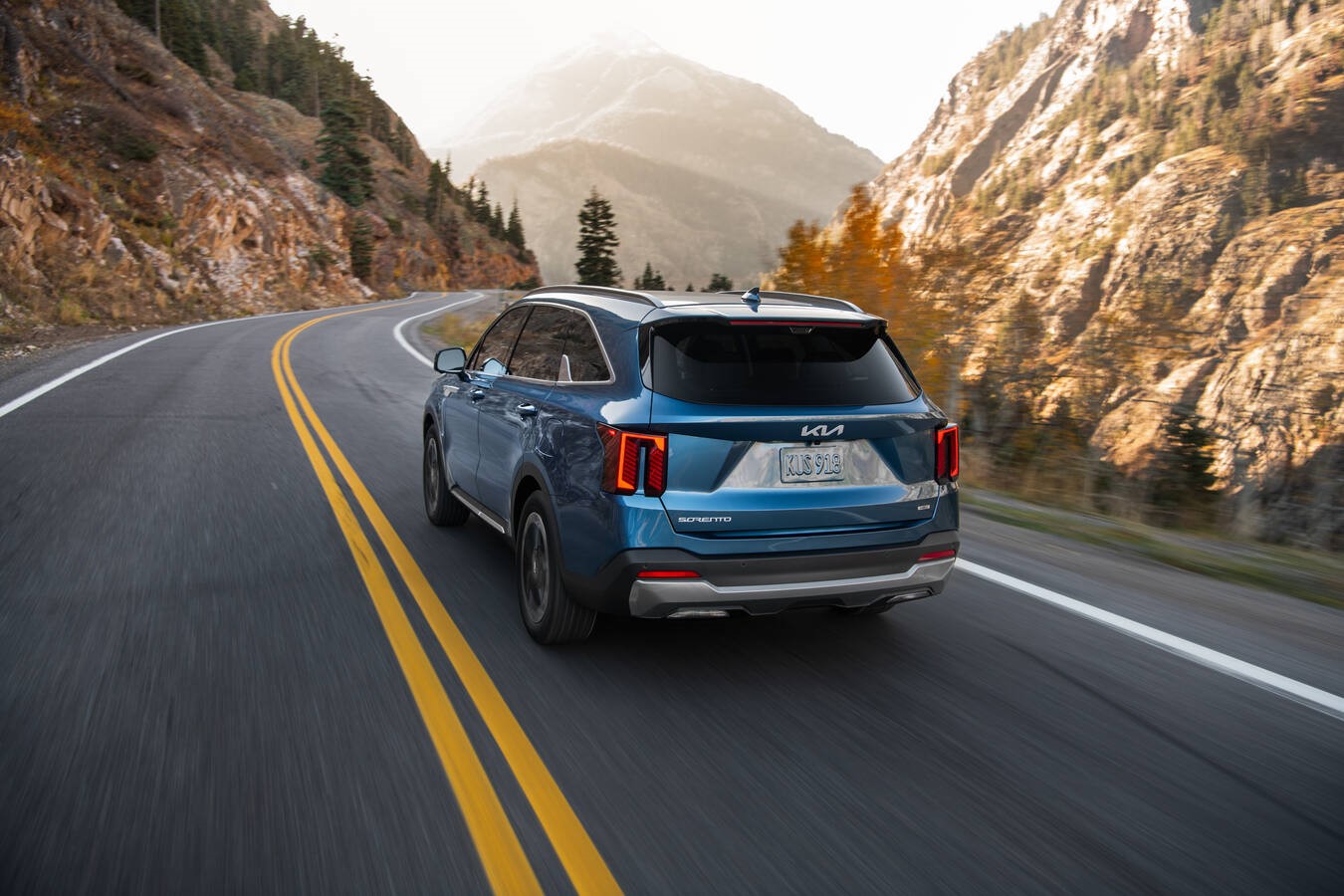
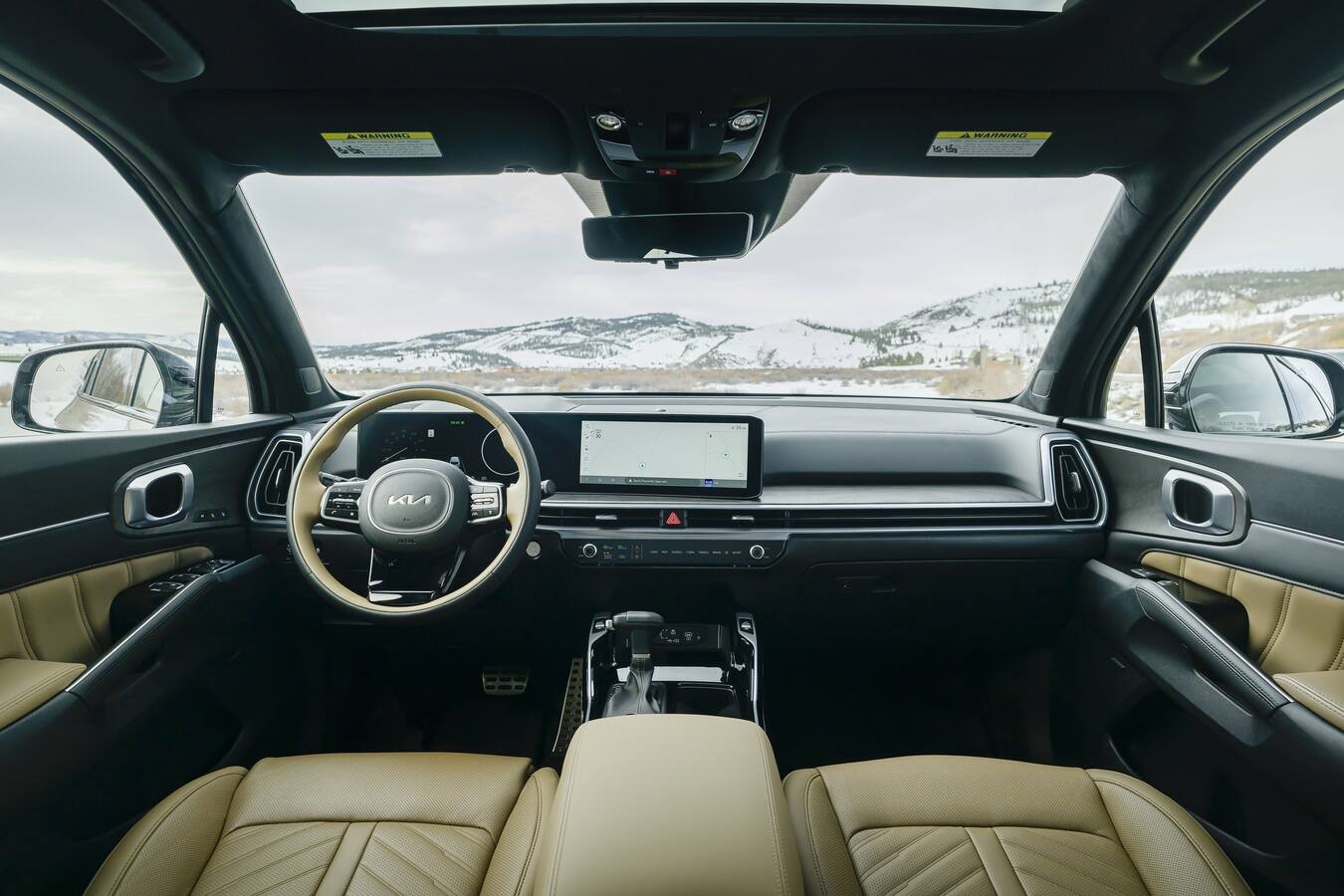
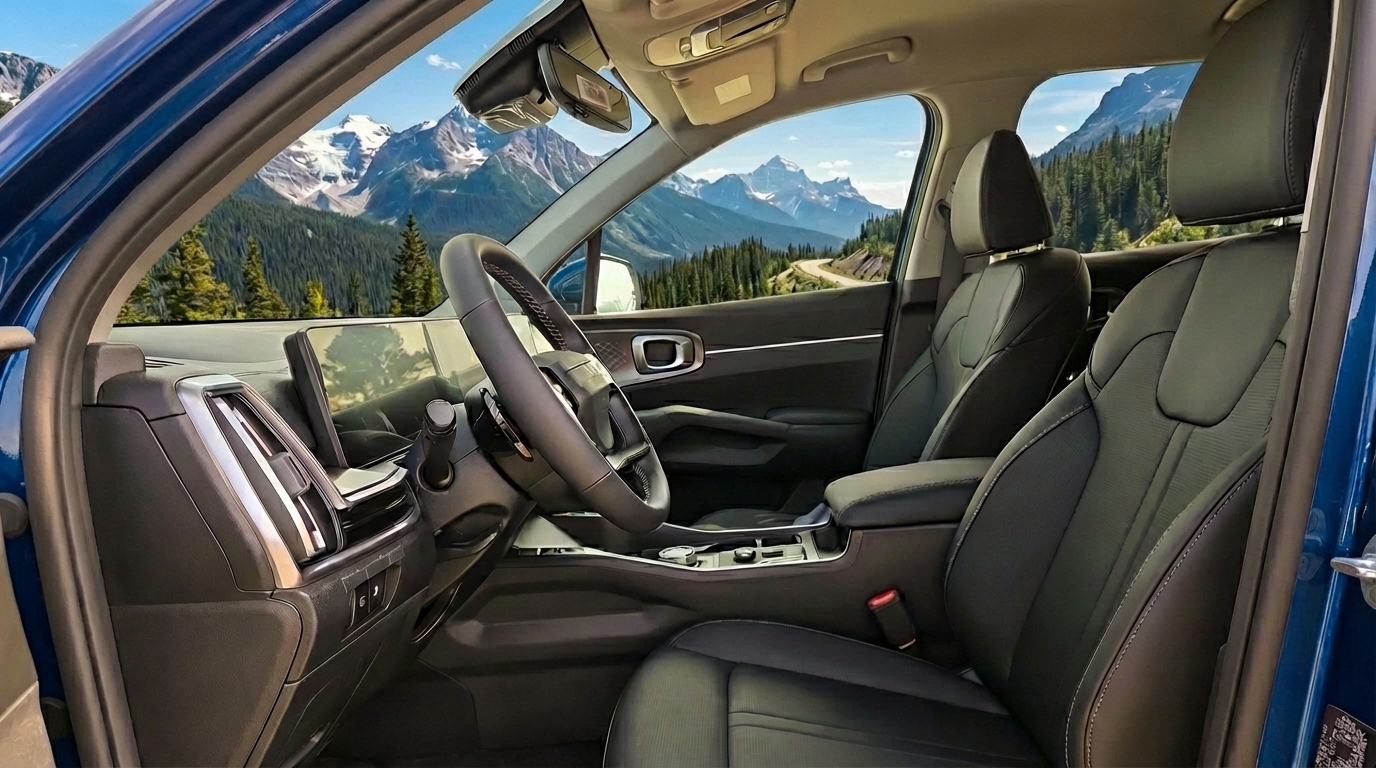
The Sorento Hybrid’s design is a major asset, featuring a bold, angular aesthetic that looks more premium than its price suggests. Its exterior is defined by sharp lines and a confident stance, headlined by Kia’s signature "Tiger Nose" grille, helping it stand out against more conservative rivals like the Toyota Highlander. This upscale feel continues inside, where a clean, modern dashboard is centered around a well-integrated infotainment screen and a driver-focused cockpit. Reviewers praise the impression of quality created by soft-touch materials in key areas. One common critique, however, is the extensive use of glossy piano-black trim, which looks sleek but is a magnet for fingerprints and dust. Overall, the design delivers a handsome, contemporary look that strongly appeals to modern buyers.
5. Interior & cargo room
The Sorento Hybrid’s interior is smartly packaged, but with clear compromises. The first and second rows are spacious and comfortable, offering ample room for adults. The EX trim’s standard second-row captain’s chairs are a highlight, enhancing comfort and providing a convenient pass-through to the rear. However, the story changes in the back. The third row is consistently described as tight and best-suited for children or for adults on very short trips. This spatial constraint extends to cargo capacity; with all seats in use, the 12.6 cubic feet of space is minimal. Folding the third row transforms the cargo hold into a much more practical 45.0 cubic feet, making the Sorento a highly capable two-row crossover for most daily duties.
6. Ergonomics & comfort
The Sorento Hybrid’s cabin is designed with user-friendly ergonomics, offering a commanding driving position and well-placed primary controls. Seat comfort in the first two rows is praised as supportive enough for long journeys, with the second-row captain's chairs being a particular highlight. A recurring critique, however, involves the use of touch-sensitive or dual-function controls for climate and media, which some drivers find less intuitive than traditional physical buttons. In terms of practicality, the Sorento excels with numerous storage cubbies, cup holders, and an abundance of USB ports spread across the rows. While forward visibility is good, thick rear pillars make the standard suite of cameras and driver aids essential for confident maneuvering in tight spaces.
7. Interior, fit & finish
The Sorento Hybrid’s interior consistently earns praise for its "near-premium" feel, presenting a stylish and modern cabin that punches above its mainstream price. The first impression is strong, with a clean dashboard design and a thoughtful mix of soft-touch surfaces on the upper dash and door panels. Panel gaps are generally tight and consistent, and primary switchgear feels solid. To meet its competitive price point, however, compromises are made. Harder, scratch-prone plastics are used in lower areas of the cabin. Additionally, the stylish glossy black trim is notoriously susceptible to collecting fingerprints and fine scratches over time. While initial build quality is favorable, some owners note the possibility of minor rattles developing, keeping it a step behind the bank-vault solidity of segment leaders.
8. Driver & pass UX
The user experience in the Sorento Hybrid is defined by its feature-rich and visually impressive infotainment system. The large central touchscreen is responsive, with sharp graphics and logical menus that are easy to navigate after a brief learning period. Bluetooth pairing is simple and reliable. However, the push for a cleaner dash has led to some shared, touch-sensitive panels for climate and audio controls. This can require an extra glance away from the road, which some find more distracting than dedicated physical buttons. The included voice command system is adequate for basic tasks but can struggle with natural language. Overall, the Sorento delivers a powerful, modern tech experience that works well once you acclimate to its screen-centric method of interaction.
9. Sound system
The standard six-speaker audio system in the Sorento Hybrid EX is competent and perfectly serviceable for daily use. It excels at vocal reproduction, making podcasts, news, and phone calls come through with crisp clarity. For casual music listeners, the system delivers a balanced sound profile that will satisfy the majority of families at moderate volumes. However, its limitations become apparent when pushed. The most frequent criticisms center on a lack of deep bass response and a tendency for the sound to become thin or harsh at higher volumes. Compared to market leaders, it’s a respectable but unremarkable audio experience. While adequate for everyday use, those who prioritize a high-fidelity, immersive music experience will likely want to seek an upgraded premium sound system.
10. Acceleration
The Sorento Hybrid’s powertrain, a 1.6-liter turbocharged engine paired with an electric motor, delivers acceleration that is confidently adequate and smooth. A key strength is its use of a conventional 6-speed automatic transmission, which avoids the droning sensation of some rival hybrids and provides a more traditional driving feel. From a standstill, the instant torque from the electric motor provides a brisk and effortless surge, making city driving feel responsive. Its 0-60 mph time lands in the mid-to-high 7-second range, which is respectable for the class. Under sustained, heavy throttle, such as when passing on a steep hill with a full load, the small engine can become more vocal and feel a bit strained as it prioritizes efficiency over raw power.
11. Braking
The Sorento Hybrid’s braking performance is solid and confidence-inspiring. Instrumented emergency braking tests from 60 mph report competitive stopping distances in the 120- to 130-foot range, ensuring drivers have the secure stopping power they need. The more nuanced aspect is the pedal feel, which blends regenerative and traditional friction braking. This can result in a feel that some drivers find slightly artificial or non-linear during gentle, low-speed deceleration. It’s a common trait in hybrids that most owners quickly acclimate to. Under firmer braking, the pedal is predictable and easy to modulate, with ample stopping force. Overall, while the low-speed feel may take some getting used to, the braking power is strong, stable, and entirely sufficient for a family vehicle.
12. Handling
The Sorento Hybrid is engineered for pleasant and stable handling that prioritizes comfort over sporty engagement. On the highway, it feels composed and planted, tracking straight with minimal effort. The steering is light and predictable, making long-distance travel relaxing, though it offers little road feedback. For a three-row SUV, body roll is present but well-managed and never feels unsettling. Its manageable size and light steering make it feel surprisingly maneuverable around town and relatively easy to park. The turning circle is average for the class. Critics don't describe it as a sports SUV, but rather as a competent, low-effort companion that provides a serene and quietly satisfying driving experience for daily family life.
13. Interior noise
The Sorento Hybrid offers a generally quiet and serene cabin. At low speeds, the vehicle often runs on silent electric power, creating an impressively hushed environment that feels more refined than many non-hybrid competitors. At steady highway speeds, wind and road noise are well-controlled, allowing for easy conversation. The main caveat is the sound of the gasoline engine under hard acceleration. When brisk power is demanded for merging or climbing hills, the turbocharged 1.6-liter engine becomes distinctly more audible and can sound somewhat strained or coarse. This contrast between silent electric operation and the vocal engine makes the sound more noticeable. The consensus is an impressively refined experience in the city, an acceptably quiet ride on the highway, and a more pronounced engine presence under load.
14. Ride quality
The Sorento Hybrid’s ride quality is a highlight, striking a sophisticated balance between comfort and control. On the freeway, the suspension provides a settled, stable character, gliding over most pavement imperfections and expansion joints with impressive composure. This makes it an excellent companion for long road trips. In the city, it does a commendable job absorbing most bumps and rounding off the sharp edges of broken pavement. However, its focus on control means that sharp, abrupt impacts like potholes can be felt with a firm thump, and the ride can feel a bit busy over closely spaced bumps. It's often described as slightly firmer and more buttoned-down than a Toyota Highlander, trading a bit of plushness for a more composed feel.
15. Driver assist systems
Kia’s "Drive Wise" suite of driver-assistance systems is a compelling feature, praised for being comprehensive and smooth. The EX trim comes well-equipped with adaptive cruise control with stop-and-go, lane-keeping and centering assist, blind-spot monitoring, and rear cross-traffic alert. Highway Driving Assist (HDA) is a standout, intelligently combining adaptive cruise and lane centering to reduce driver fatigue on long trips with smooth, human-like inputs. The blind-spot and rear cross-traffic systems are considered effective and intuitive aids for daily driving. While not fully autonomous and dependent on clear road markings and good weather, the consensus is that the Sorento’s driver aids are a standout strength, offering a level of sophistication that rivals or surpasses key competitors.
16. Mileage
Fuel economy is a headline feature for the Sorento Hybrid, which delivers impressive efficiency for a three-row, all-wheel-drive SUV without needing to be plugged in. Official EPA estimates typically land in the mid-30s for combined MPG, with city mileage often stronger than highway mileage due to the hybrid system’s effectiveness in stop-and-go traffic. Real-world results are often reported in the high-20s to mid-30s, depending on driving style and conditions. Its efficiency is very good for the class, handily outperforming non-hybrid rivals and the Ford Explorer Hybrid. While it often trades blows with the benchmark Toyota Highlander Hybrid, the Sorento delivers significant fuel savings that make it a highly compelling choice for fuel-conscious families.
17. Safety
Safety is a top priority for the Sorento Hybrid, which combines a robust structure with a formidable suite of modern safety technologies. Historically, the Sorento platform has earned strong crash-test ratings from the IIHS and NHTSA, positioning it as a competitive player in its class. A major highlight is the generous list of standard active safety features on the EX trim. This includes Forward Collision-Avoidance Assist, Lane Keeping Assist, Blind-Spot Collision-Avoidance Assist, and Rear Cross-Traffic Alert. These systems are praised for being effective and relatively unobtrusive in daily driving. The overall sentiment is that the Sorento Hybrid is a very safe vehicle, well-equipped to protect its occupants and prevent accidents, making it a reassuring choice for any family.
18. Pricing
The Kia Sorento Hybrid EX AWD is strategically priced to offer a near-premium experience without the premium cost. The EX trim, often considered the lineup's sweet spot, typically lands in the low-to-mid $40,000 range. While not bargain-priced, its value comes from the generous list of standard equipment. Kia includes desirable technology, safety, and comfort features that are often costly options on rivals. Compared to a similarly equipped Toyota Highlander Hybrid, the Sorento often presents a stronger value at the time of purchase. Buyers consistently feel they are getting a high level of equipment for their money, making the Sorento a competitively priced and feature-rich option in the midsize SUV segment.
19. Value
The Sorento Hybrid's value proposition is twofold: exceptional upfront value combined with good, but not class-leading, long-term resale value. At the dealership, it shines by offering a wealth of standard features—advanced tech, comfort items, and upscale design—for a competitive price. This impressive "bang for your buck" is powerfully reinforced by Kia's industry-leading 10-year/100,000-mile powertrain warranty, which provides unparalleled peace of mind. On the other side, its resale value, while strong, typically trails the segment champion, the Toyota Highlander Hybrid, which benefits from a legendary reputation for durability. The Sorento represents a compelling buy for those wanting maximum equipment and warranty coverage now, even if it doesn't hold its value quite as well as its top rival.
20. Reliability
The Kia Sorento Hybrid’s reliability is generally considered average to above average, reflecting the brand's significant improvements in quality. It has not yet achieved the legendary bulletproof reputation of its main rival, the Toyota Highlander Hybrid. Widespread reports of catastrophic mechanical failures are rare. Instead, owner forums occasionally mention minor electronic glitches with the infotainment system, sensitive sensor warnings, or small trim rattles. The core hybrid powertrain is generally considered robust. The Sorento’s biggest trump card is Kia’s 10-year/100,000-mile powertrain warranty, which far exceeds competitor offerings. This extensive coverage provides a powerful safety net, making the Sorento a dependable choice effectively backstopped by an unbeatable warranty.
Frequently asked questions about the 2026 Kia Sorento Hybrid EX (AWD)
Is the 2026 Kia Sorento Hybrid EX (AWD) worth buying?
The Kia Sorento Hybrid EX AWD is a clever, right-sized solution for families who need versatility without the bulk of a full-size SUV. It strikes a compelling balance between a practical three-row layout and wallet-friendly fuel economy. Functioning like a conventional gas car, its turbocharged hybrid powertrain operates without needing to be plugged in. The Sorento’s primary appeal is its triple threat of expressive modern styling, a tech-forward interior, and Kia’s famously long warranty. While lauded for its upscale ambiance and real-world efficiency, its main compromise is a third-row seat
How much does the 2026 Kia Sorento Hybrid EX (AWD) cost?
The 2026 Kia Sorento Hybrid EX (AWD) is priced at $32,390 – $53,490, before destination, options, and incentives.
What is the fuel economy of the 2026 Kia Sorento Hybrid EX (AWD)?
The 2026 Kia Sorento Hybrid EX (AWD) returns 34 MPG combined per published EPA figures.
How this review is produced
moblr meta-reviews are generated by aggregating multiple published expert road tests using AI consensus and sentiment analysis, then read and reviewed by a human editor before publication. Category ratings on the −50 to +50 scale show how each vehicle compares to the average for its segment. Learn more about the moblr review process.