2026 Mazda 3 2.5 S Select Sport Sedan
Consensus at a glance
- Consensus score
- Not yet rated
- Price
- $25,885 – $38,175
- Powertrain
- Gasoline
- Combined fuel economy
- 30 MPG
- Body type
- sedan
Quick Take
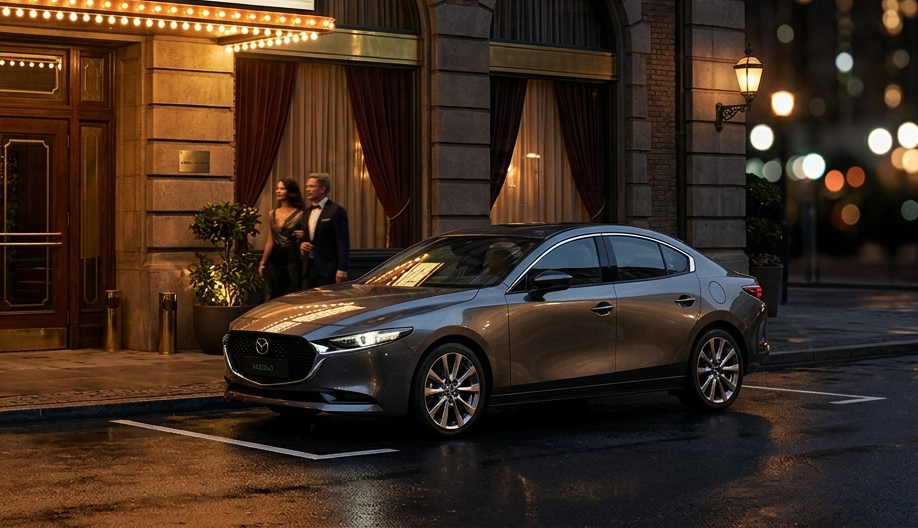
The 2026 Mazda3 2.5 S Select Sport Sedan is a premium-leaning compact car that prioritizes an engaging driving experience, upscale design, and a refined interior over maximum practicality. It is powered by a proven 2.5-liter naturally aspirated four-cylinder engine mated to a conventional six-speed automatic transmission, a combination praised for its smooth and responsive feel. While it offers a quiet, high-quality cabin that punches above its price point, this focus comes at the cost of class-leading rear-seat passenger space and cargo room. The Select Sport trim is consistently viewed as the lineup’s sweet spot, bundling desirable aesthetic and comfort features without a massive price increase. It appeals to buyers who want a sophisticated and fun-to-drive daily driver that feels more special than its mainstream competitors.
Its Main Competition
The Mazda3 primarily competes with the Honda Civic, Toyota Corolla, Hyundai Elantra, and Volkswagen Jetta. Against these rivals, its key differentiators are a more luxurious and driver-focused interior, a quieter cabin, and a more engaging handling profile. While competitors like the Civic and Elantra often provide more rear passenger space, the Mazda3 counters with a superior sense of craftsmanship. Unlike the hybrid options available from Toyota and Honda, the Mazda3 sticks with a traditional and responsive gasoline powertrain. Its infotainment philosophy, which often favors a rotary controller over a pure touchscreen interface, also sets it apart by aiming to reduce driver distraction. Ultimately, it competes by delivering a more premium feel rather than by winning every raw measurement on a spec sheet.
Its Buyer's Demographics
The typical buyer for the Mazda3 is a design-conscious individual who values a vehicle as more than a simple appliance. Demographics often include young professionals, couples, and empty-nesters who prioritize driving dynamics and a premium feel. These buyers generally have a higher-than-average income and education level for the compact car segment and often have households with no children or only small children. They are willing to trade maximum rear-seat and cargo space for a more stylish exterior and a refined, driver-focused cockpit. The Mazda3 appeals to those seeking an elevated experience without the expense and pretense of a true luxury badge, making it a popular choice for urban and suburban commuters.
Design
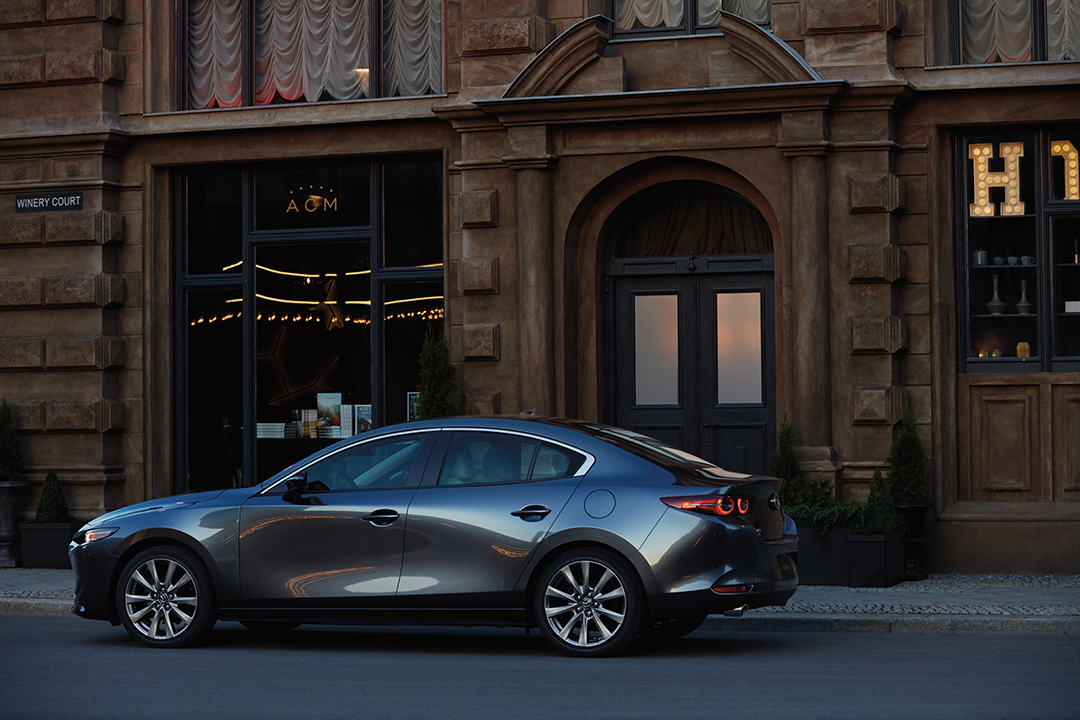
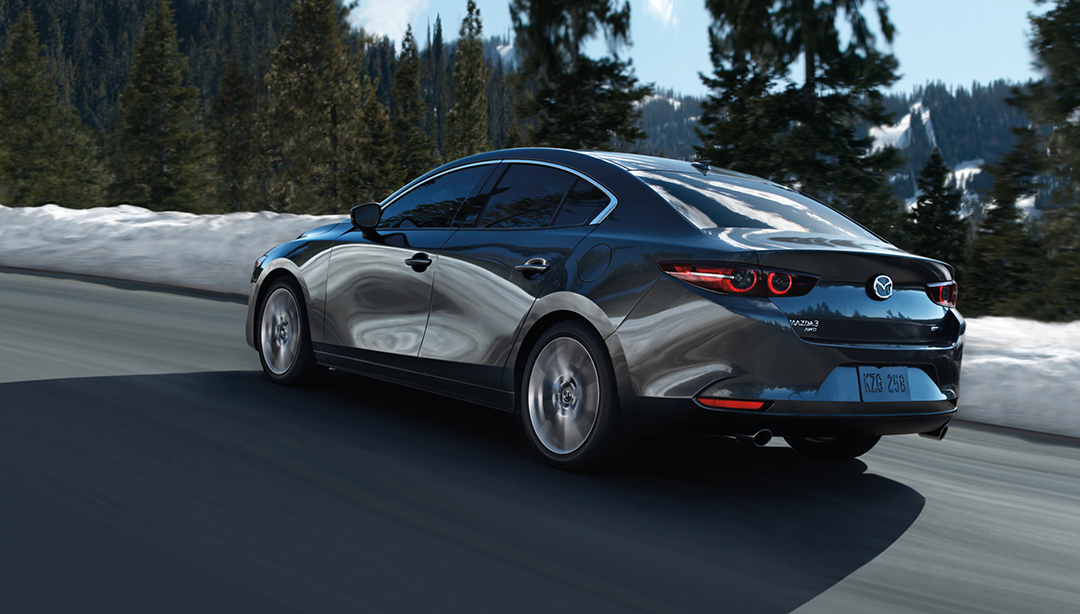
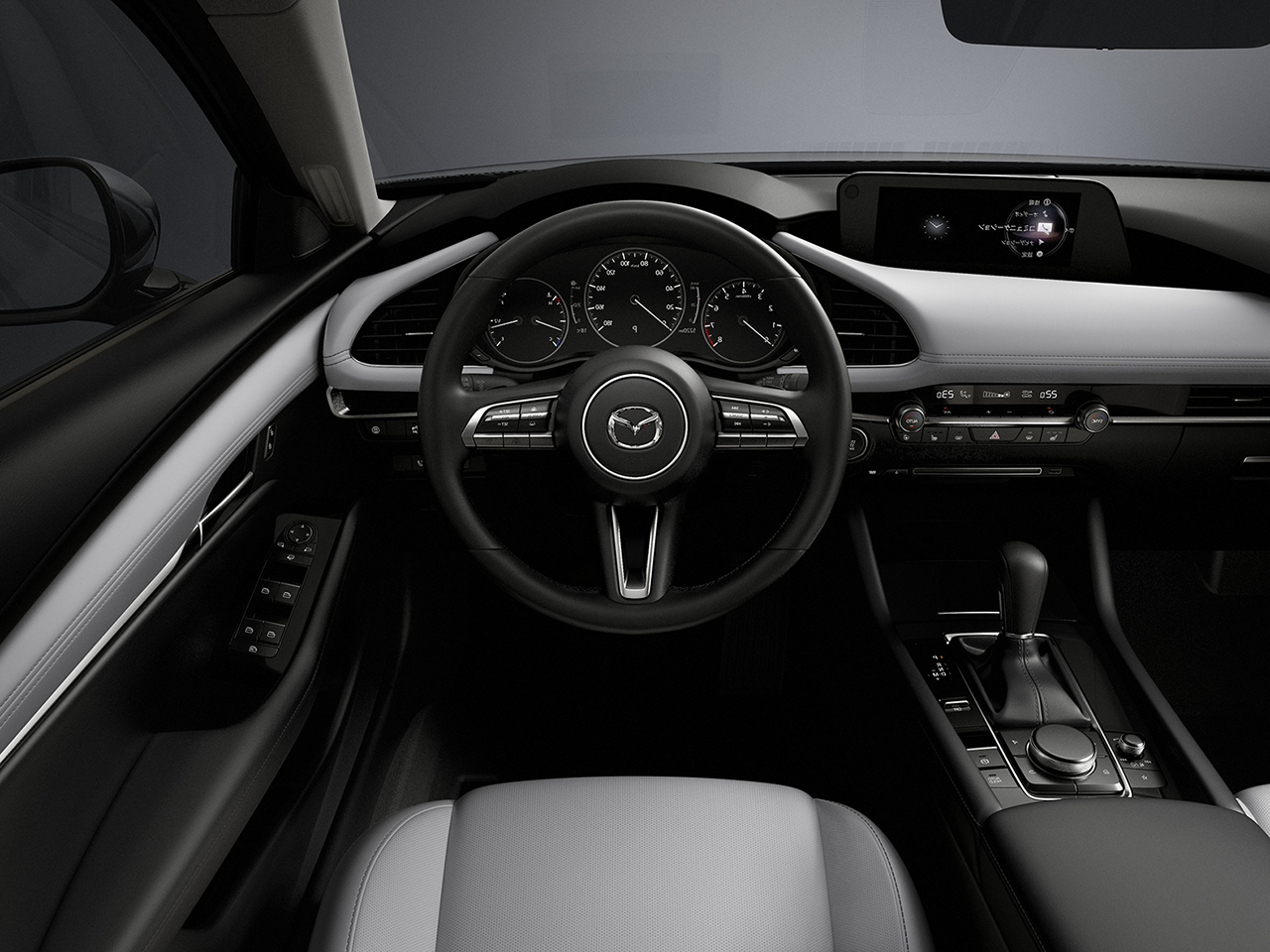
The Mazda3’s design is a standout in the compact class, defined by an elegant and minimalist philosophy. The exterior features clean, flowing lines and smooth surfaces, avoiding the sharp creases and aggressive angles of some rivals to create a more sophisticated and timeless look. This upscale appearance is complemented by a bold front grille and slim LED headlights. Inside, the cabin continues this theme with a driver-focused, minimalist layout that emphasizes high-quality materials and excellent fit and finish. The use of soft-touch surfaces and well-crafted switchgear gives the interior a decidedly premium atmosphere that feels more expensive than its price tag suggests and is a core part of the vehicle’s appeal.
Interior & cargo room
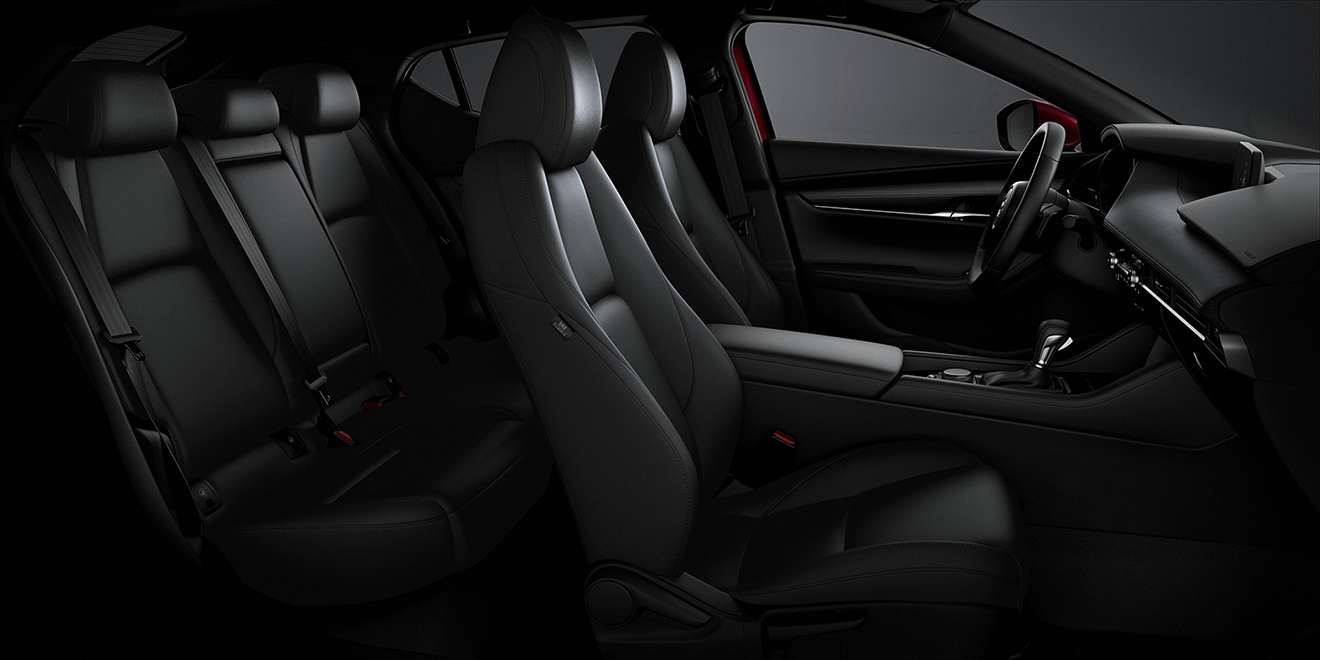
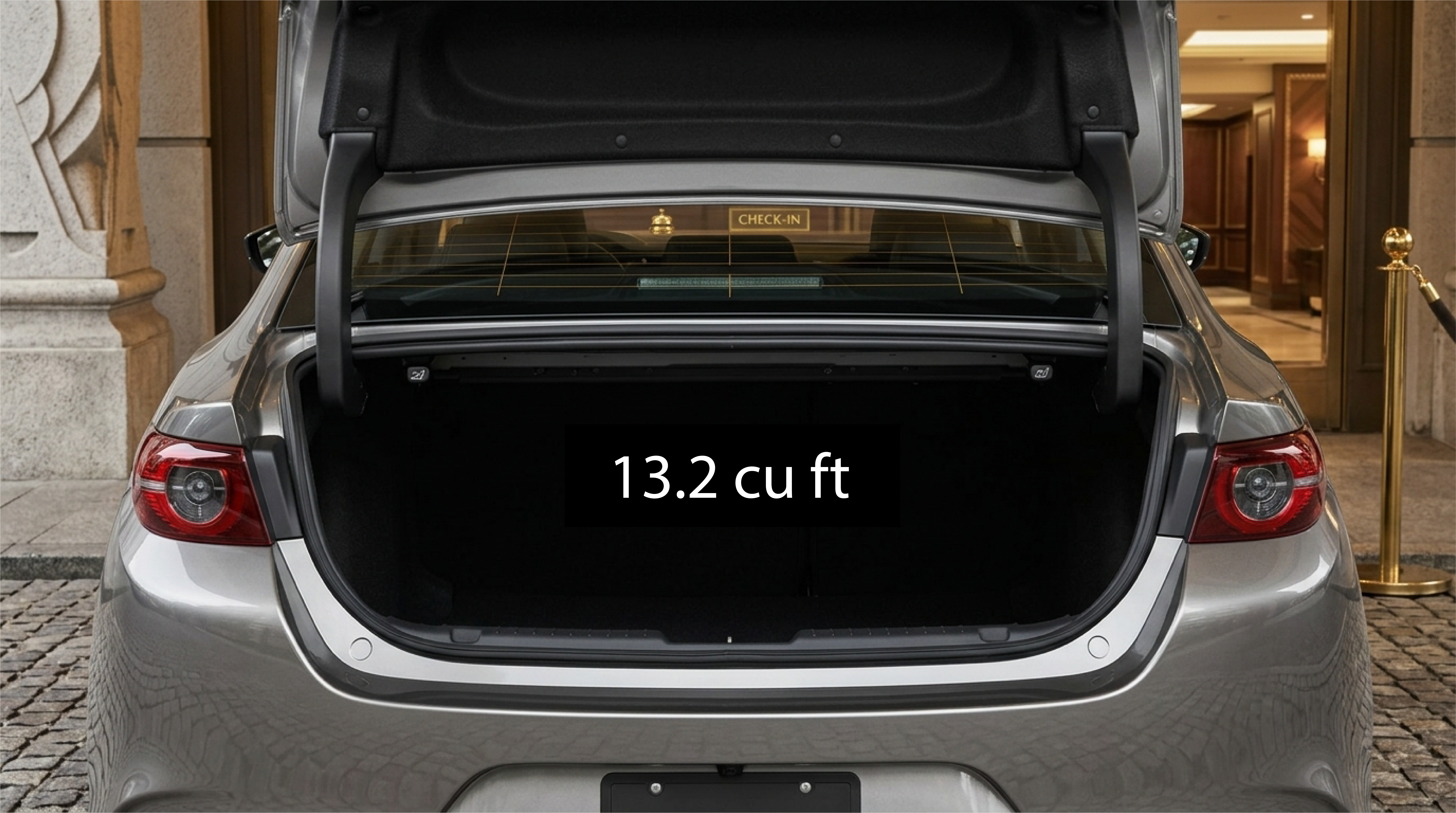
While the front seats offer ample comfort and space, the Mazda3’s most significant compromise is in its rear accommodations and cargo capacity. The sleek, coupe-like roofline directly impacts rear-seat utility, resulting in less headroom and legroom than in key competitors like the Honda Civic or Hyundai Elantra. Adults will find the back seat tight for long journeys. Similarly, the trunk volume of around 13.2 cubic feet is at the lower end of the segment. Some reviews note that the shape of the trunk opening can also make loading bulky items more challenging. This trade-off is clear: the Mazda3’s beautiful styling comes at the direct expense of interior and cargo practicality.
Ergonomics & Comfort
The Mazda3’s interior is designed with a clear driver-first focus, featuring a natural seating position and logically placed controls that fall easily to hand. Front seat comfort is a strong point, with supportive, well-bolstered seats that are excellent for long commutes. However, the car’s stylish design creates a major ergonomic flaw in the form of poor rearward visibility. The thick rear C-pillars generate significant blind spots, making diligent use of mirrors and the standard blind-spot monitoring system a necessity for safe lane changes. Small-item storage is considered adequate but not class-leading, with enough cupholders and bins for daily essentials but less overall volume than more utility-focused rivals.
Interior, Fit & Finish
The interior execution is a defining strength of the Mazda3, consistently earning praise for feeling more luxurious than its price would suggest. The cabin is layered with high-quality, soft-touch materials on the dashboard and upper door panels, while the buttons and knobs operate with a satisfying, precise click. Fit and finish are exemplary, with tight, consistent panel gaps and a solid, rattle-free construction that contribute to the car’s premium impression. While some harder plastics can be found in lower, less-visible areas of the cabin, the overall aesthetic is cohesive and upscale. This attention to detail in materials and assembly is a key factor that sets the Mazda3 apart from its mainstream competitors.
Driver & Pass UX
The user experience is centered around a philosophy of minimizing driver distraction, predominantly utilizing a tactile rotary controller on the center console instead of a large, touch-only screen. While there is a learning curve for those accustomed to tablet-style interfaces, the system becomes intuitive and allows for easier eyes-on-the-road adjustments. The infotainment software is generally stable and responsive, with reliable voice commands for basic tasks. Bluetooth pairing for phones is consistently reported as quick and straightforward, with stable connections for calls and audio streaming. This deliberate, safety-minded interface design is a unique characteristic compared to the increasingly screen-dependent cockpits of its rivals.
Sound System
The standard audio system in the Mazda3 delivers a clear and well-balanced sound profile that is more than suitable for daily commuting and podcasts. It performs particularly well with spoken-word content, where vocal clarity is paramount. The refined and quiet nature of the cabin contributes significantly to the listening experience, as it allows for enjoyable audio playback without having to crank the volume to overcome excessive road or wind noise. While the base system may lack the deep bass and immersive soundstage of premium upgraded stereos, it provides a clean, distortion-free sound at normal volumes that will satisfy the vast majority of listeners.
Acceleration
The Mazda3 is powered by a 2.5-liter naturally aspirated four-cylinder engine producing approximately 191 horsepower, paired with a conventional and responsive six-speed automatic transmission. This powertrain is praised for its smooth, linear, and predictable power delivery. It provides confident acceleration for merging and passing, with a 0-60 mph time in the seven-second range, making it feel brisk in daily driving. A key strength is its immediate throttle response, which avoids the lag associated with some turbocharged engines and the droning feel of continuously variable transmissions (CVTs) common in the segment. The result is a driving experience that feels polished, connected, and satisfying.
Braking
Braking is a universally praised attribute of the Mazda3, inspiring confidence with its strong and consistent performance. The car remains stable and composed during hard stops, with competitive stopping distances for the compact class. The standout feature, however, is the brake pedal feel. It is consistently described as firm, linear, and exceptionally easy to modulate, allowing the driver to bring the car to a smooth halt in traffic with precision. This predictable and responsive pedal avoids the vague or overly grabby sensation found in some competitors, reinforcing the car’s overall a secure, driver-focused character.
Handling
The Mazda3 delivers a composed and engaging handling experience that shines on both highways and winding roads. At speed, the car feels exceptionally stable and planted, with precise, linear steering that gives the driver a strong sense of connection to the road. Body roll is very well-controlled and less than average for the segment, allowing the car to remain flat and confident through corners. While its turning circle is only average for navigating tight city streets, the overall dynamic character is a major highlight. The suspension strikes a balance that clearly prioritizes a responsive and pleasurable driving experience over soft, isolating comfort.
Interior Noise
For a mainstream compact car, the Mazda3 features a remarkably quiet and refined interior. At steady highway speeds, wind and road noise are impressively suppressed, contributing to a calm environment that feels more aligned with a premium vehicle. This is achieved through extensive use of traditional sound-deadening materials rather than electronic active noise cancellation. While the serene atmosphere is a highlight, the engine does make its presence known with an audible but not unpleasant note during hard acceleration. On particularly coarse or broken pavement, some tire noise can still intrude, but the cabin generally remains a peaceful place for commuting or long trips.
Ride Quality
The Mazda3’s ride quality exhibits a distinct dual character. On the freeway, the ride is excellent—composed, stable, and feeling securely planted to the road. However, this control is achieved with a suspension that is tuned on the firmer side of the compact-car spectrum. In city driving, this firmness becomes more apparent, as sharp bumps, potholes, and expansion joints are felt more distinctly than in softer-riding competitors. The ride is never harsh or uncomfortable, but it’s clear that Mazda prioritized sharp handling and a connected, sporty feel over creating a plush, isolating ride.
Driver Assist Systems
The Mazda3 is well-equipped with a comprehensive suite of active safety and driver assistance features, including adaptive cruise control, lane-keeping assist, and blind-spot monitoring. These systems are widely praised for their smooth and non-intrusive operation. The adaptive cruise control maintains speed and distance with a natural fluidity, and the lane-keeping system provides gentle, helpful steering nudges rather than aggressive, constant corrections. This tuning philosophy ensures the aids support the driver without feeling like they are fighting for control. The standard blind-spot and rear cross-traffic alert systems work effectively and are especially valuable given the car's compromised rear visibility.
Mileage
As a conventional gasoline vehicle, the 2026 Mazda3 delivers fuel economy that is considered average for the non-hybrid compact sedan class. It typically achieves EPA ratings around 27 MPG in the city and 37 MPG on the highway, for a combined figure of 31 MPG. While these numbers are respectable, they fall short of the efficiency offered by class leaders like the Honda Civic and Toyota Corolla, particularly their available hybrid variants. However, many buyers feel this modest fuel economy penalty is a worthwhile trade-off for the Mazda3’s stronger standard engine, responsive transmission, and more engaging driving dynamics.
Safety
Safety is a key strength, with the Mazda3 consistently earning top-tier crash-test ratings from both NHTSA (5-Star overall) and the IIHS (Top Safety Pick). Its solid performance is bolstered by a comprehensive suite of standard active safety technologies, branded as i-Activsense. This includes crucial features like automatic emergency braking, lane-keeping assist, and adaptive cruise control. Critically, blind-spot monitoring and rear cross-traffic alert are also standard, providing an essential layer of security that helps mitigate the visibility challenges created by the car’s thick rear roof pillars and stylish design.
Pricing
The Mazda3 is priced in the mid-to-upper range of the mainstream compact sedan segment. The 2.5 S Select Sport trim, with a starting MSRP typically in the mid-$20,000s, is widely regarded as the most popular model and the sweet spot of the entire lineup. This specific trim level strikes an ideal balance, offering a significant upgrade in aesthetic appeal and interior features over the base model without the much larger price jump required for the top-tier trims. It successfully delivers a compelling near-premium experience at a competitive mainstream price point, representing the strongest value proposition for most buyers.
Value
The Mazda3 offers a strong value proposition, particularly for buyers who prioritize refinement and driving enjoyment over maximum space. Its key advantage is providing a near-luxury interior and sophisticated road manners at a mainstream price. While its long-term resale value is very competitive, it historically ranks just a step behind the segment’s legendary leaders, the Honda Civic and Toyota Corolla. For shoppers seeking more than just basic transportation, the immense satisfaction delivered by its upscale feel and engaging performance makes the Mazda3 an excellent overall value for the money from the moment of purchase.
Reliability
The Mazda3 boasts a strong reputation for reliability, largely thanks to its proven and mature powertrain. By sticking with a naturally aspirated 2.5-liter engine and a traditional six-speed automatic transmission, it sidesteps potential long-term issues associated with more complex small-displacement turbos and CVTs. This robust and relatively simple mechanical setup puts its dependability in league with the segment’s benchmarks from Honda and Toyota. While major mechanical failures are extremely rare, the few issues that are occasionally reported tend to be minor electronic or infotainment software quirks, not critical drivetrain problems.
Frequently asked questions about the 2026 Mazda 3 2.5 S Select Sport Sedan
Is the 2026 Mazda 3 2.5 S Select Sport Sedan worth buying?
The 2026 Mazda3 2.5 S Select Sport Sedan is a premium-leaning compact car that prioritizes an engaging driving experience, upscale design, and a refined interior over maximum practicality. It is powered by a proven 2.5-liter naturally aspirated four-cylinder engine mated to a conventional six-speed automatic transmission, a combination praised for its smooth and responsive feel. While it offers a quiet, high-quality cabin that punches above its price point, this focus comes at the cost of class-leading rear-seat passenger space and cargo room. The Select Sport trim is consistently viewed as th
How much does the 2026 Mazda 3 2.5 S Select Sport Sedan cost?
The 2026 Mazda 3 2.5 S Select Sport Sedan is priced at $25,885 – $38,175, before destination, options, and incentives.
What is the fuel economy of the 2026 Mazda 3 2.5 S Select Sport Sedan?
The 2026 Mazda 3 2.5 S Select Sport Sedan returns 30 MPG combined per published EPA figures.
How this review is produced
moblr meta-reviews are generated by aggregating multiple published expert road tests using AI consensus and sentiment analysis, then read and reviewed by a human editor before publication. Category ratings on the −50 to +50 scale show how each vehicle compares to the average for its segment. Learn more about the moblr review process.