2026 Subaru Forester Premium
Consensus at a glance
- Consensus score
- Not yet rated
- Price
- $29,995 – $41,595
- Powertrain
- Gasoline
- Combined fuel economy
- 29 MPG
- Body type
- suv
title
1. Quick Take
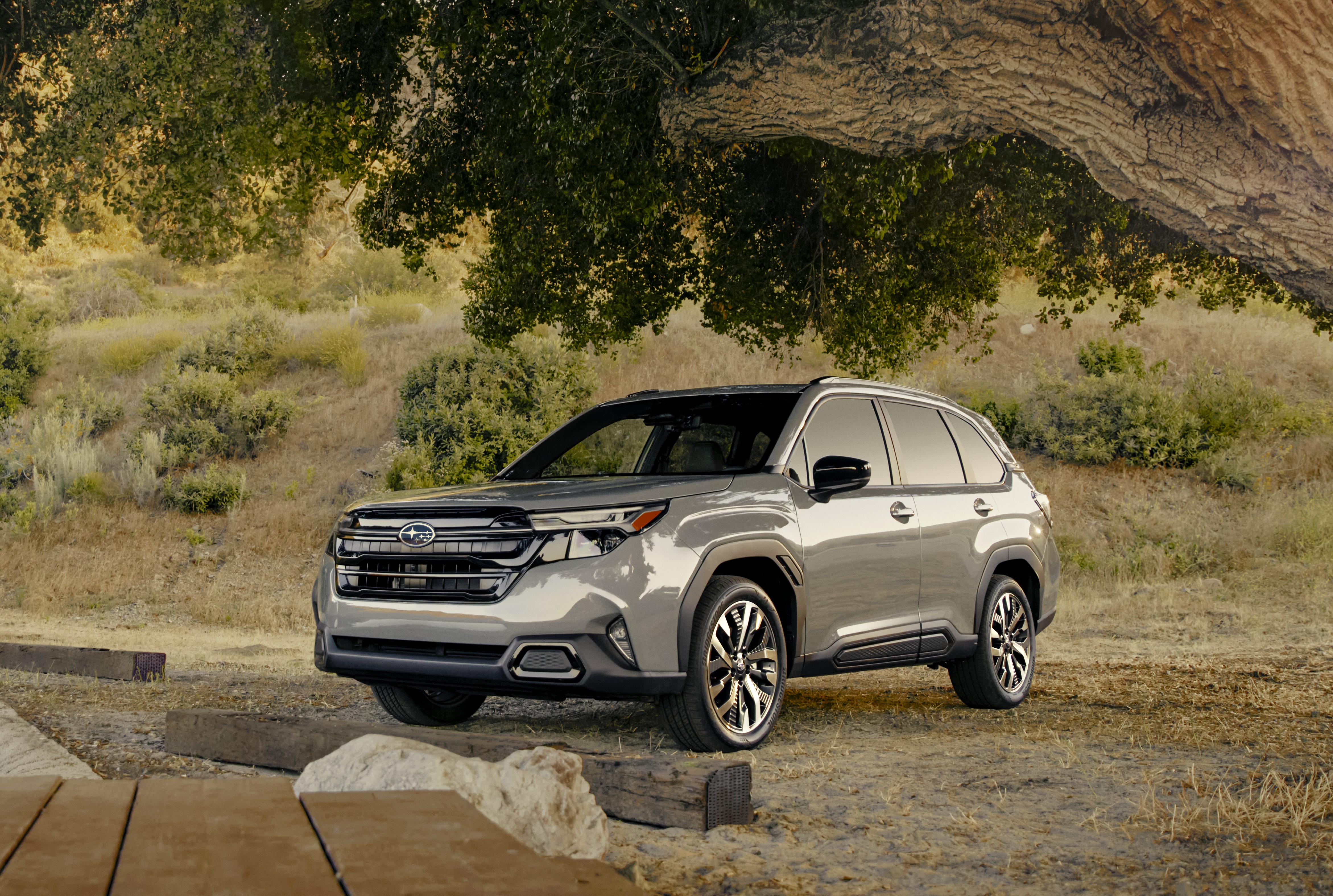
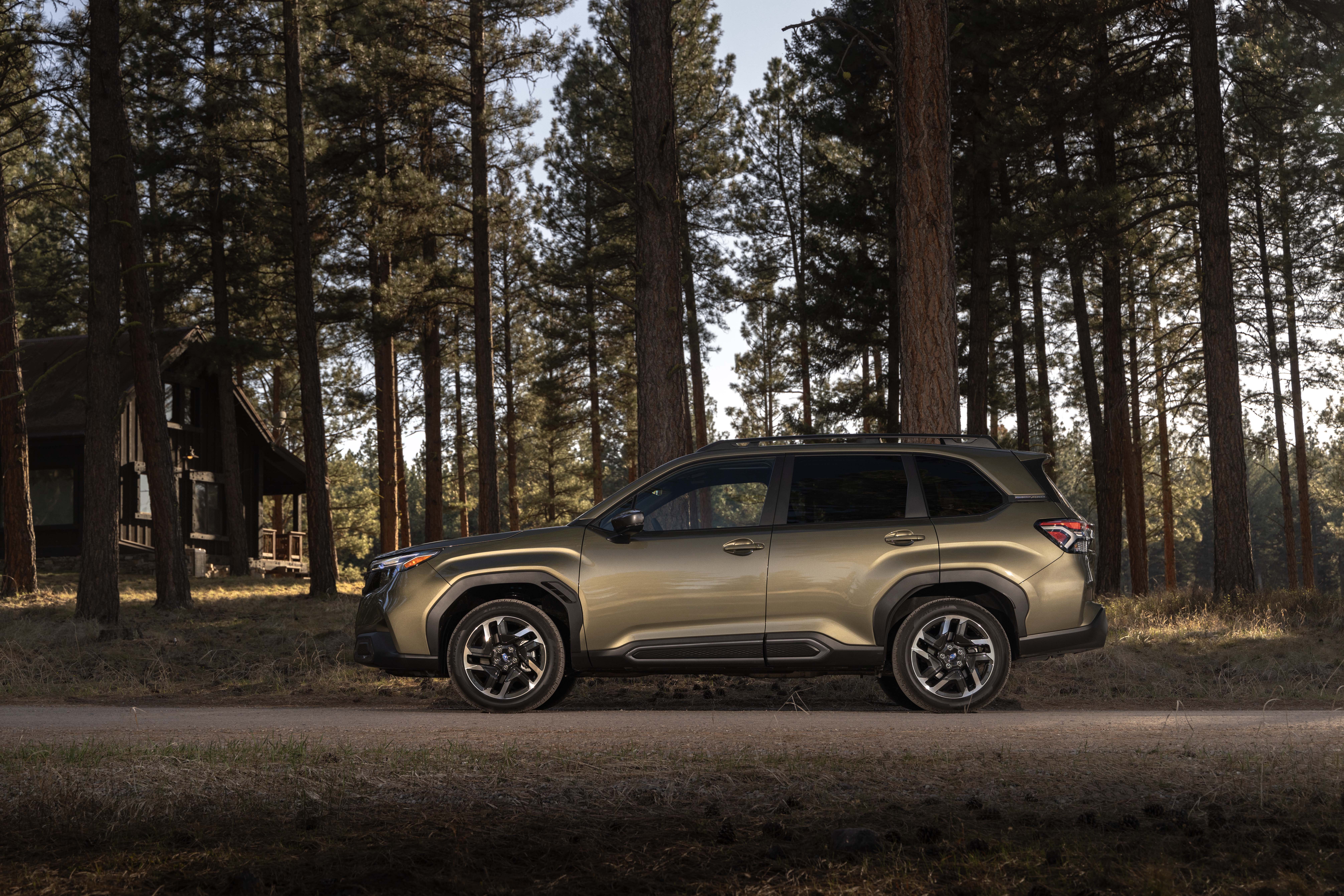
The 2026 Subaru Forester Premium positions itself as the volume-oriented "sweet spot" in the lineup, prioritizing function over flash. Rejecting the industry trend of coupe-like rooflines, it retains a boxy, upright profile that maximizes visibility and utility for families, dog owners, and outdoor enthusiasts. It differentiates itself from rivals by offering Symmetrical All-Wheel Drive as standard equipment rather than an expensive option. While critics universally note that the 2.5-liter naturally aspirated engine feels leisurely compared to turbocharged competitors, the consensus remains that the Forester excels in livability. Ultimately, it is a pragmatic, "no-drama" daily driver designed as a tool for living rather than a status symbol.
2. Its Main Competition
The 2026 Forester Premium faces fierce competition from segment leaders like the Toyota RAV4, Honda CR-V, and Mazda CX-5. While rivals often charge extra for all-wheel drive, the Forester distinguishes itself by including it as a standard core feature. Competitors like the RAV4 and CR-V offer hybrid powertrains that deliver superior fuel economy and punchier acceleration, whereas the Mazda CX-5 provides a more premium interior and sporty handling. In contrast, the Forester is framed as the "function over fashion" alternative, offering superior outward visibility and boxy practicality. Ultimately, it competes not by being the fastest or sleekest, but by providing a rugged, utilitarian counterpoint to the increasingly car-like designs of its peers.
3. Its Buyer’s Demographics
The demographic profile of the Forester Premium buyer is distinct, often described as the "millionaire next door." Research portrays these owners as pragmatic, financially stable, and remarkably highly educated, possessing post-graduate degrees at rates significantly higher than the general public. Geographically concentrated in the "snow belt" and outdoor-adjacent suburbs, these buyers view All-Wheel Drive as a necessity rather than a luxury. Psychographically, they value safety, environmental awareness, and functionality over status symbols. A unique and frequently cited statistic is the "dog factor," as Forester owners are statistically more likely to own and travel with pets. They are practical consumers who view their vehicle as a support system for hiking and family life rather than an expression of aggression.
4. Design
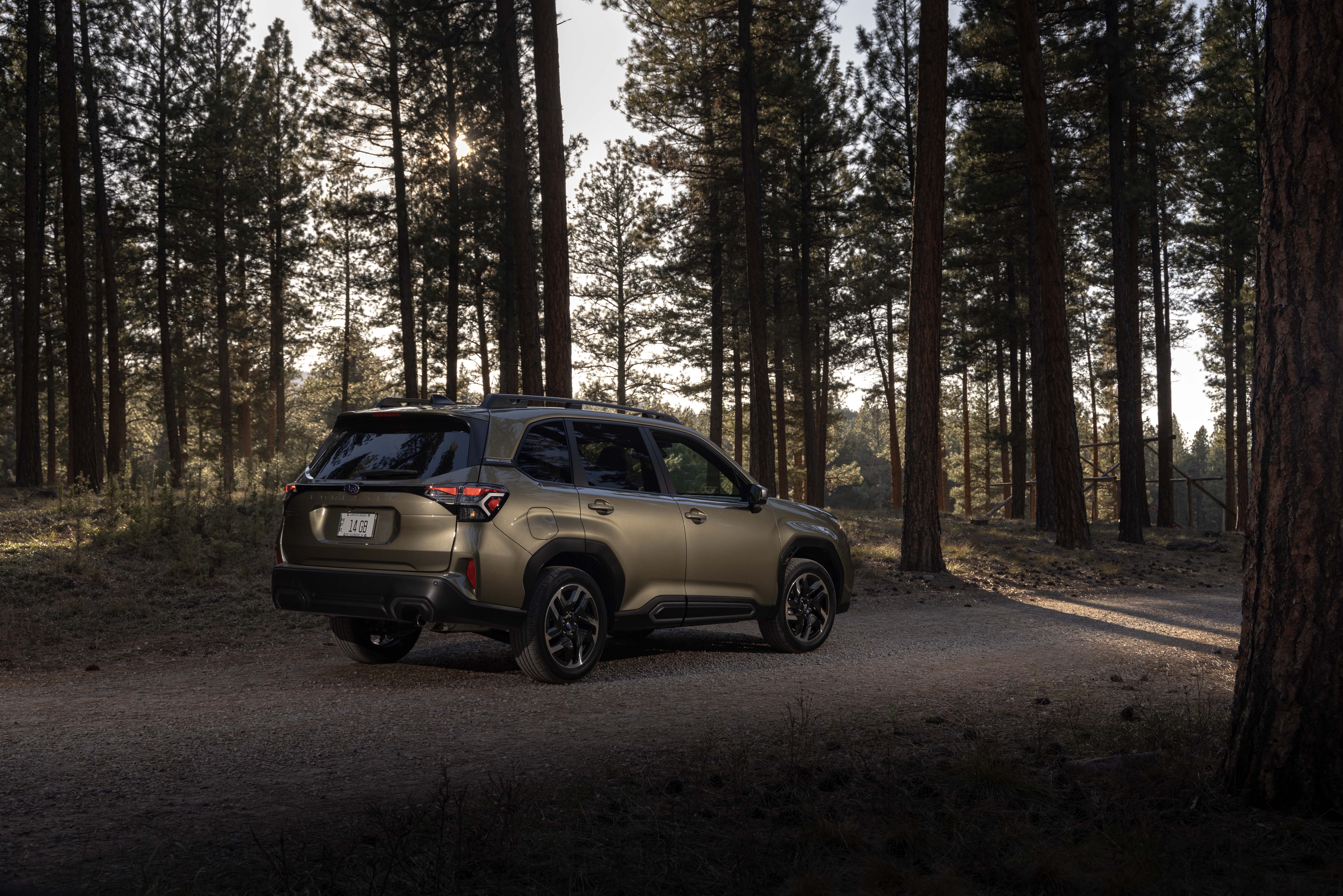
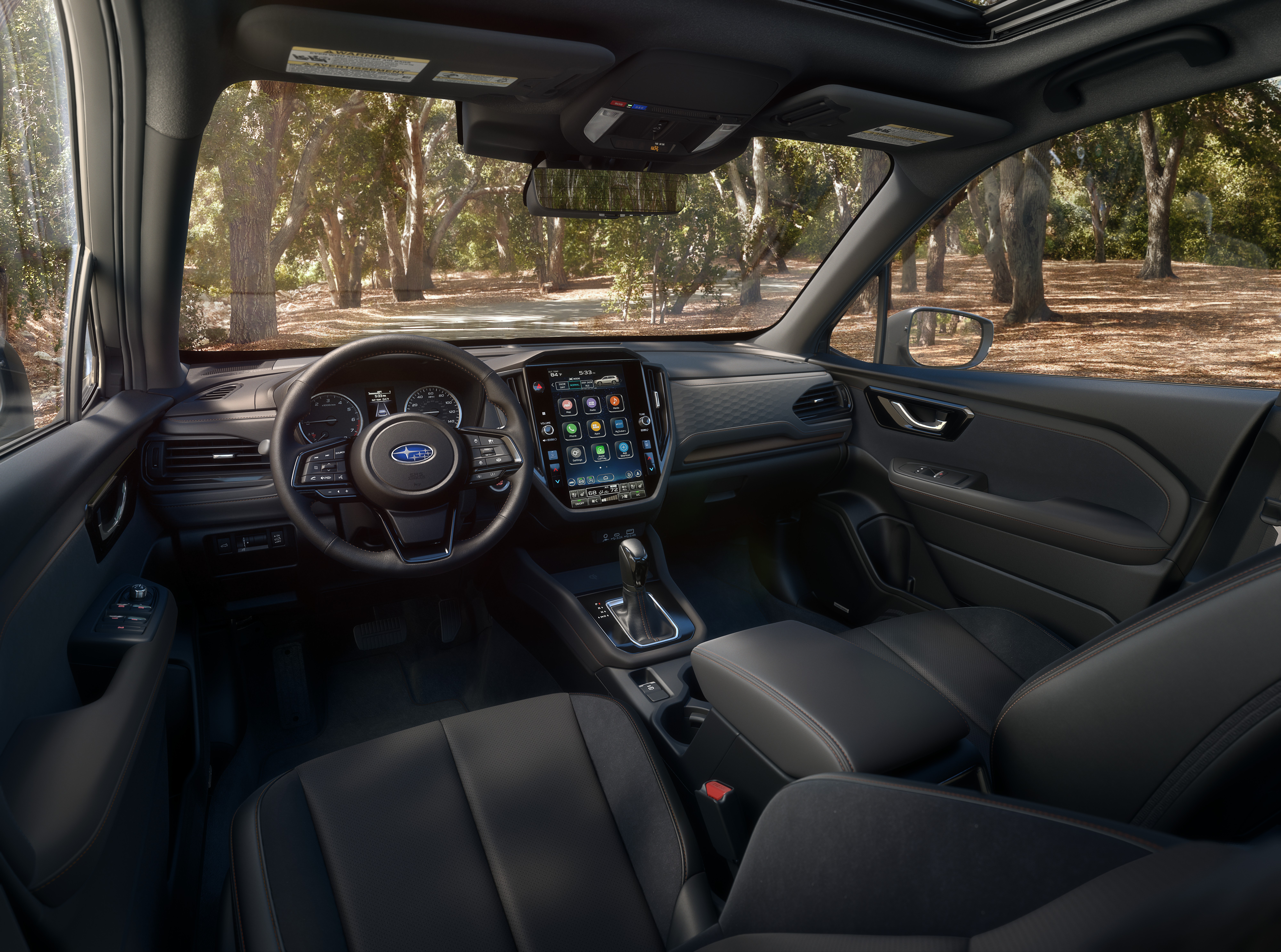
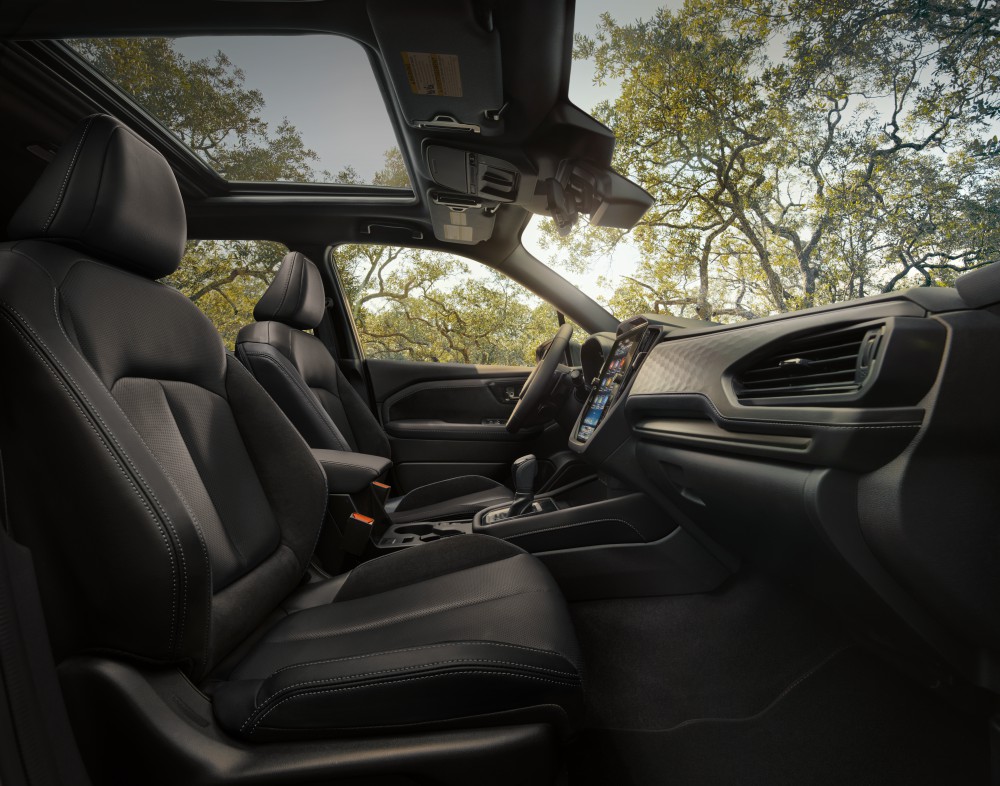
The design of the 2026 Forester Premium is widely characterized as an exercise in "handsome utility." It retains the model’s signature boxy silhouette and expansive glass area, specifically resisting the industry trend toward raked rooflines that compromise cargo space for style. While a refreshed front fascia adds a slightly burlier look, the exterior remains unapologetically conservative and upright. Inside, the cabin balances ruggedness with modern tech, dominated by a new 11.6-inch portrait-oriented touchscreen that modernizes the dashboard. The rest of the interior prioritizes durability, utilizing textured plastics and geometric patterns designed to hide scuffs from camping gear or paws. Ultimately, the design is viewed as "Subaru-correct": unobtrusive, highly functional, and built to withstand real-world abuse.
5. Interior & Cargo Room
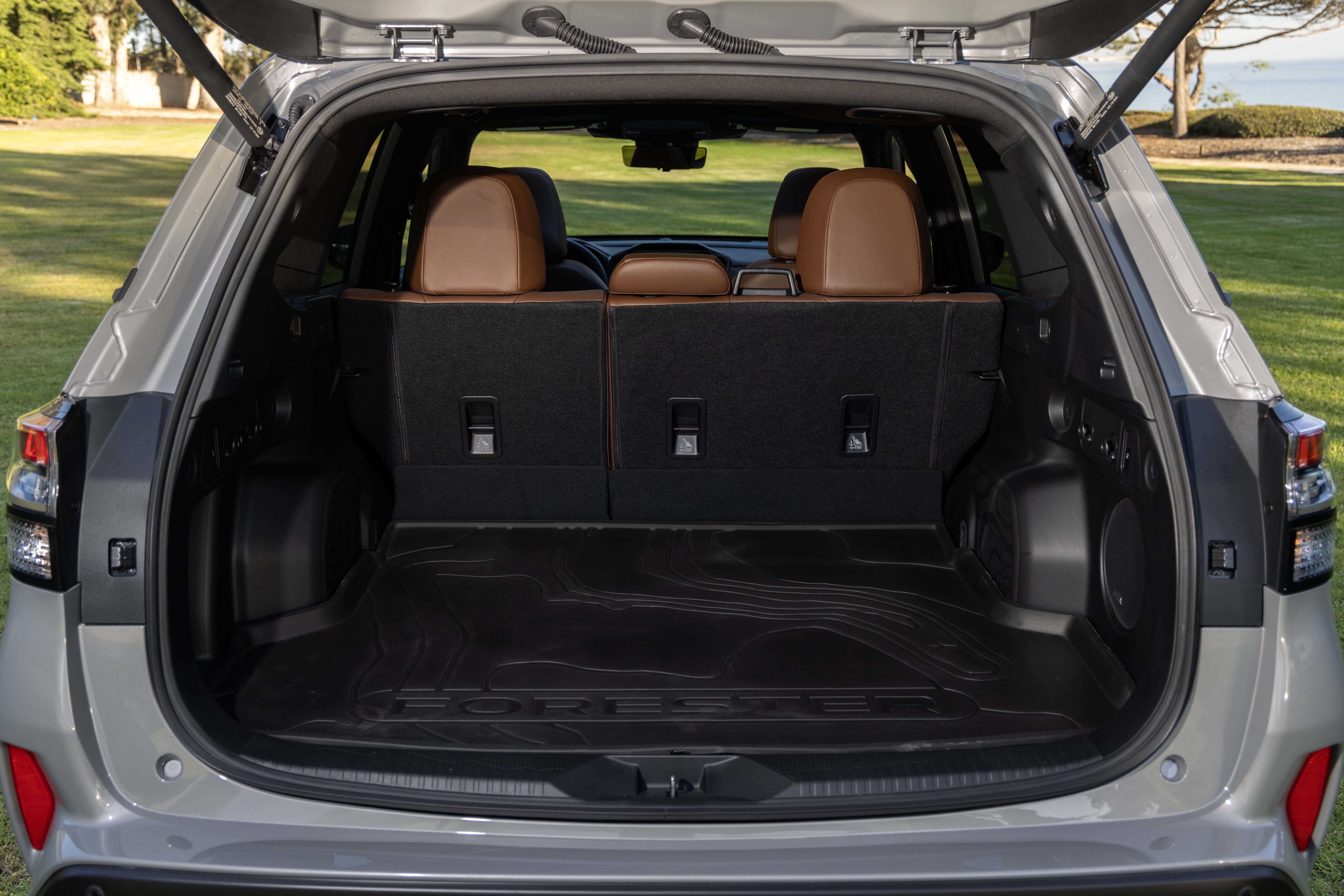
The Forester Premium is frequently cited as a masterclass in packaging, proving that usable space matters more than raw numbers on a spec sheet. With approximately 29 cubic feet of cargo space with seats up and 74 cubic feet folded, the vehicle benefits from a boxy design and a wide, square rear aperture. This shape allows owners to stack bulky items or large dog crates that would be rejected by the sloping rear glass of competitors. Passenger accommodations are defined by a sense of "airiness," with class-leading headroom and excellent outward visibility. Reviewers also highlight the ideal "step-in" height, allowing passengers to slide straight into their seats, making it one of the most practical daily drivers in its class.
6. Ergonomics & Comfort
Ergonomics in the 2026 Forester Premium receive high marks for fundamental comfort, particularly regarding the "command driving position." The seats are mounted directly to the chassis to reduce body sway, and the hip point allows for effortless entry and exit. However, the migration of controls to the 11.6-inch touchscreen introduces a learning curve, as consolidating fan speed and seat heater controls into the screen requires more eyes-off-the-road time than traditional dials. Despite this digital friction, the overarching champion of comfort is the vehicle's visibility. The thin A-pillars and massive windows create a "fishbowl" effect that critics universally love, offering 360-degree awareness that makes parking and maneuvering significantly less stressful than in competing SUVs.
7. Interior, Fit & Finish
The interior fit and finish of the Forester Premium are best described as "robust" and "purpose-built." Aggregated reviews emphasize that while Subaru has improved the cabin with nicer textiles and tighter assembly, it leans into "utilitarian chic" rather than luxury. The dashboard features textured materials specifically chosen to disguise dust, mud, and scratches—a deliberate choice for a vehicle expected to haul dogs and gear. While the Premium trim adds upscale touches like a leather-wrapped steering wheel, hard plastics are still evident on lower panels, and gloss black trim is noted for attracting fingerprints. Overall, the consensus is that the interior is designed to endure years of hard use while remaining presentable, prioritizing longevity over plushness.
8. Driver & Pass UX
The user experience in the Forester Premium is dominated by the Starlink Multimedia Plus system and its 11.6-inch vertical touchscreen. Smartphone integration is a strong point, with wireless Apple CarPlay and Android Auto standard on this trim, effectively utilizing the portrait orientation for maps and media. However, the experience is not flawless; reviewers frequently mention a "boot-up lag" where the system can be sluggish immediately after starting the car. The decision to pin climate controls to the bottom of the digital screen rather than using dedicated physical buttons is a polarizing move that complicates simple adjustments. While the system is feature-rich, it prioritizes screen real estate over the tactile simplicity that long-time Subaru owners might prefer.
9. Sound System
The audio experience in the Forester Premium is generally characterized as "adequate" or "commuter-friendly." The standard 6-speaker setup is tuned to favor mid-range frequencies, ensuring that podcasts, news radio, and audiobooks are crisp and intelligible even at highway speeds. However, audiophiles will likely find the system lacking due to a noticeable absence of bass depth and soundstage width. Unlike the optional Harman Kardon systems found in higher trims, the Premium’s base setup lacks a subwoofer and struggles to separate complex instrumentation when volume levels are pushed. Consequently, while it avoids being tinny or harsh, it fails to deliver an immersive listening experience, serving as a utilitarian sound system for a utilitarian car.
10. Acceleration
The powertrain performance of the 2026 Forester Premium is the single most criticized aspect of the vehicle across all research sources. Equipped with a 2.5-liter naturally aspirated Boxer four-cylinder engine producing approximately 180 horsepower, the Forester is widely considered slow for its class. With 0-60 mph times hovering in the 8.5 to 9.0-second range, it lags behind turbocharged competitors and the electric-assist punch of rival hybrids. The driving experience is further defined by the Continuously Variable Transmission (CVT), which exhibits a characteristic "rubber band" effect and engine drone under hard throttle. While the powertrain is praised for smoothness in city traffic, the consensus is clear: the Forester Premium is tuned for efficiency and calm cruising, not for excitement.
11. Braking
The braking performance of the 2026 Forester Premium is widely regarded as competent and confidence-inspiring, showing a maturity in tuning over previous generations. Thanks to the adoption of an electronic brake booster, the Forester sheds the "mushy" pedal response associated with older Subarus, offering a feel that is firm, linear, and progressive. In emergency stopping tests, the vehicle posts competitive distances in the mid-120s foot range, tracking straight and exhibiting minimal nose dive despite its tall suspension. While it may not have the razor-sharp initial bite of a sports SUV, the braking character is perfectly matched to the car’s calm demeanor, providing immediate and reassuring feedback in both stop-and-go traffic and panic situations.
12. Handling
The handling character of the Forester Premium is defined by stability and ease rather than sportiness. On the highway, the steering—benefiting from a dual-pinion rack derived from the WRX—is precise and tracks straight, eliminating the need for constant micro-corrections. In the city, the Forester shines with a remarkably tight turning circle of approximately 35.4 feet which, combined with excellent visibility, makes it one of the easiest SUVs to maneuver in tight spaces. Body roll is noticeable in corners due to the compliance-focused suspension, but it remains well-controlled and safe. While it lacks the tactile engagement of a Mazda CX-5, the Forester Premium offers a "secure" handling profile that prioritizes safe, predictable behavior in all weather conditions.
13. Interior Noise
The acoustic profile of the Forester Premium is a tale of two environments: cruising versus accelerating at maximum power. At steady highway speeds, the cabin is commended for being reasonably quiet, thanks to improved sound dampening and structural adhesives that mitigate wind and road noise. Passengers can easily hold conversations, and the boxy shape generates less wind roar than expected. However, this tranquility is broken under hard acceleration, where the CVT keeps the engine at high RPMs, introducing a coarse "powertrain moan" into the cabin. Unlike premium competitors that use active noise cancellation to silence engine sounds, the Forester relies on passive insulation, resulting in a vehicle that is peaceful when cruising but vocal when working hard.
14. Ride Quality
Ride comfort is a significant strength for the Forester Premium, often cited as a reason to choose it over sportier rivals. The suspension is tuned with a clear bias toward comfort, utilizing long travel to absorb bumps, expansion joints, and broken pavement with a composed, muted thump. The 17-inch or 18-inch wheels standard on the Premium trim are a distinct asset; their taller tire sidewalls provide an extra layer of pneumatic cushion compared to the larger wheels on upper trims. On the freeway, the ride is stable and laid-back, avoiding the harsh, jittery feel of stiffly sprung competitors. The consensus is that Subaru has nailed the suspension tuning for real-world daily driving, prioritizing passenger isolation over cornering flatness.
15. Driver Assist Systems
The EyeSight Driver Assist Technology is the technological centerpiece of the 2026 Forester Premium and is universally lauded as one of the best standard systems in the mainstream market. The suite utilizes an updated three-camera setup to expand the detection field for pedestrians and cyclists. Reviewers consistently praise the Adaptive Cruise Control and Lane Centering for their smoothness, accelerating and decelerating naturally without the jerky reactions found in lesser systems. Specific to the Premium trim, the availability of Blind-Spot Detection and Rear Cross-Traffic Alert is considered a high-value addition. Overall, EyeSight is viewed as a comprehensive, confidence-inspiring suite that reinforces the Forester's reputation as a safety-first vehicle, reducing driver fatigue on long trips.
16. Mileage
Fuel economy for the 2026 Forester Premium is described as "respectable for an AWD vehicle" but underwhelming compared to the segment's efficiency leaders. With EPA estimates generally landing around 26 mpg city, 33 mpg highway, and 29 mpg combined, the Forester trails significantly behind the hybrid variants of the Toyota RAV4 and Honda CR-V. Even against non-hybrid front-wheel-drive competitors, the Forester takes a slight hit due to the drag and weight of its standard All-Wheel Drive system. However, the CVT is aggressively programmed to keep RPMs low during cruising to maximize highway range. Ideally, the Forester Premium is a vehicle for highway commuters, as city drivers will see mileage drop more precipitously than in hybrid alternatives.
17. Safety
Safety is the core pillar of the Forester brand, and the 2026 Premium trim upholds this legacy with fervor. Beyond the comprehensive EyeSight active safety suite, the vehicle relies on exceptional passive safety fundamentals, specifically its class-leading outward visibility which allows drivers to see hazardous situations sooner. Historically, the model lineage consistently earns Top Safety Pick+ honors from the IIHS and 5-Star ratings from the NHTSA, and reviewers treat these accolades as a given for the 2026 model. The Forester is viewed as one of the safest places to put a family, not just because of its crash energy absorption, but because its safety technology is calibrated to be effective and is included as standard equipment rather than hidden behind a paywall.
18. Pricing
In terms of pricing, the Forester Premium is positioned as a "mainstream value," with an MSRP typically hovering in the low-to-mid $30,000 range. While the sticker price might appear higher than the base front-wheel-drive models of competitors, reviews emphasize the "hidden value" of the standard equipment. When adjusting for the cost of adding All-Wheel Drive to rivals—usually a significant upcharge—and factoring in the standard panoramic sunroof and power driver's seat on the Premium trim, the Forester often emerges as the more affordable option. It occupies a pricing "sweet spot" that undercuts the steep prices of hybrid rivals while offering more mechanical capability, making it a high-value volume seller.
19. Value
The 2026 Forester Premium is considered a long-term financial winner, primarily due to its exceptional resale value. Subaru’s reputation for durability and the high demand for used AWD vehicles in snow-belt states mean that the Forester depreciates slower than almost any other non-hybrid SUV in its class. Financial analysts frequently cite it for best-in-class residual value, meaning the total cost of ownership over five years is often lower than competitors with similar sticker prices. At the time of purchase, the value proposition is tied to "utility per dollar," offering a highly capable all-weather machine with top-tier safety tech. While you get fewer "flashy" features than in Korean rivals, the Forester Premium is an undeniable heavyweight regarding financial prudence.
20. Reliability
The reliability outlook for the 2026 Forester Premium is projected to be "above average," benefiting from a mature powertrain design. The 2.5-liter engine and CVT are known quantities, with the teething issues of early generations largely resolved, minimizing concerns about major mechanical failure. Consequently, the main sources of friction in reliability reports tend to be peripheral issues, such as infotainment glitches, screen lag, or battery drain from complex electronics. While it may not reach the legendary "bulletproof" status of a naturally aspirated Toyota, it sits comfortably in the upper tier of the segment for dependability. The consensus is that the Forester is a robust workhorse that is unlikely to leave owners stranded, provided routine maintenance is observed.
Frequently asked questions about the 2026 Subaru Forester Premium
Is the 2026 Subaru Forester Premium worth buying?
The 2026 Subaru Forester Premium positions itself as the volume-oriented "sweet spot" in the lineup, prioritizing function over flash. Rejecting the industry trend of coupe-like rooflines, it retains a boxy, upright profile that maximizes visibility and utility for families, dog owners, and outdoor enthusiasts. It differentiates itself from rivals by offering Symmetrical All-Wheel Drive as standard equipment rather than an expensive option. While critics universally note that the 2.5-liter naturally aspirated engine feels leisurely compared to turbocharged competitors, the consensus remains th
How much does the 2026 Subaru Forester Premium cost?
The 2026 Subaru Forester Premium is priced at $29,995 – $41,595 , before destination, options, and incentives.
What is the fuel economy of the 2026 Subaru Forester Premium?
The 2026 Subaru Forester Premium returns 29 MPG combined per published EPA figures.
How this review is produced
moblr meta-reviews are generated by aggregating multiple published expert road tests using AI consensus and sentiment analysis, then read and reviewed by a human editor before publication. Category ratings on the −50 to +50 scale show how each vehicle compares to the average for its segment. Learn more about the moblr review process.