2026 Tesla Model Y Premium AWD
Consensus at a glance
- Consensus score
- Not yet rated
- Price
- $39,990 – $57,490
- Powertrain
- Electric
- Combined fuel economy
- 123 MPG
- Body type
- suv
2026 Tesla Model Y Premium AWD
1. Quick Take
The 2026 Tesla Model Y Premium AWD is a dual-motor, all-wheel-drive electric crossover that blends quick acceleration with everyday family utility. It is built on the brand’s core principles: a minimalist cabin dominated by a large central touchscreen, a software-first ownership experience with frequent over-the-air updates, and seamless integration with a proprietary fast-charging network. This positions it as a high-volume option in the competitive midsize EV segment. Compared to rivals, its key differentiators are the cohesive charging and navigation ecosystem that simplifies road trips and the combination of strong performance with high powertrain efficiency. Common criticisms focus on the starkness of the minimalist interior, a firm ride quality, and the heavy reliance on the touchscreen for functions that are traditionally handled by physical controls.
2. Its Main Competition
The Model Y Premium AWD competes directly with other two-row electric crossovers like the Hyundai Ioniq 5, Kia EV6, and Ford Mustang Mach-E. Significant differences emerge around the user experience and driving character. The Model Y’s minimalist cabin, which centralizes nearly all controls in the touchscreen, contrasts sharply with competitors that retain more physical buttons and conventional driver displays. Another key differentiator is its proprietary infotainment system, which notably lacks the Apple CarPlay and Android Auto integration that is standard on most rivals. The vehicle typically offers quicker acceleration and more total cargo space, including a functional front trunk. Conversely, many competitors are noted for providing a more compliant, comfortable ride quality and more traditional interior ergonomics that some drivers find more intuitive.
3. Buyer's Demographics
The typical buyer for this vehicle is an affluent professional or family, often residing in suburban areas with access to home charging. The demographic skews toward being college-educated, tech-savvy, and in an age range of 30 to 50 years old. Many buyers are part of dual-income households with one or two children, utilizing the vehicle as a primary family hauler that serves both for daily commuting and longer trips. Key purchasing motivations include the vehicle's strong performance, technological features, and the low running costs associated with electric vehicle ownership. These consumers are generally comfortable with a software-centric vehicle and value the convenience of an integrated technology and charging ecosystem, making the Model Y a practical choice for their modern lifestyle.
4. Design
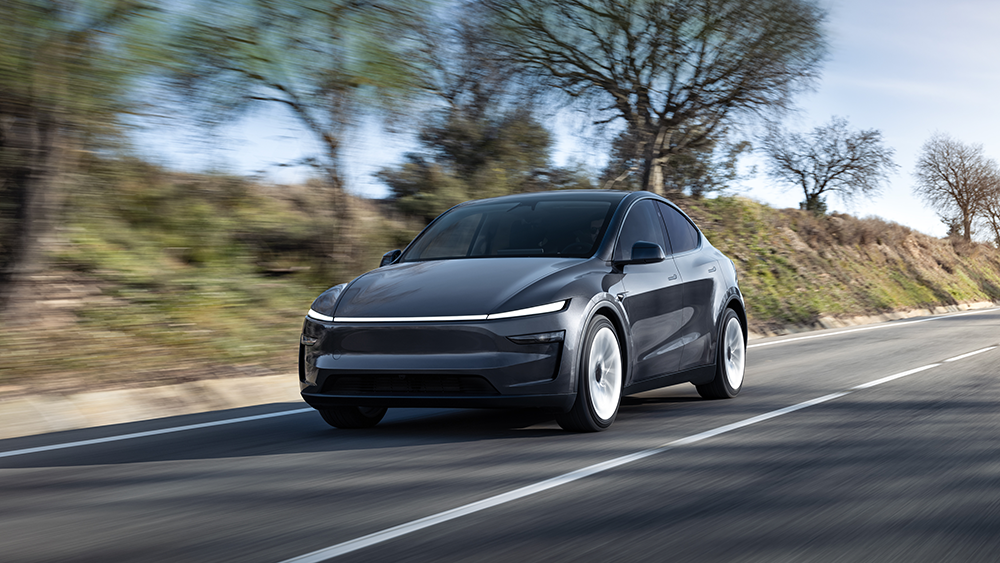
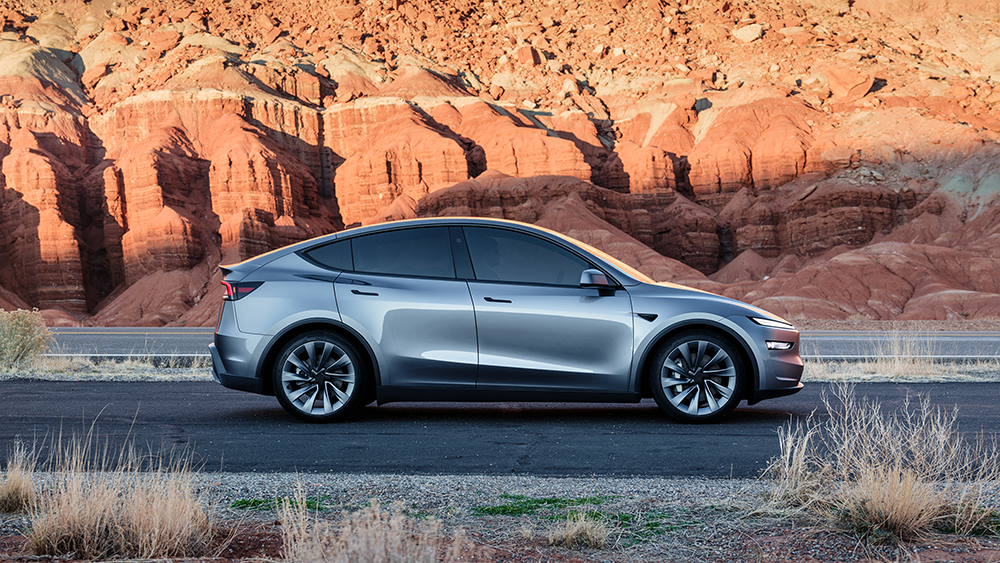
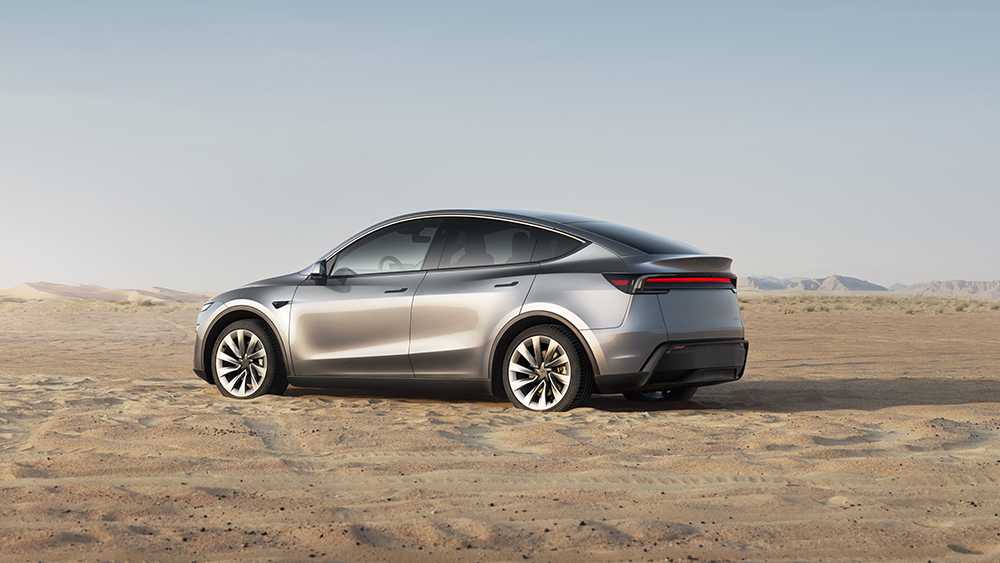
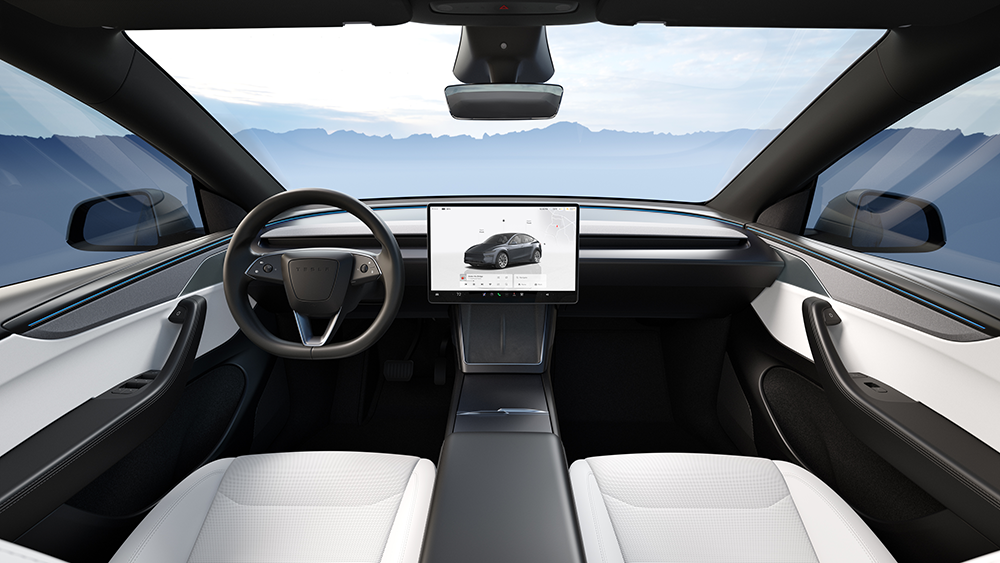
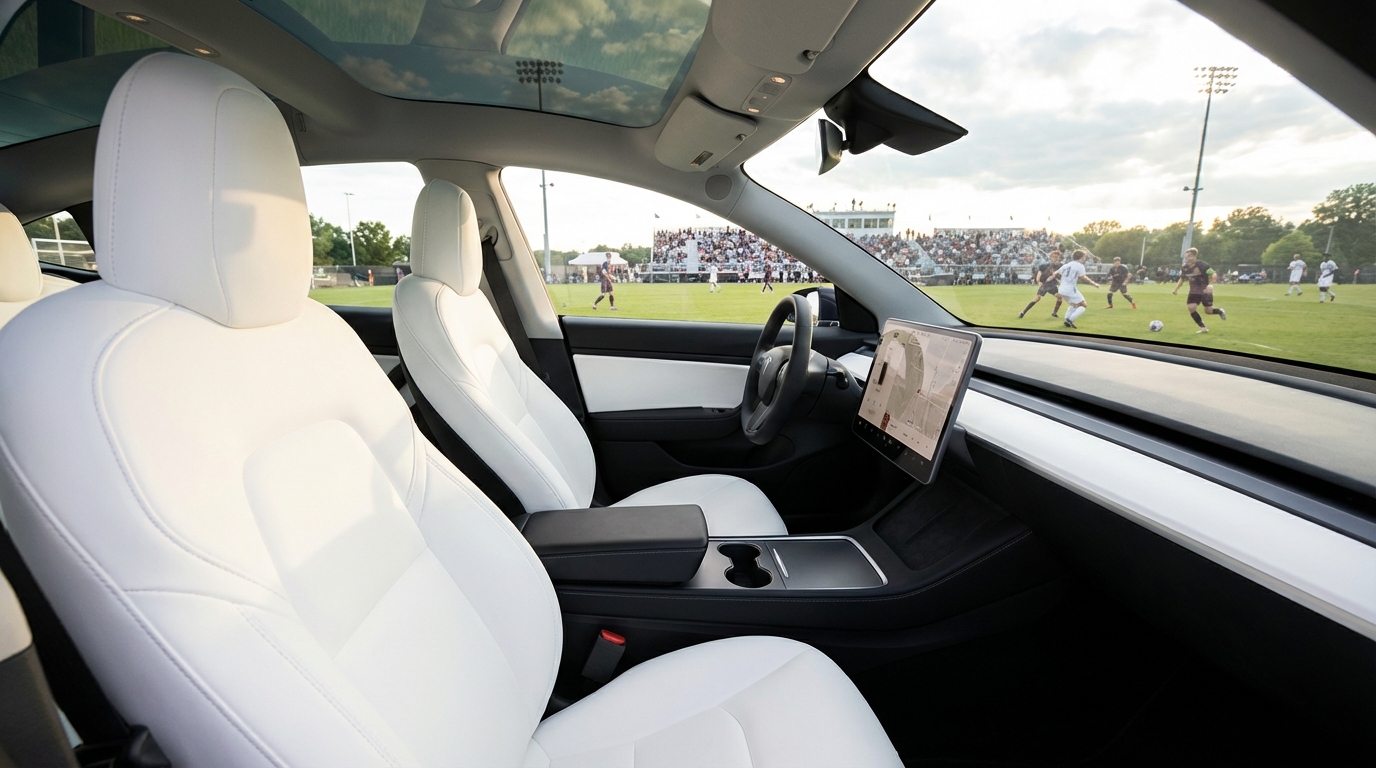
The exterior design continues the brand's minimalist, aerodynamic aesthetic with a smooth, rounded shape that prioritizes efficiency. The 2026 model features updated styling with slimmer headlights and new rear lighting elements, which some find sleek and modern, while others view it as anonymous or conservative compared to more aggressively styled competitors. Inside, the intentionally sparse cabin centers around a large touchscreen, creating an open, uncluttered feel. This design is polarizing, appealing to those who prefer simplicity but disappointing others who expect more physical controls and richer materials for the price. While interior materials are noted as being improved with more soft-touch surfaces and ambient lighting, the overall philosophy favors a tech-forward simplicity over the crafted, decorative luxury found in some rivals.
5. Interior & cargo room
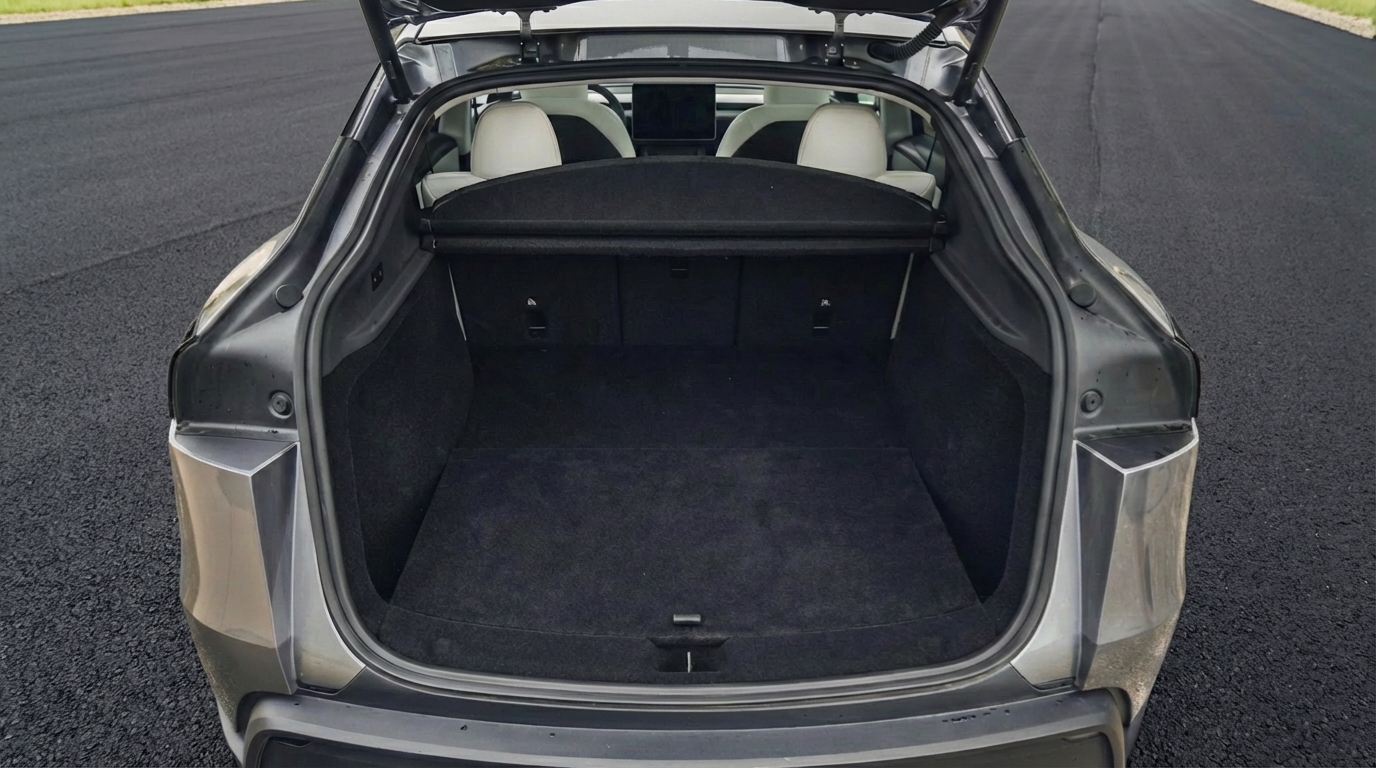
Interior space and cargo capacity are frequently cited as significant strengths. The cabin feels exceptionally spacious for its footprint, an impression enhanced by a flat floor and a large panoramic glass roof that provides an airy feel. Both front and rear headroom are generous, and rear legroom is a particular highlight, offering ample space for adult passengers on long journeys. Cargo versatility is a key advantage, combining a large rear storage area with a deep underfloor well and a sizable front trunk (“frunk”) that adds practical, secure space many competitors lack. This combination makes the vehicle highly practical for hauling groceries, strollers, and sports equipment. A common observation is that the sloping rear roofline can slightly limit the ability to stack very tall, boxy items against the tailgate.
6. Ergonomics & comfort
The ergonomic experience is defined by the minimalist, screen-centric cabin, which requires drivers to use the touchscreen for common adjustments like mirrors and climate vents. This creates a learning curve and can be less intuitive than physical controls. Forward visibility is strong due to a low dashboard, but rearward visibility is restricted by the sloping roofline, increasing reliance on cameras. Cabin storage is a highlight, with generous door pockets and a deep center console providing ample space. The front seats are widely described as comfortable and supportive, with available ventilation enhancing long-distance comfort. The rear seat offers generous legroom, though some find the thigh support could be better for taller passengers on extended journeys, even with the spaciousness.
7. Interior, fit & finish
The interior fit and finish are considered a clear improvement over previous iterations, with a more refined and solid feel. The cabin features more extensive use of soft-touch materials on the dashboard and doors, along with vegan leather upholstery that is both supple and durable. New ambient lighting elements add to the modern atmosphere. The overall assembly quality is reported to be more consistent, with tighter, more uniform panel gaps and a significant reduction in the squeaks and rattles that were sometimes noted in earlier models. While these updates create a more premium environment, some harder plastic materials can still be found in lower areas, and the starkly minimalist design may feel less detailed than the layered interiors of some luxury rivals.
8. Driver & Pass UX
The user experience centers on a large central touchscreen that is consistently described as bright, fast, and highly responsive. While its dominance creates a learning curve due to the lack of physical buttons, the user interface is generally considered logical once familiar. A notable difference from competitors is the infotainment system’s lack of Apple CarPlay and Android Auto integration. Voice commands are included and function reliably for tasks like navigation and climate adjustments. Bluetooth pairing is straightforward and provides stable connections. A notable feature is the inclusion of a rear passenger touchscreen, which allows occupants in the back to manage their own climate and entertainment, a feature that enhances the passenger experience on longer trips.
9. Sound system
The premium audio system is widely regarded as a highlight, featuring a multi-speaker setup that includes a dedicated subwoofer. It delivers clear, punchy, and immersive sound that performs well across a variety of content. Music playback is characterized by a balanced presentation with articulate mids for clear vocals and deep, controlled bass that avoids sounding boomy or overwhelming. The system maintains its composure and clarity well, even as the volume is increased. Spoken-word content, such as podcasts, is also rendered with excellent clarity, making it easy to understand without significant volume adjustments. The overall soundstage feels wide and engaging, providing a satisfying listening experience for both daily driving and longer trips.
10. Acceleration
Acceleration is a standout characteristic, delivered by a dual-motor all-wheel-drive powertrain that provides immediate and potent torque. The response to accelerator input is instantaneous, resulting in a smooth, linear, and uninterrupted surge of power without the delay of gear changes. This makes the vehicle feel exceptionally quick in common real-world situations like merging and passing, not just from a standstill. Performance figures consistently place the 0-60 mph time in the mid-four-second range, making it highly competitive for a family crossover. The power delivery is easy to modulate for calm city driving but provides a confident and forceful rush when desired, feeling both effortless and athletic when commanded by the driver.
11. Braking
Braking performance is characterized by a sophisticated blend of strong regenerative braking and traditional friction brakes. In emergency stopping situations, the vehicle delivers confident deceleration with good stability. For daily driving, most deceleration is handled by the regenerative system, which allows for smooth one-pedal driving that can bring the vehicle to a complete stop. This feature is often described as intuitive and well-calibrated once the driver is acclimated. The brake pedal itself is noted for feeling firm and predictable when used, with a seamless transition between regenerative and friction braking. This gives the driver confidence in both routine and emergency scenarios, and the overall stopping power is competitive with other electric crossovers in its segment.
12. Handling
On the highway, the vehicle feels planted and stable, with a quick steering ratio that makes it responsive to inputs. The steering is often described as precise, allowing for confident lane changes, though it provides less road feedback than more enthusiast-focused vehicles. Body roll is well-controlled for a crossover, largely due to the low center of gravity afforded by the underfloor battery pack, which keeps the chassis flat through sweeping curves. In city driving, the responsive steering makes the car feel agile in traffic. However, its turning circle is noted as being average to slightly larger than some competitors, which can make tight U-turns or navigating cramped parking garages a bit more cumbersome, sometimes requiring an extra maneuver.
13. Interior noise
The cabin benefits from the inherent quietness of its electric powertrain, with minimal motor whine under acceleration. At low to moderate speeds, the interior is serene. At highway speeds, the primary sounds are from wind and tires, and the noise level is highly dependent on the road surface. The 2026 model shows improvement in this area, utilizing acoustic glass and additional sound-deadening materials to reduce wind and road noise compared to prior versions. These passive measures create a calmer environment, making conversations and audio easier to enjoy. While the cabin is significantly quieter than before, some tire roar can still be prominent on coarse concrete surfaces.
14. Ride quality
The ride quality represents a notable improvement over previous versions, offering a more composed and comfortable experience. On the freeway, the suspension feels planted and stable, absorbing minor road imperfections and expansion joints with less harshness. The tuning is often described as firm but controlled, avoiding the floaty feeling of some softer crossovers. In the city, the ride is more forgiving over potholes and broken pavement than before, though it can still transmit sharp impacts more distinctly than the most comfort-focused competitors. The vehicle manages speed bumps with good control, absorbing the impact without excessive bounce or jarring motions. The suspension strikes a balance that prioritizes controlled handling while providing a more compliant ride suitable for daily commuting.
15. Driver assist systems
The standard driver assistance suite now only includes adaptive cruise control, as 'Autosteer' - Tesla's automatic lane centering system has been dropped (instead, Tesla is expecting buyers to purchase or subscribe to its FSD, full self driving system). Otherwise, the system relies on a camera-based approach for features like blind-spot monitoring and parking assistance, using center-screen visualizations and a dedicated blind-spot warning indicator in the cabin instead of conventional mirror-mounted lights. While the highway assistance features are a highlight, the system's behavior in certain scenarios, like responding to traffic flow changes, can sometimes feel less natural than some rival systems.
16. Mileage
As a pure electric vehicle, the Model Y Premium AWD is evaluated on its efficiency and charging experience. Real-world driving range is competitive but, like all EVs, is sensitive to factors like speed, temperature, and wheel size. Highway cruising and cold weather can noticeably reduce range. A key strength is the seamless integration with a proprietary fast-charging network, which simplifies long-distance travel. The vehicle’s navigation system automatically routes to chargers and preconditions the battery to optimize charging speeds. The charging process is often described as a simple “plug-and-charge” experience, which is a significant advantage over relying on more fragmented third-party networks. Home charging via a Level 2 setup is the most common and convenient method for daily use.
17. Safety
The vehicle is equipped with a comprehensive suite of active safety features, including automatic emergency braking with pedestrian detection, blind-spot monitoring, and lane departure avoidance, all powered by a camera-based system. Structurally, its design benefits from a low center of gravity due to the floor-mounted battery pack, which contributes to a very low risk of rollover. The absence of a front engine block also allows for a large frontal crumple zone. In crash testing conducted by government and independent agencies, the Model Y platform consistently earns high marks for occupant protection across frontal, side, and rollover scenarios. This strong performance in both crashworthiness and active crash avoidance places it among the top performers in its class.
18. Pricing
The Premium AWD trim is positioned in the middle of the Model Y lineup, carrying a manufacturer's suggested retail price that is competitive with similarly equipped dual-motor electric crossovers from rival brands. It is frequently cited as the most popular choice in the lineup because it offers a compelling balance of all-wheel-drive traction, strong performance, and a long driving range without the higher cost of the top-tier Performance model. The pricing structure is relatively straightforward, with most premium features like the panoramic roof, upgraded audio, and heated seats included as standard on this trim. Given that federal EV tax credits are no longer available for any electric vehicle, its purchase price is compared directly against competitors, where it often represents a strong value proposition for the level of performance and technology included.
19. Value
The value proposition is influenced by both its upfront cost and its long-term ownership factors. At the time of purchase, the Premium AWD trim often undercuts similarly equipped rivals while offering access to a more reliable charging network and continuous over-the-air software updates that can add features over time. Historically, resale values have been subject to volatility due to changes in new vehicle pricing, but brand recognition and high demand help support its value on the used market compared to some EV competitors. The total cost of ownership is aided by lower energy and maintenance costs compared to gasoline vehicles, especially for owners who can charge at home. However, insurance premiums can be higher than for comparable crossovers.
20. Reliability
Reliability perceptions often distinguish between the powertrain and the rest of the vehicle. The core electric drivetrain, including the motors and battery, is generally considered robust and requires minimal routine maintenance. The most frequently cited issues tend to involve fit-and-finish consistency, cabin squeaks or rattles, and occasional software glitches with the large touchscreen. While build quality has shown marked improvement over the years, with tighter panel gaps and better paint consistency, some owners still report minor issues that require service visits. Many software-related bugs can be resolved via over-the-air updates without a trip to a service center, though wait times for physical repairs can sometimes be longer than with legacy brands.
Frequently asked questions about the 2026 Tesla Model Y Premium AWD
Is the 2026 Tesla Model Y Premium AWD worth buying?
The 2026 Tesla Model Y Premium AWD is a dual-motor, all-wheel-drive electric crossover that blends quick acceleration with everyday family utility. It is built on the brand’s core principles: a minimalist cabin dominated by a large central touchscreen, a software-first ownership experience with frequent over-the-air updates, and seamless integration with a proprietary fast-charging network. This positions it as a high-volume option in the competitive midsize EV segment. Compared to rivals, its key differentiators are the cohesive charging and navigation ecosystem that simplifies road trips and
How much does the 2026 Tesla Model Y Premium AWD cost?
The 2026 Tesla Model Y Premium AWD is priced at $39,990 – $57,490, before destination, options, and incentives.
What is the fuel economy of the 2026 Tesla Model Y Premium AWD?
The 2026 Tesla Model Y Premium AWD returns 123 MPG combined per published EPA figures.
How this review is produced
moblr meta-reviews are generated by aggregating multiple published expert road tests using AI consensus and sentiment analysis, then read and reviewed by a human editor before publication. Category ratings on the −50 to +50 scale show how each vehicle compares to the average for its segment. Learn more about the moblr review process.