5 Best Compact Sedans for Rideshare Duty
Updated July 23, 2026 · Ranked from moblr's independent scores
Rideshare work rewards a very specific kind of car: cheap to buy, cheap to run, reliable enough to survive 40,000 miles a year, safe enough to keep insurance premiums manageable, and comfortable enough that passengers rate you five stars. This list ranks compact sedans against exactly those priorities using a weighted formula that combines purchase price, real-world annual fuel cost, and moblr's independent category scores for reliability, safety, interior room, ergonomics, and passenger UX.
How we ranked these
We start with every vehicle in moblr's Compact Sedans set and rank each on a weighted Rideshare Score. The formula splits into three brackets, each weighted 35% / 35% / 30% of the final score. Bracket 1 (purchase economics) blends MSRP (rewarded proportionally against a $30,000 benchmark) with moblr's value score. Bracket 2 (running costs and risk) blends annual fuel cost at 14,000 miles (benchmarked against $550/yr), reliability, and safety. Bracket 3 (in-car experience for you and your passengers) blends interior & cargo room, ergonomics & comfort, and driver-and-passenger UX. Annual fuel cost assumes $3.50/gal for gas and hybrid trims and $0.16/kWh for EVs.

Rideshare score: 8.69/10
Base price: $24,695 · 49 mpg combined
The Civic Sport Hybrid is the compact-segment archetype for rideshare duty: 49 mpg combined keeps annual fuel spend around $1,000 at $3.50 gas, and it scores at the top of the compact class for ergonomics, reliability, and passenger UX. Purchase price sits right at the $30k benchmark, while safety and interior-room scores are among the strongest in the set. It wins on nearly every axis the formula weights.
Read the full review →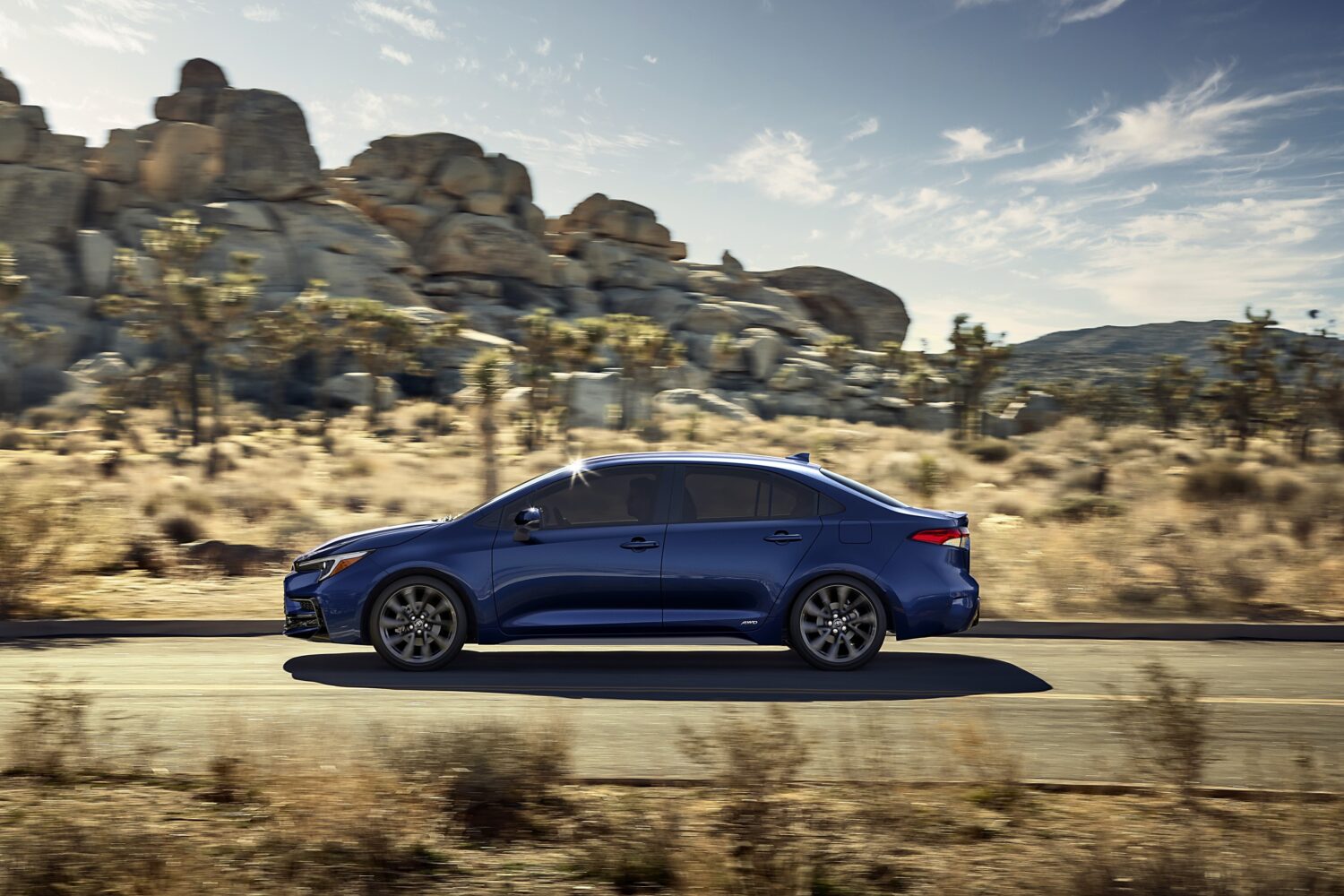
Rideshare score: 8.53/10
Base price: $22,925 · 50 mpg combined
The Corolla Hybrid LE FWD is the value play: the lowest MSRP in the top five, a reliability score that leads the entire compact segment, and 50 mpg combined that pushes annual fuel cost below $1,000. Interior room and ergonomics are more modest than the Civic's, but the formula rewards the rock-bottom purchase price and bulletproof reliability so heavily that it lands a close second.
Read the full review →
Rideshare score: 8.35/10
Base price: $22,625 · 50 mpg combined
The Elantra HEV SEL Sport pairs hybrid efficiency with a strong driver-and-passenger UX score and solid interior room. Reliability scoring is mid-pack and the value score is lower than the Japanese hybrids, which keeps it off the top two spots. Still, the hybrid running costs and modern cabin keep it firmly in the top half for drivers who want a tech-forward compact without the Toyota/Honda badge.
Read the full review →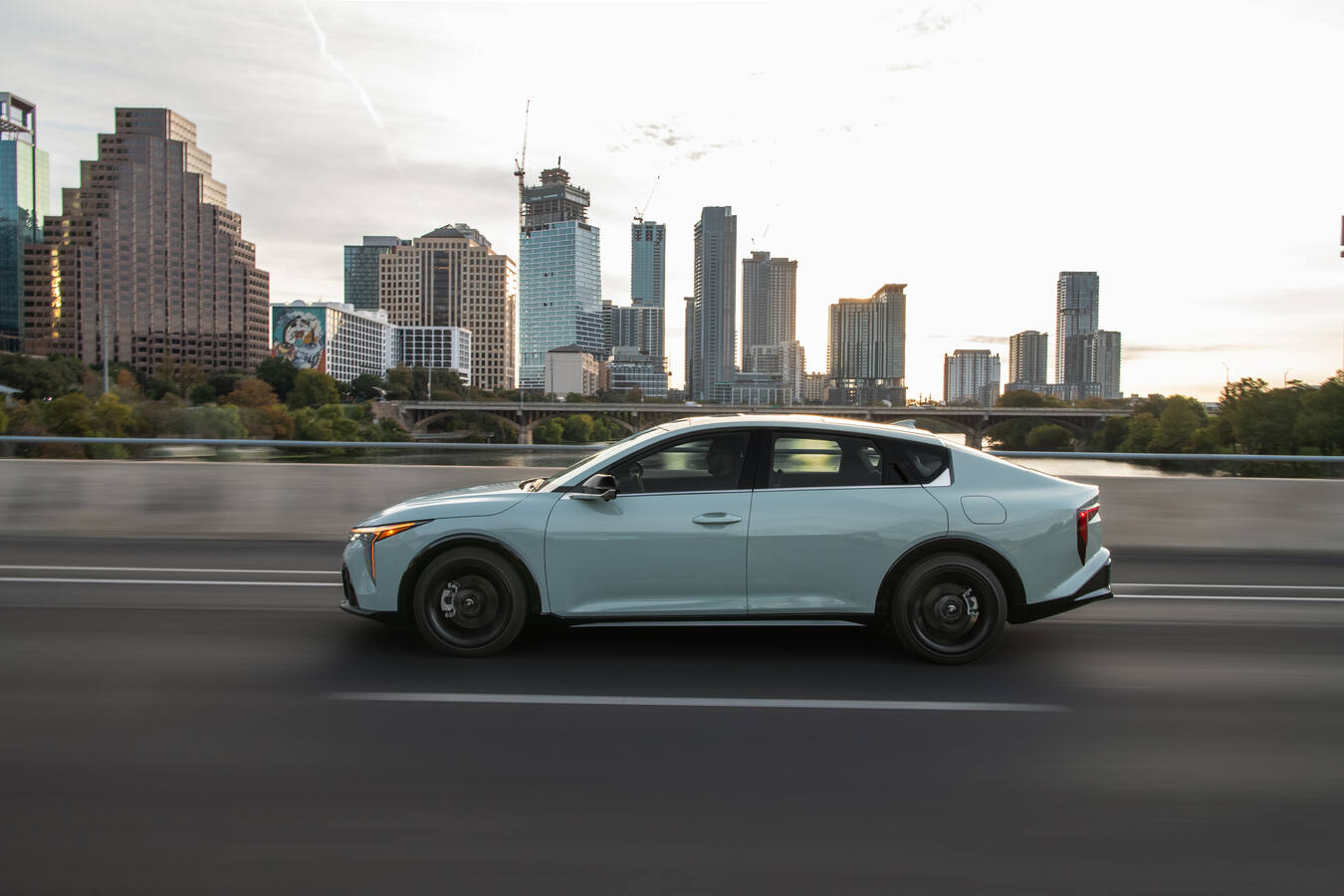
Rideshare score: 8.22/10
Base price: $22,290 · 33 mpg combined
The K4 GT-Line's biggest advantage is the lowest purchase price of any top-five finisher, and its value score is one of the highest in the compact set. It also delivers strong interior-room and safety numbers. The catch is non-hybrid fuel economy near 33 mpg and a below-average reliability score, which drags running-cost and risk brackets down — but the low capex keeps it competitive.
Read the full review →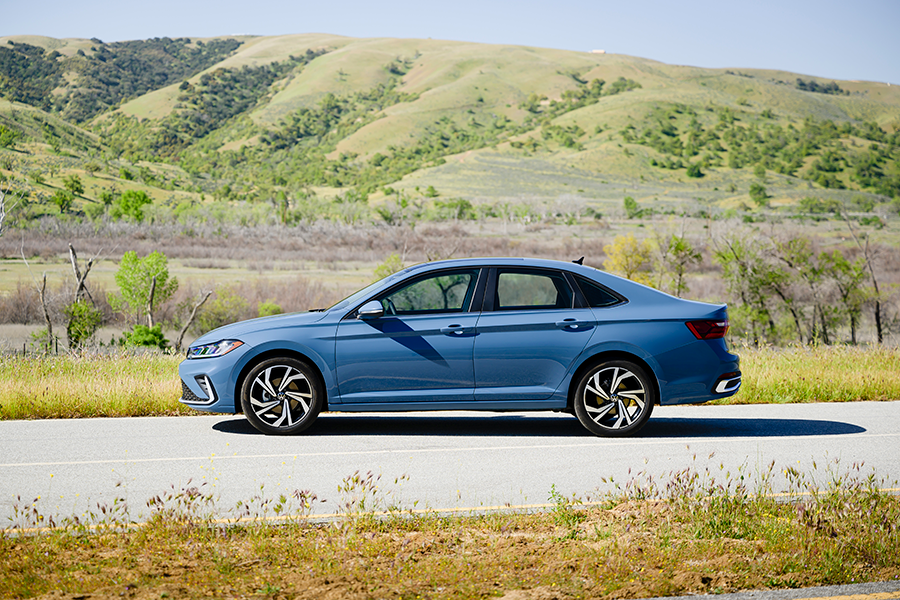
Rideshare score: 7.86/10
Base price: $23,995 · 33 mpg combined
The Jetta SE is the practical non-hybrid pick: a spacious interior, strong safety score, and a purchase price that undercuts most hybrids. Reliability scoring is weaker than the Japanese entries, and 33 mpg combined means higher annual fuel spend than the hybrid trio. For a driver who wants European cabin space and build feel on a tight budget, the formula still gives it a top-five finish.
Read the full review →
The bottom line
The formula rewards the same things a fleet operator looks for: low capex, low opex, high reliability, and enough comfort that passengers don't ding your rating. The compact-segment hybrids dominate as expected — but the value-priced non-hybrid entries hold their own because the formula gives real weight to purchase price and running cost, not just cabin refinement.
Frequently asked questions
Why weight MSRP and fuel cost so heavily?
Because rideshare economics live and die on cost per mile. A car that costs $5,000 more up-front takes years of Uber/Lyft trips to earn back, and every 5 mpg of efficiency is roughly $250/year at 14,000 miles. The formula benchmarks MSRP against $30,000 and annual fuel cost against $550 so hybrids are properly rewarded without ignoring the sticker price.
What assumptions go into 'annual fuel cost'?
14,000 miles per year at $3.50/gallon for gas and hybrid trims and $0.16/kWh for EVs, using each vehicle's combined MPG (or MPGe for EVs). You can rerun the numbers with your own local prices on each vehicle's review page using the Fuel Cost Calculator.
Why is reliability weighted so heavily inside bracket 2?
A rideshare driver who can't work loses income immediately — reliability compounds. moblr's reliability score reflects long-term ownership signals rather than a single warranty period, which is exactly the horizon that matters when a car is your workplace.
Are compact sedans better than compact SUVs for rideshare?
Compact sedans generally win on purchase price and fuel economy, while compact SUVs offer more cargo and passenger headroom. The formula here assumes the sedan form factor is acceptable for the driver's market; riders in urban areas rarely prefer one over the other if the car is clean and comfortable.
How often is this list updated?
It re-ranks automatically whenever a vehicle's underlying category scores or starting price changes, and we revisit the editorial commentary when new compact sedans are added to the lineup. The date at the top of the page reflects the most recent editorial pass.