5 Best Midsize 2-Row SUVs for Cargo and Interior Room
Updated July 18, 2026 · Ranked from moblr's independent scores
The single biggest reason buyers cross-shop out of a sedan or hatchback into a midsize two-row SUV is space — for a stroller and a dog, for a Costco run, for the airport-run luggage that never quite fits in a trunk. But cargo volume figures on a spec sheet lie: cubic feet tell you nothing about whether a load floor is flat, whether the opening is wide enough for a bike wheel, or whether the rear seats fold into a usable bay. This list ranks the five midsize two-row SUVs in moblr's current lineup by the independent 'interior & cargo room' score, drawn from reviewers actually loading, folding, and living with each vehicle.
How we ranked these
Every vehicle in moblr's midsize-2-row-SUV comparison set is scored on interior and cargo room by reviewers who evaluate the practical realities: cargo opening width and height, load-floor height and flatness, how flat the rear seats fold, the depth of any under-floor storage, rear-seat legroom that doesn't come at the cost of cargo depth, and the usefulness of interior storage nooks (door pockets, center console, glovebox). The single 0-10 category score shown on each vehicle's individual moblr review page is what this ranking is sorted on — no spec-sheet cubic-foot manipulation, no marketing brochure claims.
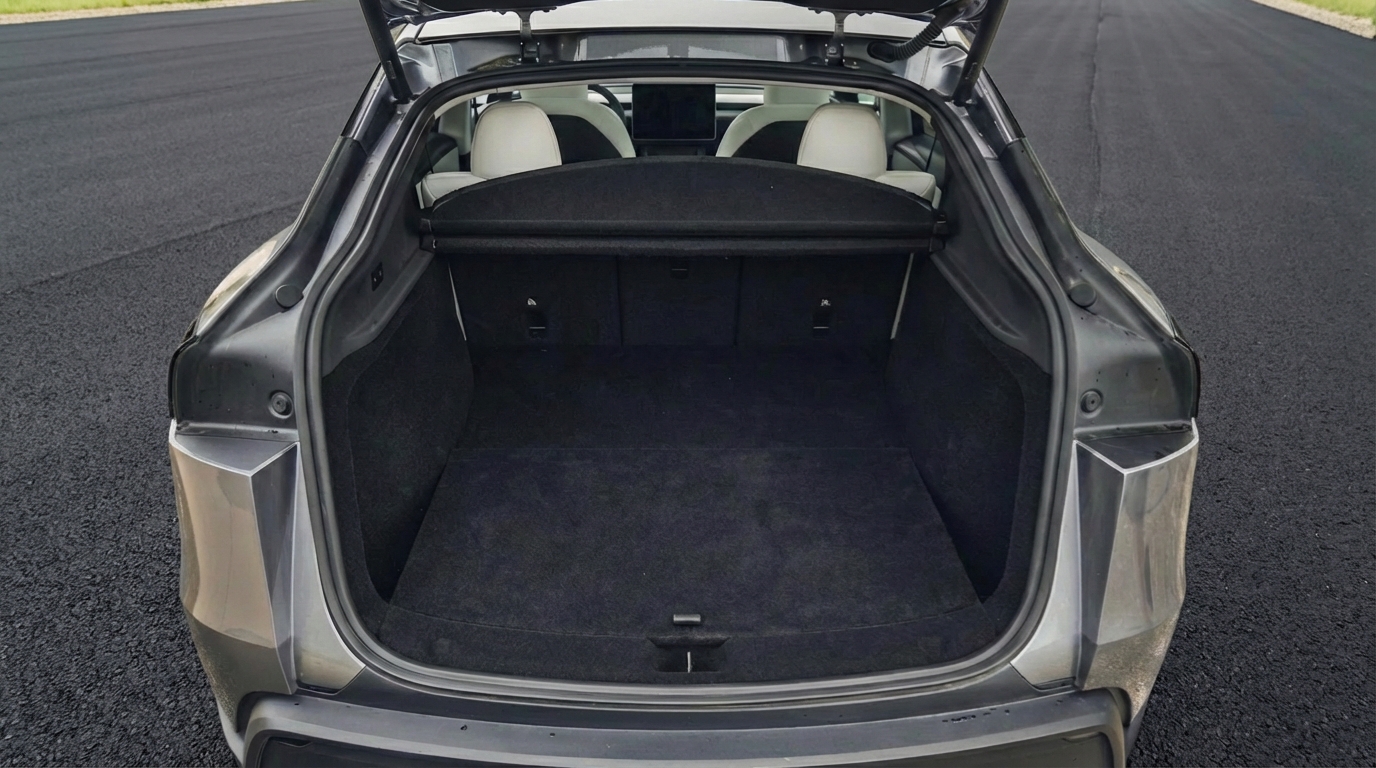
moblr consensus score: 6.83/10
Base price: $39,990 · 123 mpg combined
moblr's review highlights the Model Y Premium AWD's skateboard-battery architecture as the source of its unusual interior volume — a flat floor, a deep front trunk, and a rear cargo bay with a substantial under-floor well that swallows luggage most rivals can't hide. Reviewers note rear seats that fold nearly flat via one-touch controls and a wide, low tailgate opening that makes loading bulky items straightforward. Interior storage is minimalist but efficient, with a large center bin and clean, uncluttered console geometry.
Read the full review →
moblr consensus score: 6.71/10
Base price: $30,920 · 40 mpg combined
moblr's review credits the CR-V Sport Hybrid FWD with one of the segment's most usable cargo bays — a wide, square opening, a low load floor, and rear seats that fold nearly flat to create a long, uninterrupted floor. Interior storage is called thoughtfully engineered, with generous door bins, a deep center console, and cupholder placement that survives real family use. The consistent read is that Honda prioritizes packaging efficiency over styling flourish, and the CR-V's practical space reflects that.
Read the full review →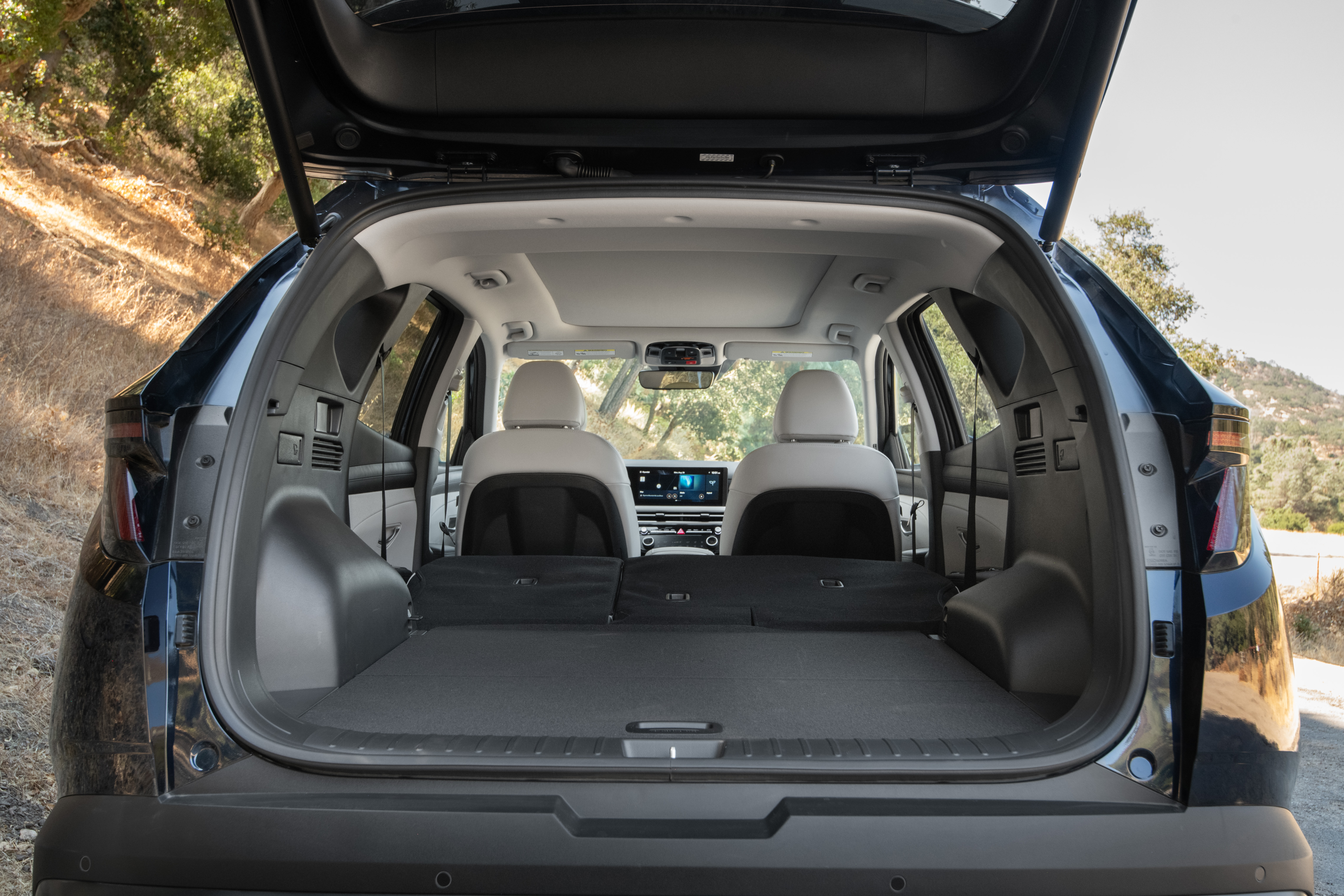
moblr consensus score: 6.48/10
Base price: $29,450 · 28 mpg combined
moblr's review calls the Tucson SEL FWD one of the roomiest midsize two-row SUVs at its price, with a boxy rear end that translates directly into a tall, square cargo opening and a load floor that stays flat with the second row folded. Reviewers highlight standout rear-seat legroom that doesn't come at the cost of cargo depth, plus thoughtful interior storage — deep door bins, a usable center console tray, and a wide dashboard shelf that keeps daily-carry items in easy reach.
Read the full review →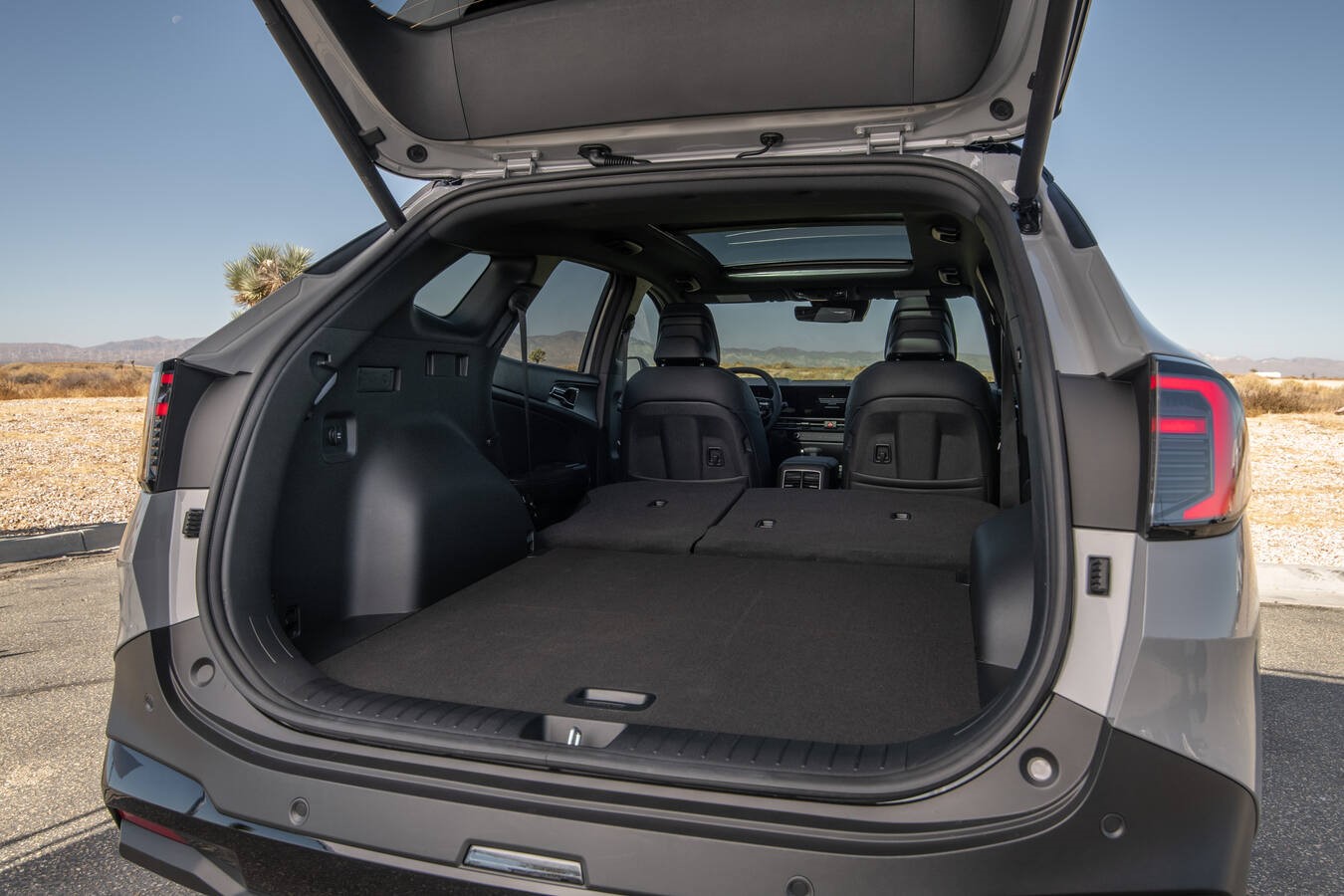
moblr consensus score: 6.48/10
Base price: $28,785 · 26 mpg combined
moblr's review describes the Sportage X-Line's cabin as class-above for both passenger and cargo space, with a wide, tall cargo opening and a load floor that stays low enough for daily use. Reviewers highlight the rear seats' generous legroom without eating into cargo depth, and a folding second row that opens a large, flat bay for bulkier loads. Interior storage is called well-organized — deep door pockets, a usable center console, and a covered tray that keeps daily-carry items tidy.
Read the full review →
moblr consensus score: 6.37/10
Base price: $29,995 · 29 mpg combined
moblr's review positions the Forester Premium as a masterclass in packaging efficiency — an upright greenhouse, tall roofline, and near-vertical rear glass that maximize both cargo volume and rear-passenger headroom. Reviewers call out the wide, low cargo opening, a nearly flat load floor with the second row folded, and rear seats that recline for long-trip comfort without stealing cargo depth. Interior storage is practical rather than flashy, with generous door pockets and a deep center console that suits outdoorsy daily use.
Read the full review →
The bottom line
Cubic-foot numbers on a window sticker don't tell you how a cargo bay actually loads. This list is the shortcut when your top priority is 'will my stuff fit and load easily every single day?' From there, the usual tie-breakers — powertrain, price, ride comfort — are on each vehicle's individual review page.
Frequently asked questions
Why only midsize two-row SUVs?
Because sub-segments have very different packaging realities. Mixing subcompact, midsize, and larger two-row SUVs into a single cargo ranking hides the fact that a well-packaged subcompact can beat a poorly-packaged midsize on paper, even though a real buyer cross-shopping midsize rivals would never consider it. Scoping to a single sub-segment keeps the comparison honest for the shopper.
Is this the same as cubic-foot cargo volume?
No, and that's the point. Two SUVs with identical cubic-foot ratings can be very different to live with — one has a flat load floor and a wide opening, the other has a sloped floor, a tall lift-over, and a narrow tailgate. moblr's score is grounded in reviewers actually loading real cargo, not a spec-sheet number that pretends every cubic foot is equally usable.
Do plug-in hybrids and EVs suffer on this score because of the battery?
Sometimes — a floor-mounted battery can raise the load floor and shrink under-floor storage, and rear-seat legroom can be affected in some architectures. Where that's true, the review calls it out. Where a battery-electric midsize two-row SUV was packaged well enough to compete on cargo, it earns its rank on the same score as the gas rivals.
How often is this list updated?
It re-ranks automatically whenever a vehicle's underlying interior-&-cargo score changes, and we revisit the editorial commentary when new midsize two-row SUVs are added to the lineup. The date at the top of the page reflects the most recent editorial pass.